

Storm-Damaged Stump and Root Ball Removal
A tree that was cut leaves a stump. A tree that blew over leaves a root plate standing on edge with a hole behind it. JB lifts storm root balls out with the loader and the excavator, hauls them off and backfills the hole.
Storm Root Balls: What the Job Involves
Hurricane Helene came through in late September 2024 and put a great many trees on the ground across western North Carolina and the Upstate. The part above ground usually gets dealt with first. What is often left sitting there is the bottom of the tree: a slab of roots and red clay tipped up on its edge, a pit behind it, and a short length of trunk still attached. That is a root plate, and it is not an ordinary stump.
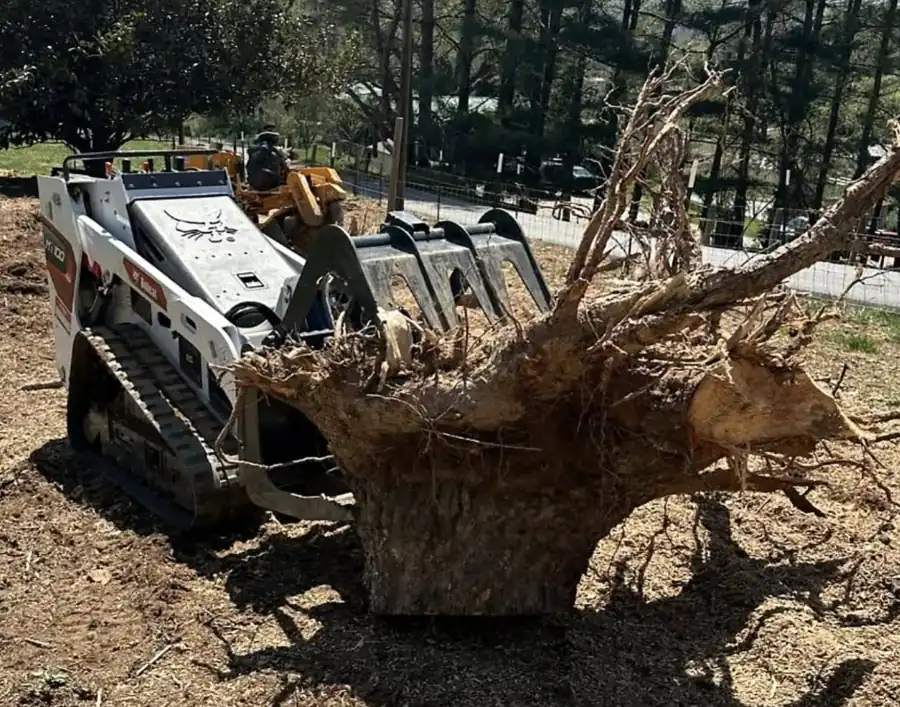
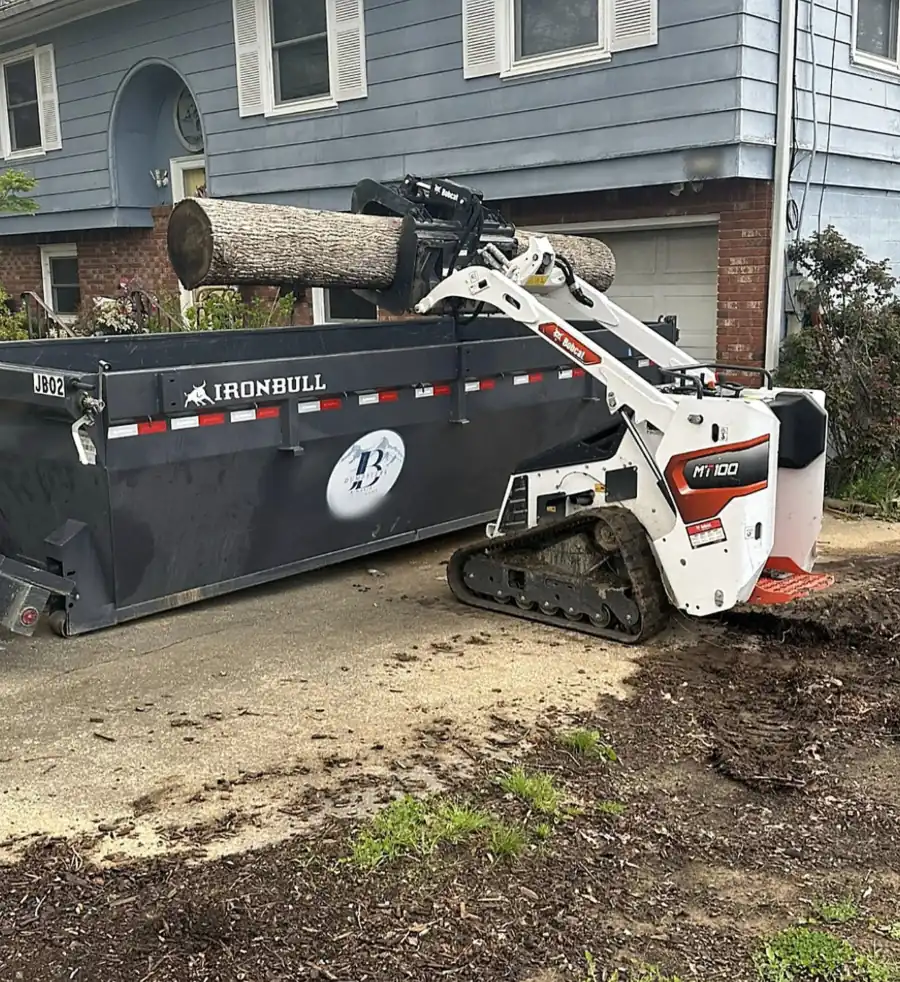
A stump from a cut tree is rooted and level, and the grinder takes it below grade. A root ball from a blow-down is loose, heavy, full of soil and rock, and sitting above the ground. It has to be lifted. The Bobcat track loader with a grapple handles the ones a person cannot move, and the excavator handles the ones the loader cannot. The root ball goes on a trailer and leaves, and the hole it came out of is backfilled.
Storm work comes in every size, from one pine root ball at the edge of a yard to a line of blow-downs along a wooded lot. Send a photo and say which you have, a cut stump or a root ball on edge, because they are quoted differently. Storm stumps that were cut and are still rooted go through ordinary stump grinding. The county hub for stump grinding in Rutherford County covers the eastern side of the area.
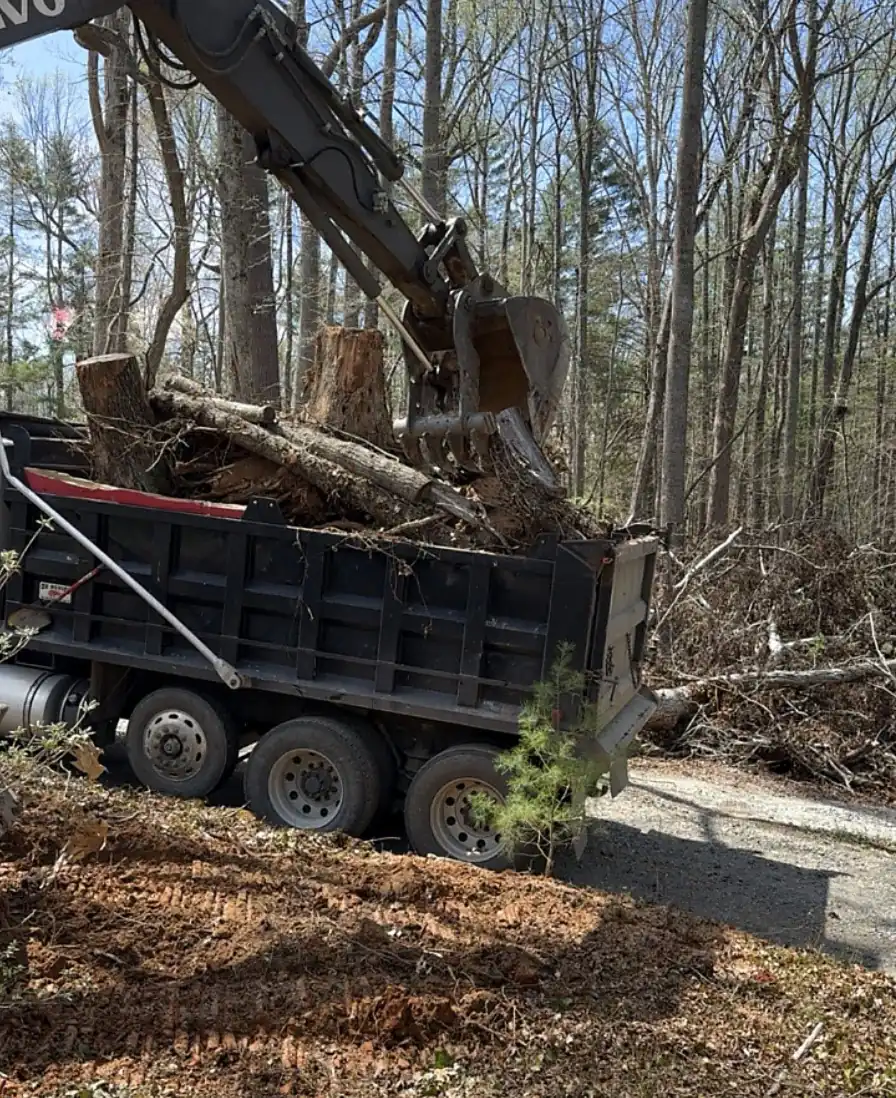
What storm root ball removal includes
- Lifted root plates and root balls removed
- Track loader with a grapple, or excavator
- Root balls loaded and hauled off
- The hole backfilled after the root ball leaves
- Cut storm stumps ground below grade
- A free quote from photos of the damage
Root plates, root balls and blow-downs
When wind takes a tree over with the roots, the whole root system lifts out as a plate and stands up on edge. It leaves a pit on one side and a wall of roots and dirt on the other. Treat it with respect. Tree care safety guidance warns that a root plate on edge can sit back into its hole when the trunk is cut off it, so keep children and pets out of the pit. Trunk still attached, or the tree hung up in another? Call or send a photo and we will talk through the options. Once it is a root ball on the ground, it is a lifting job.
How a storm root ball comes out
The loader or the excavator gets hold of the root ball and lifts it clear, the same way a stump comes out in full stump removal. It is loaded and hauled off, since a root ball is not something you can leave at the curb. Where it ends up is covered in the guide to tree stump disposal. The hole is backfilled afterwards. Fill settles, so the spot may want topping up later. If several trees went down in a row, the root balls come out in one visit and the ground between them can be raked or graded back to something you can mow.
What a storm quote needs
Photos do most of it. Take one of each root ball or stump with a person, a shovel or a bucket beside it for scale. Take one from further back that shows how a machine would get there, and whether there is a fence, a septic tank, a drain field or a steep bank on the way. Say how many there are and your town. Public utility lines are located through 811 before digging near them, and 811 does not mark private lines, so point out anything of yours that is buried. Jordan quotes every job himself and the estimate is free.
Storm Root Balls Questions
Not seeing yours? Call (828) 574-4474 and ask Jordan, or read the common questions.
What is the difference between a storm root ball and an ordinary stump?
A stump is what a saw leaves: rooted, level and solid, and a grinder takes it below grade. A storm root ball is the whole root system torn out of the ground by a falling tree, usually tipped on edge with a pit behind it. It is loose, heavy and full of soil, so it is lifted out and hauled off instead.
Can a tipped-up root plate be ground instead of hauled away?
Sometimes, and a photo decides it. A stump that is still rooted and close to level grinds like any other. A root plate standing on edge, packed with clay and rock, is a job for the loader or the excavator. Send a picture of it from the side and you will be told which it is.
Is the hole filled in after a blown-down root ball is taken out?
Yes, the hole is backfilled once the root ball is gone. Loose fill settles over the following months, so expect the spot to want topping up before it is level for good. If you plan to put anything on it other than grass, say so when you ask for the quote.
The trunk is still attached to the root ball. Can I call now?
Yes. Call or send a photo and we will talk through the options. A trunk still joined to a root plate changes how the whole thing behaves, so it is worth a look at the photo before anyone decides what happens first. Show the root plate, the trunk and what the tree is lying on.
Do you still take Helene blow-down stumps this long after the storm?
Yes. Stumps and root balls that have sat for years come out the same way fresh ones do. An older root ball may have shed some of its soil, and a photo shows what is left to lift. Send photos of what is left and the way in, and say roughly how many there are.
5.0
5.0 on Google · 24 reviews
What People Say Afterwards
Word for word from the Google profile. The same three things keep coming up: he shows up when he says he will, the work is clean, and the ground is left tidy.
“Jordan with JB Stump Grinding & Land Management did an excellent job from start to finish. He was professional, courteous, respectful, and showed up exactly when he said he would. His work was very clean and neat, and he took the time to make sure everything was cleaned up and the property looked great before he left.”
“Exceptional job from start to finish — he was professional, efficient, and clearly takes a lot of pride in his work. His pricing was very fair and reasonable, and the quality of the work was excellent. He showed up, worked hard, and left the area looking great when it was finished.”
“I have used JB Stump Grinding multiple times and I couldn’t be more impressed! Jordan did a great job, showed up when he said he would, and left everything clean when he was finished. Professional, dependable, and easy to work with.”
“I have used JB twice and will use him again anytime. He is a pleasure to work with and also does a fantastic job. He cuts, cleans up and delivers. Definitely deserves 5 stars.”
“Jordan is a stand up guy! Can’t thank him enough! Would highly recommend him to anyone!”
“Best stump removal in the area!”
How a Job Runs
Send two photos
One of the stump with something for scale, one of the way in, plus your town. Call, use the form, or email the photos.
Get your quote
Jordan quotes every job himself. Estimates are free, and you have the number before any work starts.
Lines get marked
Public utility lines are located through 811 before grinding near them. 811 does not mark private lines, so point out irrigation, lighting, invisible fence and septic parts.
The grind
The stump is ground in passes to below grade, usually four to eight inches under. Tell us first if you are planting or laying turf and it goes deeper.
Clean ground
Grindings are raked back into the hole and topped, left in a pile for your beds, or hauled off. Any marks on the lawn get raked.
Stump Grinding & Removal
Stumps ground out below grade, grindings dealt with, and the ground left clean.
The full serviceFull Stump Removal
The whole stump and root ball lifted out and hauled off, for spots that will be built on.
DetailsLarge Stumps
Big oak, pine and old hardwood stumps ground below grade, wide root flare included.
DetailsTight Access
A narrow tracked grinder for stumps behind gates, beside houses and up against patios.
DetailsCommercial & Builders
Stump grinding and removal for builder lots, HOA common ground, golf courses and rentals.
DetailsPasture & Fence Lines
Paddock, field and fence-row stumps ground below grade so you can mow and fence.
DetailsStump grinding near you
Need Storm Root Balls?
Send two photos and your town, or call Jordan. You get a real number before any work starts.