
Erosion Control & Drainage in Upstate SC & Western NC
JB Stump Grinding & Land Management does erosion control and drainage across Upstate SC and Western NC: banks shaped and held, swales and pipe that carry runoff to a proper outfall, and bare ground stabilized after clearing or grading. Free estimates: call (828) 574-4474.
Erosion Control: What the Job Involves
Water always wins if nobody gives it a plan. It finds the low line across a yard, cuts a rut down a gravel drive, eats the toe of a bank and leaves a fan of red mud on the far side of the fence. Erosion control is deciding ahead of time where that water will go and how fast, then building the slope, the channel or the pipe that makes it do so.
This part of the Carolinas makes it a common problem. The Blue Ridge escarpment drops steeply through Polk and Henderson counties, summer storms are heavy, and the red clay of the Upstate is slow to soak up a hard rain. Helene in September 2024 showed what saturated slopes can do. Most jobs are far smaller than that: a bank behind a house, a washed drive, a wet corner, a new lot that needs holding until the cover grows back.
JB Stump Grinding & Land Management does this work from Tryon, North Carolina, on both sides of the state line, north toward Asheville and south through Spartanburg and Greenville counties. It ties closely to grading and excavation, because most erosion begins with a surface that was shaped wrong or left bare. Often the fix is a few loads of dirt moved to the right place and the water given somewhere to go.
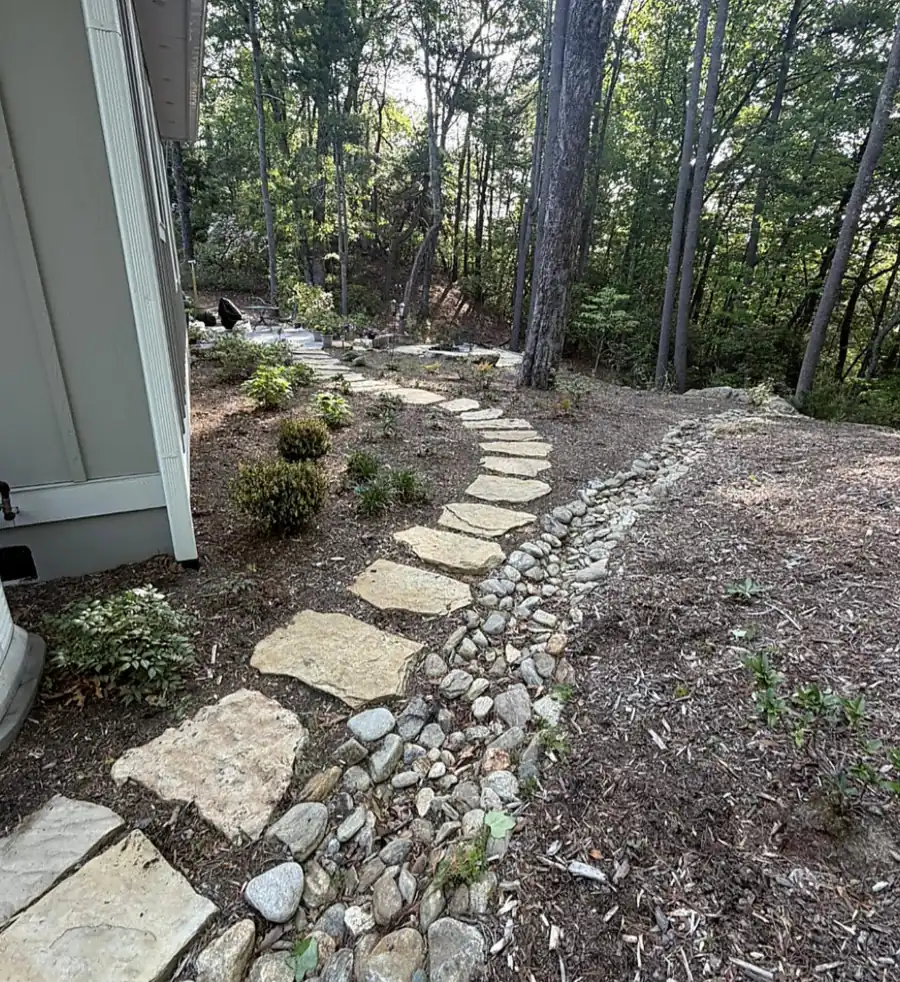
What erosion control and drainage covers
- Slopes and cut banks shaped and stabilized
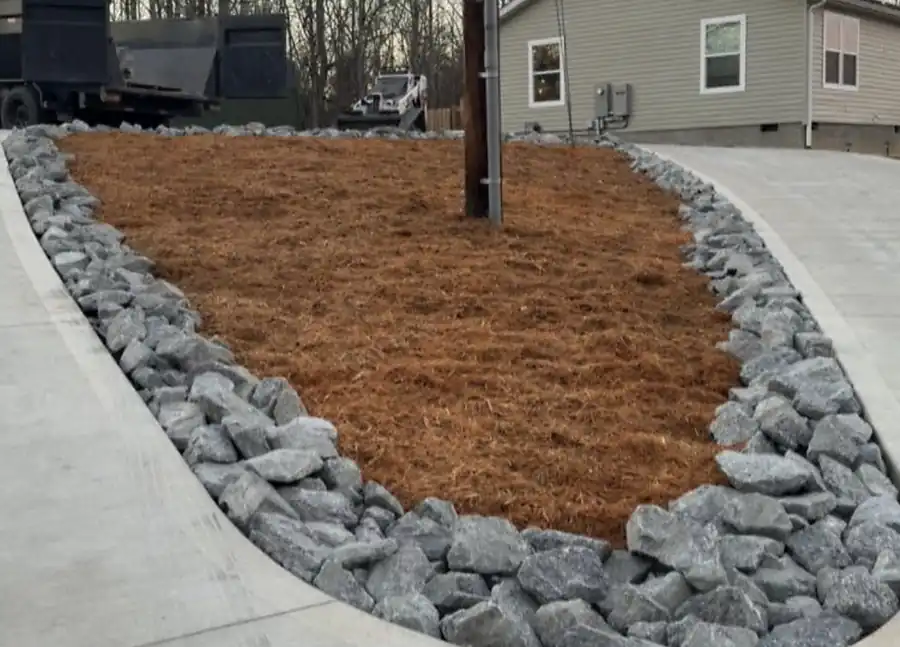
- Erosion matting and rock on bare banks
- Swales cut to carry runoff
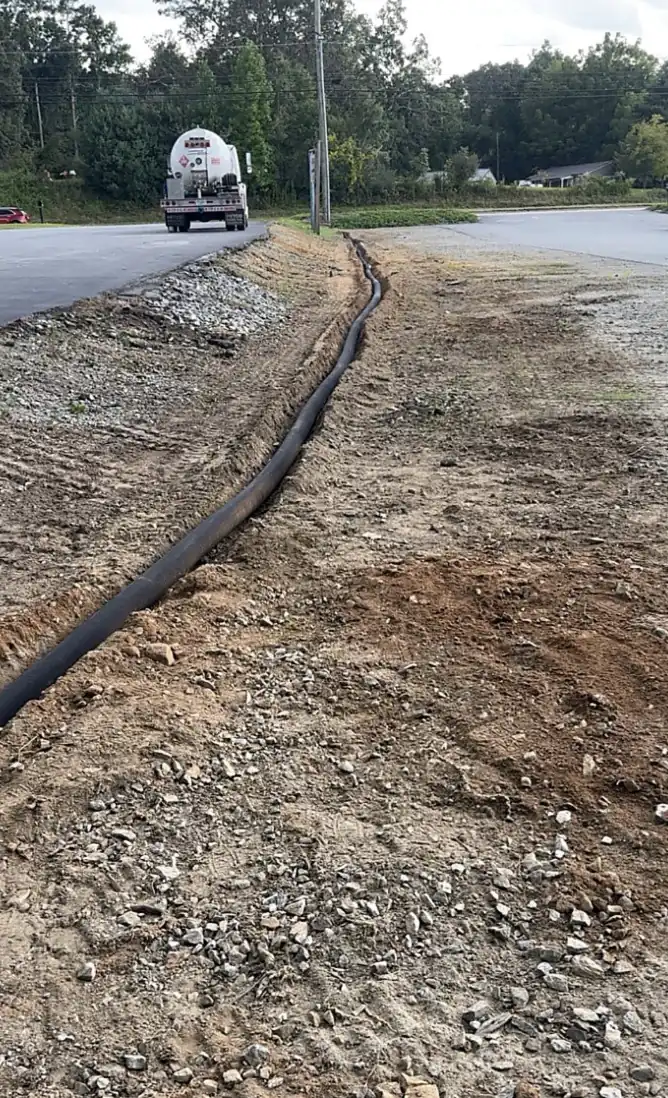
- Drain pipe and catch basins put in
- Outfalls lined with rock
- Bare ground held after clearing or grading
Slopes and cut banks
A bank fails from the top and from the bottom. Water running over the lip cuts gullies down the face, and water at the toe undercuts it until a section slumps. So the first move is to keep runoff off the face altogether, with a berm or a swale along the top that turns it aside. Then the face is laid back to an angle it can hold, covered with erosion matting so soil stays put, and armored with rock where flow concentrates. Planting does the long-term work, since roots hold a slope better than anything laid on it.
Drainage that goes somewhere
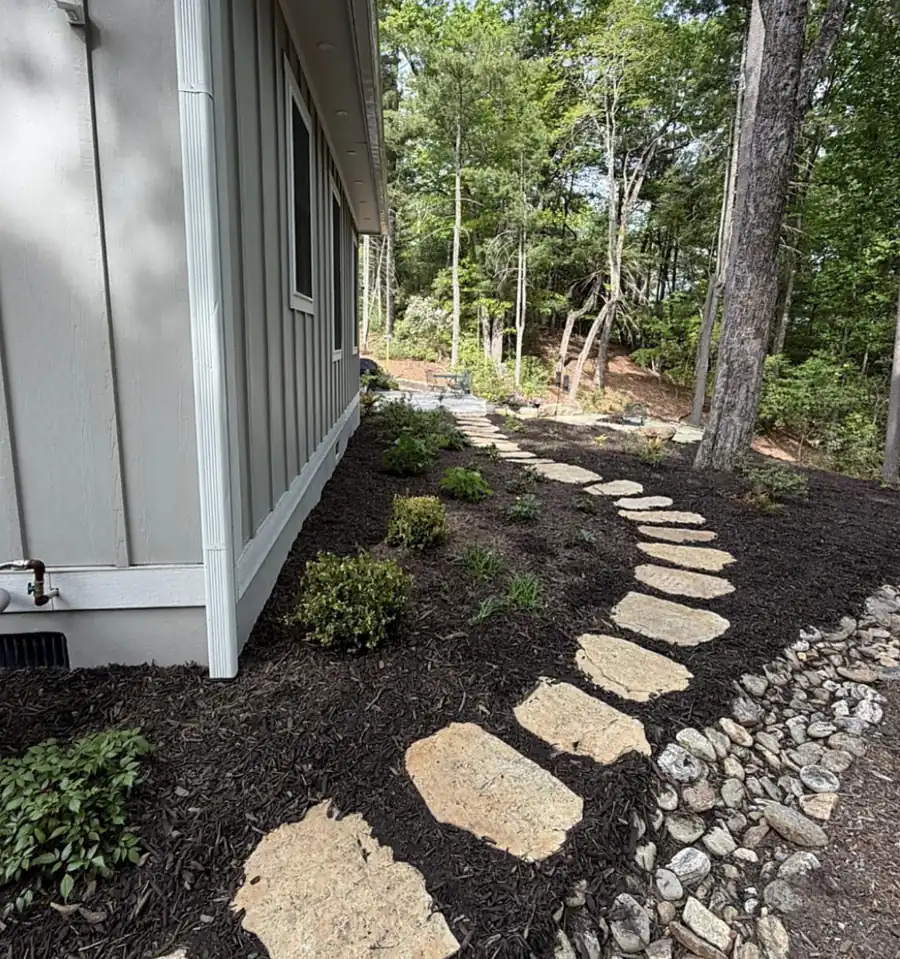
Drainage that just moves the problem down the hill is not drainage. Every swale, pipe and catch basin needs an outfall: a place where the water can leave without cutting a new gully or flooding the next yard. A grassed swale is the simple answer where there is room and gentle fall. Pipe goes in where the water has to cross a drive or pass a building, with a catch basin at the low point to take it in. The outlet is lined with stone so the water slows down and spreads out before it reaches the ditch, the creek or the woods.
After clearing or grading
Bare ground is the most fragile ground there is. Once land clearing or a pad cut has taken the cover off, one hard storm can move a great deal of soil, and the mud ends up on the road or in the creek. Holding it as the work goes costs less than repairing it afterwards. On steep parts the roots are left in place, with stump grinding used in place of pulling the root ball. Larger jobs bring paperwork: North Carolina requires an approved erosion and sedimentation control plan when more than one acre is disturbed, and South Carolina has stormwater rules of its own. Ask the county office first.
What moves the price of erosion control
These jobs are quoted after the water has been traced, on site or from good photos. The number depends on how much ground has to be reshaped, how much rock, pipe and matting goes in, how far the water has to be carried to a safe outfall and whether a machine can reach the spot. A fix made at the top of a slope usually costs less than a repair at the bottom. Take photos during or just after rain if you safely can, since they show where the water runs. Send them with your town through the contact page.
Erosion Control Questions
Not seeing yours? Call (828) 574-4474 and ask Jordan, or read the common questions.
How do I stop a bank from washing out?
Start at the top, not the face. Most banks wash because runoff from above pours over the edge, so turning that water aside with a swale or a berm does more than anything laid on the slope. After that the face is shaped to an angle it can hold, covered with matting and planted, with rock where water still concentrates. Send photos from above and below the bank.
What is the difference between a swale and a French drain?
A swale is a shallow, wide channel on the surface that carries runoff across the ground, usually grassed or lined with stone. A French drain is a buried trench of gravel with a perforated pipe that collects water soaking through the soil. Swales handle storm runoff, and French drains handle ground that stays soggy. Many yards need one, and some need both tied to a single outlet.
Does erosion control or drainage work need a permit?
It depends on how much ground is disturbed and where. North Carolina requires an approved erosion and sedimentation control plan when more than one acre is disturbed, and counties, towns and South Carolina's Department of Environmental Services have rules of their own. Work in or beside a stream is regulated separately. Call the county office that handles land disturbance before work begins.
Will riprap or erosion matting hold a steep slope?
Each does a part. Matting keeps soil in place until roots take over, and it gives out if water is allowed to run under it. Riprap takes the force of moving water at a toe, an outlet or a channel. Neither fixes a slope that is too steep, or one that has water pouring over the top, so shaping and diverting come first.
My gravel driveway washes out every time it storms. Can that be fixed?
Usually. A drive washes because water is running down it instead of off it. The repair is to reshape it with a crown or a cross slope, cut a ditch or swale alongside, and add a pipe or a water bar where runoff crosses. Fresh stone goes on last. Adding gravel without reshaping just gives the next storm more to carry downhill.
5.0
5.0 on Google · 24 reviews
What People Say Afterwards
Word for word from the Google profile. The same three things keep coming up: he shows up when he says he will, the work is clean, and the ground is left tidy.
“Jordan with JB Stump Grinding & Land Management did an excellent job from start to finish. He was professional, courteous, respectful, and showed up exactly when he said he would. His work was very clean and neat, and he took the time to make sure everything was cleaned up and the property looked great before he left.”
“Exceptional job from start to finish — he was professional, efficient, and clearly takes a lot of pride in his work. His pricing was very fair and reasonable, and the quality of the work was excellent. He showed up, worked hard, and left the area looking great when it was finished.”
“I have used JB Stump Grinding multiple times and I couldn’t be more impressed! Jordan did a great job, showed up when he said he would, and left everything clean when he was finished. Professional, dependable, and easy to work with.”
“I have used JB twice and will use him again anytime. He is a pleasure to work with and also does a fantastic job. He cuts, cleans up and delivers. Definitely deserves 5 stars.”
“Jordan is a stand up guy! Can’t thank him enough! Would highly recommend him to anyone!”
“Best stump removal in the area!”
How a Job Runs
Send two photos
One of the stump with something for scale, one of the way in, plus your town. Call, use the form, or email the photos.
Get your quote
Jordan quotes every job himself. Estimates are free, and you have the number before any work starts.
Lines get marked
Public utility lines are located through 811 before grinding near them. 811 does not mark private lines, so point out irrigation, lighting, invisible fence and septic parts.
The grind
The stump is ground in passes to below grade, usually four to eight inches under. Tell us first if you are planting or laying turf and it goes deeper.
Clean ground
Grindings are raked back into the hole and topped, left in a pile for your beds, or hauled off. Any marks on the lawn get raked.
What Usually Goes With It
Based in Tryon, North Carolina, working both sides of the state line. See where we work.
Septic Systems
Tanks and drain fields put in, replaced and repaired.
DetailsDumpster Rental
Roll-off dumpsters out of Tryon, dropped where you need one and hauled off full.
DetailsLand Clearing
Overgrown lots, building sites and fence lines opened back up and left workable.
DetailsErosion Control by town
Erosion Control in the Towns Around Spartanburg
Each town has its own page, with the ground, the rules and the access there.
Erosion Control by town
Erosion Control by county
Need Erosion Control?
Send two photos and your town, or call Jordan. You get a real number before any work starts.