
What is left after stump grinding
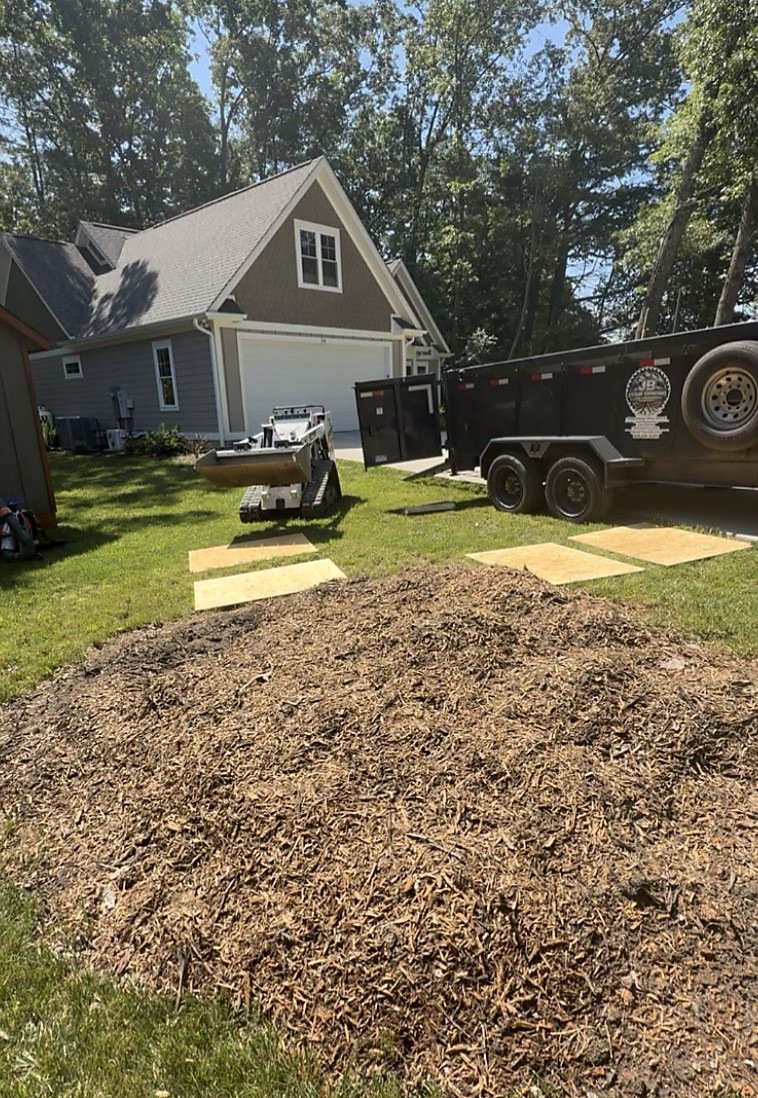
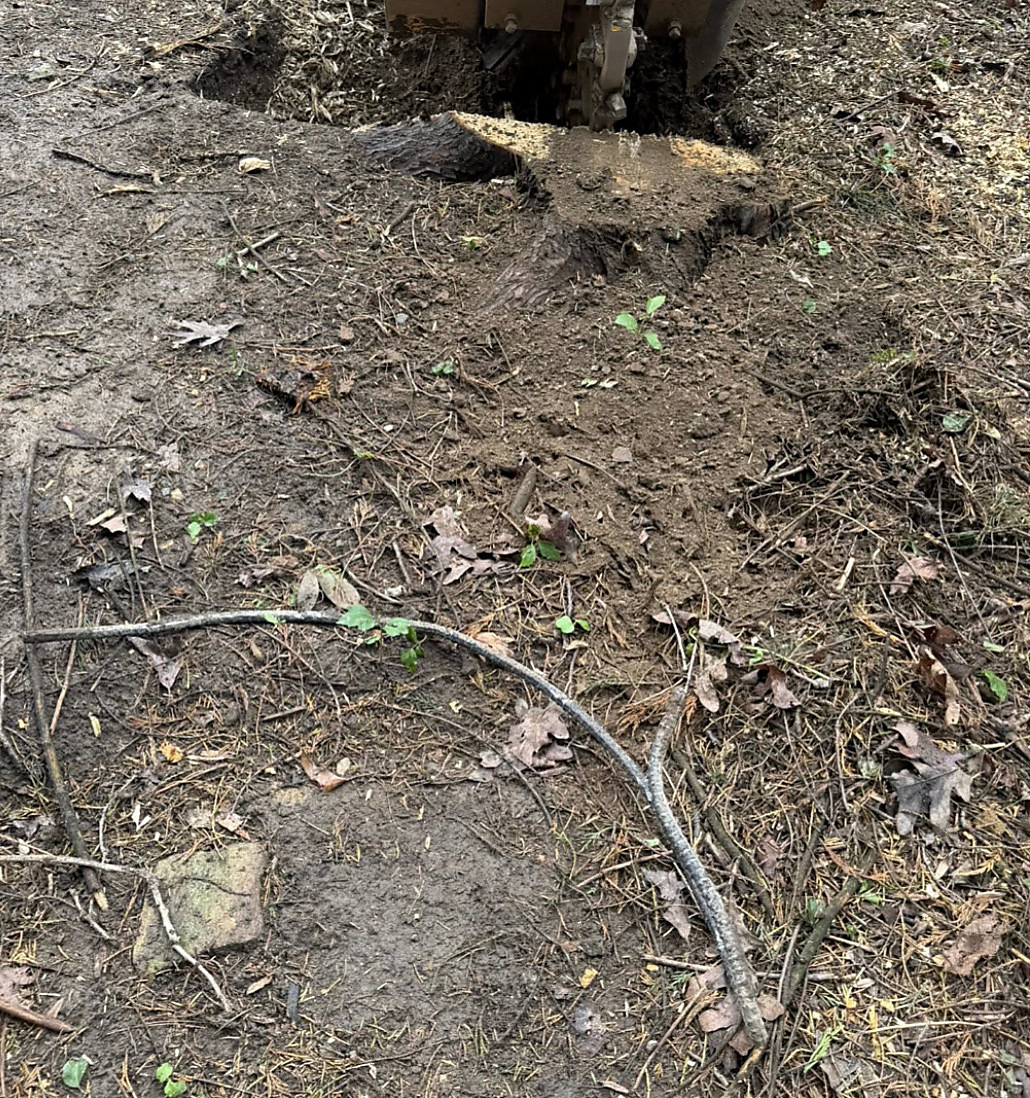
The stump is gone to four to eight inches below the ground around it. In its place is a mound of grindings, which is wood chips mixed with soil, and under the mound a hollow the shape of the stump. The pile always looks bigger than the stump did, because solid wood takes up much more room once it is loose chips. The main roots are still in the ground, running out from where the stump stood.
The chip pile: three choices
Raked back. The grindings go back into the hollow and are topped with soil. This is what happens unless you ask for something else.
Left in a pile. If you want them for beds or paths, they are left where you say.
Hauled away. They are loaded and taken off the property. Hauling is quoted separately, so say so when you ask for a price.
Using the grindings as mulch
Grindings work as mulch on top of the ground: around trees and shrubs, and on paths. Spread them two to three inches deep and keep them a few inches back from trunks and stems. Do not dig fresh chips into a planting bed. Fresh wood uses up nitrogen from the soil as it breaks down, and plants growing in the mix turn yellow.
Filling the hole
The same thing happens to grass sown into a hollow full of chips. It comes up thin and pale. If lawn is going over the spot, the better fill is mostly soil. Take out most of the chips, fill with topsoil and not red clay, and leave it an inch or two higher than the lawn, because it will settle. As the last chips and the roots decay, the spot sinks a little more. Expect to add soil once or twice in the first year or two.
Seeding grass over it
When to seed depends on the grass. Tall fescue is the usual lawn in the North Carolina foothills and mountains. It is seeded in late summer and early fall: mid August to the start of September in the mountains, and through September lower down. In Upstate South Carolina, mid to late September suits fescue, and warm-season lawns such as bermuda, zoysia and centipede are seeded in early May. Outside those windows, fill the hole and seed when the season comes round. A little nitrogen fertilizer helps where chips are still in the soil. Your county Extension office can confirm the dates for your lawn: N.C. Cooperative Extension in North Carolina, Clemson Extension in South Carolina.
Replanting a tree in the same spot
The easy answer is to plant the new tree a few feet to one side. The old spot is full of chips and big roots, there is little soil in it, and it will keep sinking. If the new tree has to go exactly where the old one stood, say so before the job. The stump then has to be ground deeper and wider, or taken out whole with its root ball, and the hole refilled with soil. Stump grinding vs stump removal explains the difference.
How long the roots take to break down
The roots rot where they are. It takes years, not months. Small roots go first. The big roots of a large hardwood can last ten years or more. Oak, hickory and locust are slow. Pine and poplar are quicker.
While that goes on you may notice three things. The ground can dip slightly along the line of a big root. Mushrooms can come up in the lawn in wet weather. They are feeding on the dead wood and they do not harm the grass. And a few species, poplar and locust in particular, send up shoots from roots some way out from the stump. Mow them or cut them at ground level.
If something is being built there
Settling does not matter under a lawn. It does matter under a slab, a footing, a post or a paved surface. If anything is being built where the stump stood, the roots need to come out, and that is stump removal, not grinding. The page on stump grinding and stump removal covers both, and what moves the price is set out separately.
After the grind
Questions people ask afterwards
Can I leave the stump grindings in the hole?
Yes. Raking them back and topping them with soil is the standard finish. If grass is going over the spot it does better with fewer chips and more soil, and the spot will need topping up as it settles.
How soon can I plant grass after stump grinding?
As soon as the hole is filled with soil and the season is right for your grass. Tall fescue is seeded in late summer and early fall. Warm-season grasses are seeded in late spring. Your county Extension office can confirm the dates.
Can I plant a new tree where the old stump was?
It is better a few feet to one side. If it has to be the same spot, say so before the job, because the stump then has to be ground deeper and wider or taken out whole, and the hole refilled with soil.
Will the tree grow back after the stump is ground?
Almost never from the stump itself. A few species, poplar and locust in particular, can send up shoots from roots further out. Mow them or cut them at ground level.
Why are mushrooms coming up where the stump was?
They are feeding on the old roots as the roots rot. They do not harm the lawn, and they stop once the wood is gone.
Free estimate
Stump to grind?
Send the number of stumps, roughly how big they are, and whether a machine can get to them. A photo of the access answers more than a paragraph does.
Call(828) 574-4474 Emailjbdumpsters@outlook.comFree estimate
Stump to grind?
Straight to Jordan. He quotes every job himself.