

Stump grinding chews the stump down below ground level and leaves the roots in the soil to rot, while stump removal digs the whole root ball out and hauls it away. Grind when lawn, mulch or nothing at all is going on top, and remove when something will be built, dug or planted in that exact spot.
Two jobs that share one name
People search for stump grinding, stump removal and tree stump removal and mostly mean the same thing: make the stump go away. In the trade they are two different jobs with different machines, different mess and a different yard afterward. Mixing them up is how people end up paying for a big hole they did not need, or building a shed over roots that later rot and drop. The test is not the stump. It is what happens on that ground next. Once you know that, the choice usually makes itself, and most of the time it comes down on the side of the smaller job.
What stump grinding does
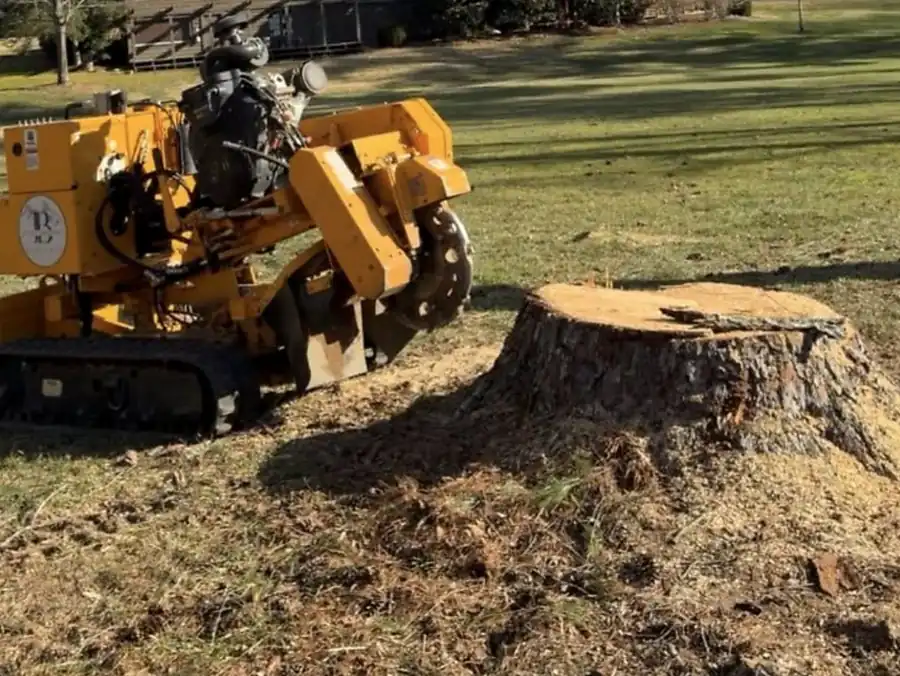
A grinder's cutting wheel works the stump down in passes until it is below the ground around it, usually four to eight inches under, deeper if you say you are planting or laying turf. The stump is not pulled, so the lawn around it is not torn up. A tracked grinder fits through a standard yard gate and gets to stumps by walls, drives and fences where digging would be trouble. You are left with a mound of grindings and a shallow hollow, and the roots stay in the ground. For a stump you are tired of mowing around, stump grinding is nearly always the answer.
What full stump removal does
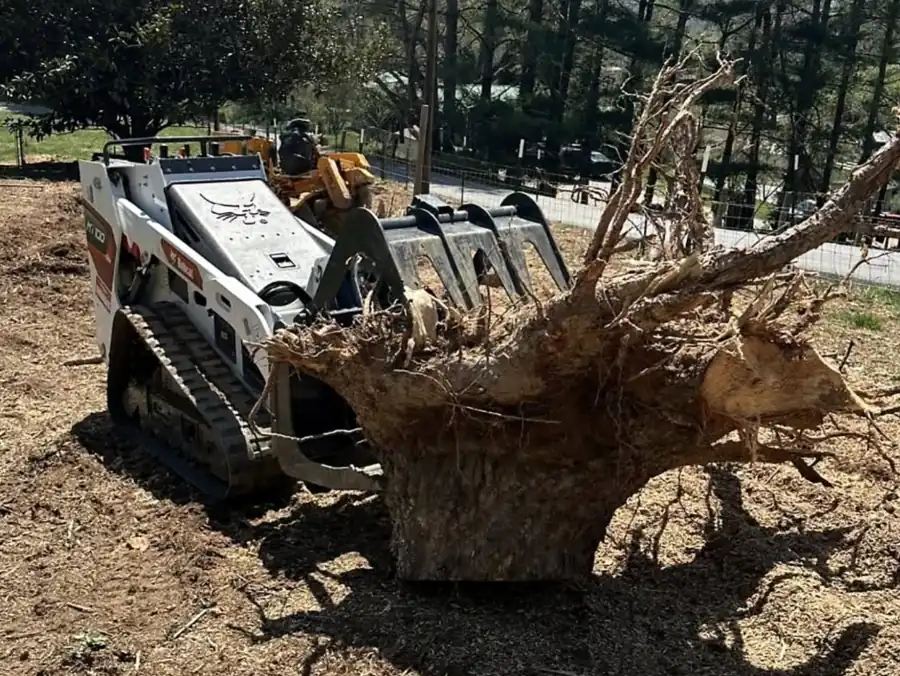
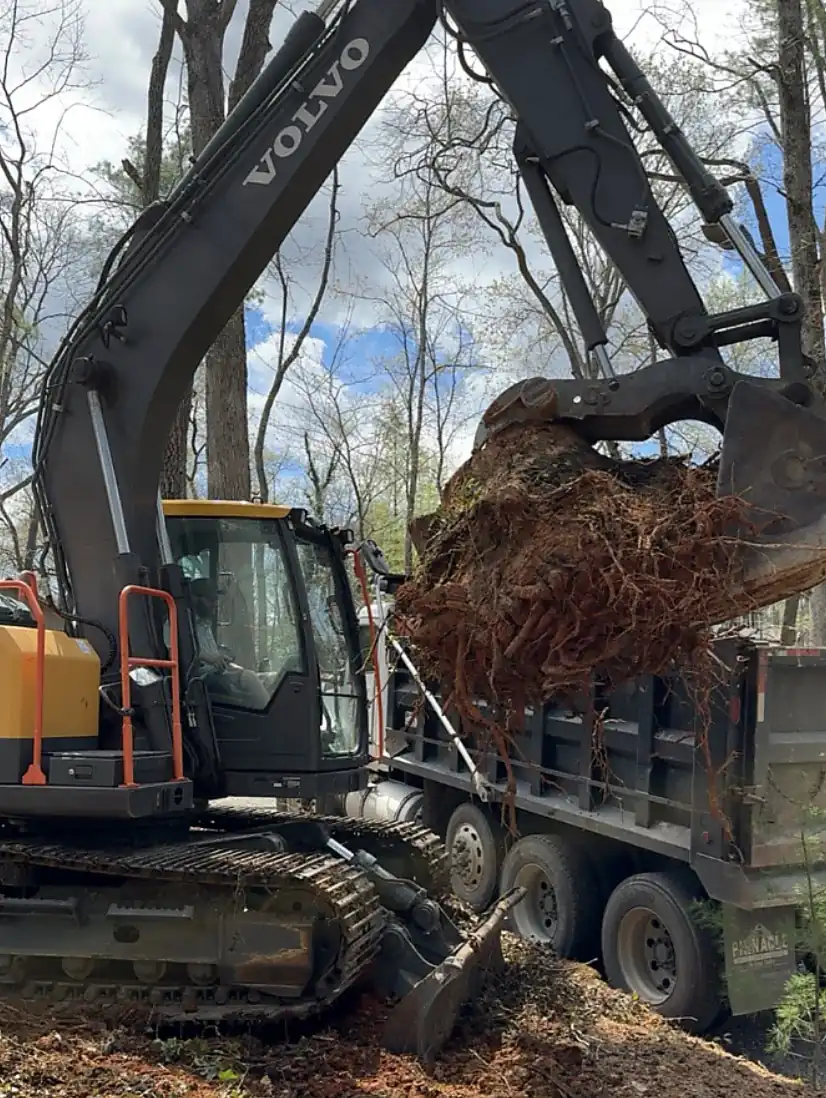
Removal takes everything. An excavator or a loader with a grapple digs around the stump, breaks the roots loose and lifts the root ball out whole. It leaves on a trailer. What you are left with is an open hole, wider than most people expect, and disturbed ground around it where the machine worked. The hole is backfilled, and the fill needs time to settle before anything sits on it. It is the bigger job in every way: more machine, more soil moved, more yard to put right. In return the ground is clear of wood, which grinding cannot promise. See stump removal for how that job runs.
Choose grinding when
Choose grinding when you want the stump gone from sight and the yard left in one piece. That covers lawn going over the spot, a mulch bed, a natural area, a stump in the mowing path, a stump beside a drive or walk, and a stump close to a foundation or fence where an excavator would do more harm than good. It also covers most stumps in a fenced back yard, because a narrow grinder goes where a digging machine cannot. Several stumps across a lot are grinding work too. If none of your plans involve digging, pouring or setting a post where the stump is, grinding does the job.
Choose removal when
Choose removal when the ground itself has to be free of roots. A footing, a deck or fence post, a concrete slab, a drain line, a pool or a retaining wall on that exact spot all need solid ground, and rotting roots are not solid. A replacement tree in the very same place is another case. So is a tree that blew over: it leaves a root plate standing on edge with a crater behind it, and there is nothing flat to grind. That job is storm stump and root ball removal. Builder lots headed for grading often get the stumps taken out whole for the same reason.
Which one costs more, and why
Removal costs more than grinding, on any stump, because of what it takes: a bigger machine, a trailer for the root ball, a place to take it, and soil and time to close the hole. Grinding needs one machine and leaves material that can stay on site. So the honest advice is to buy the smaller job unless your plans rule it out. Neither comes with a list price worth printing, since width, access and the number of stumps move both. What stump grinding costs sets out every factor and how to get a firm number from two photos.
What about the roots grinding leaves behind?
They die and rot in place. Extension guidance from Purdue puts full breakdown at several years. While it happens the ground above can settle a little, mushrooms may show in wet spells, and a few species send up shoots from the old roots. Under grass or mulch none of that matters much: you top up a dip and mow the shoots. Under a hard surface it matters a lot, and that is the whole case for removal. Do tree stumps grow back explains what the roots do and which trees are the stubborn ones.
Photos From Real Jobs
Common Questions
What are the downsides of stump grinding?
The roots stay in the ground, so the spot can settle as they rot and is not fit to build on. You get a mound of chips to deal with. A few species can sucker from the roots left behind. And a ground-out spot is a poor place for a new tree. For lawn or mulch, those are small trade-offs for keeping the yard intact.
Is it better to leave a tree stump or grind it down?
Grind it if it is in your way, in the lawn, or near the house. A stump left alone can take ten years or more to rot by itself, according to Iowa State University Extension, and many hardwood stumps sprout in the meantime. A stump at the back of a wooded lot that bothers nobody can stay. Not sure? Send a photo and ask.
Can you build over a stump that has been ground?
Not safely over the grind alone. Grinding leaves chips in the hollow and roots beneath it, and both shrink as they decay, so a slab, footing or post set on top can drop. If anything structural is going on that spot, say so first. The root ball then comes out whole and the hole is backfilled and left to settle.
What to Do Next
Tell us what is going on that ground afterward and you will be told which job it needs, including when the answer is the smaller one. Two photos and your town are usually enough. Call (828) 574-4474.