

Septic System Installation in Spartanburg, SC
JB Stump Grinding & Land Management installs new septic systems, replaces failed tanks and drain fields, and repairs broken lines, lids and baffles in Upstate SC and Western NC. The permit comes first, and the system goes where the permit says. Free estimates: call (828) 574-4474.
Septic Systems: What the Job Involves
Away from town sewer, the septic system is the part of the house nobody thinks about until it stops working. Then it is the only thing anyone thinks about. A system is simple in principle: a tank where solids settle, and a drain field where the liquid soaks away through the soil. Getting it to work for the long haul comes down to the soil, the slope, the layout and the care taken putting it in the ground.
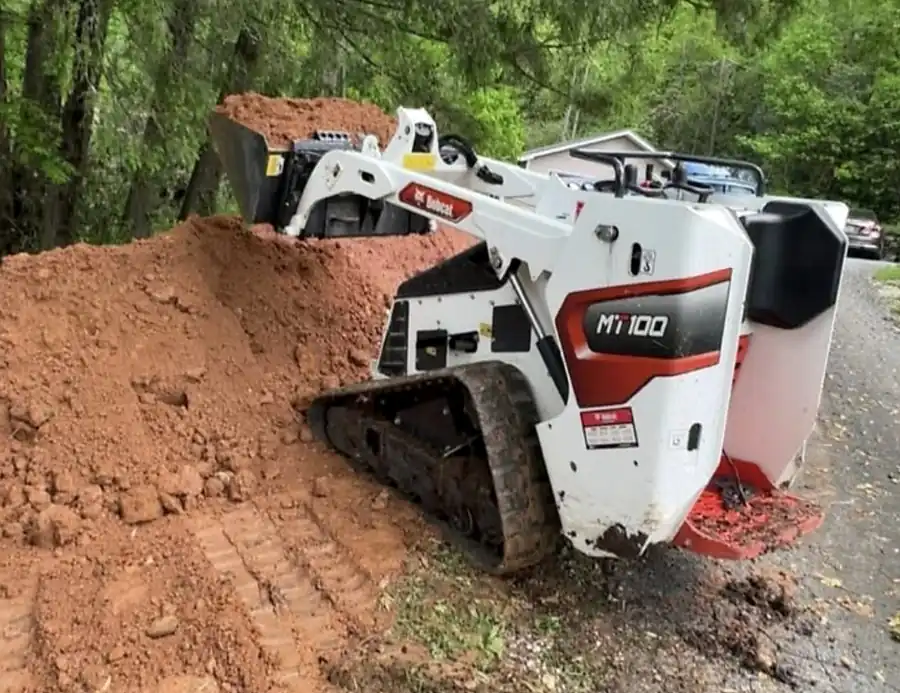
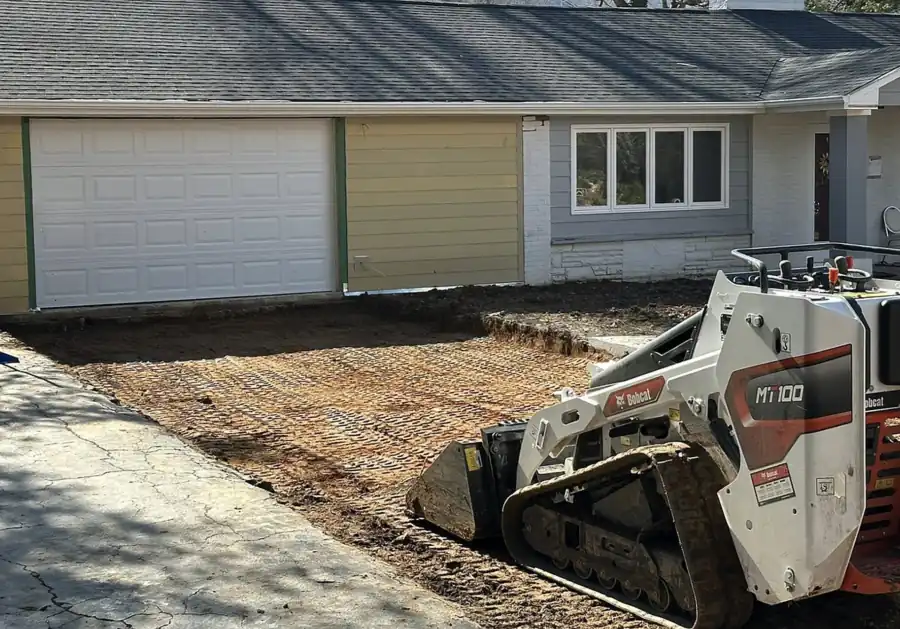
JB Stump Grinding & Land Management puts in new systems, replaces tanks and drain fields that have failed, and repairs the parts that break. It is excavation work at heart, and the machines for it are the same ones that cut pads and dig drains: an excavator for the tank hole and the trenches, and a mini track loader for moving stone and soil and for putting the yard back afterwards.
The work is done from Tryon, North Carolina, in Polk, Henderson and Rutherford counties and across the state line in Spartanburg and Greenville counties. Two states means two sets of rules, and both begin with a permit before any digging. That is explained further down. If the lot still needs opening up or leveling, grading and excavation can be quoted alongside the septic work.
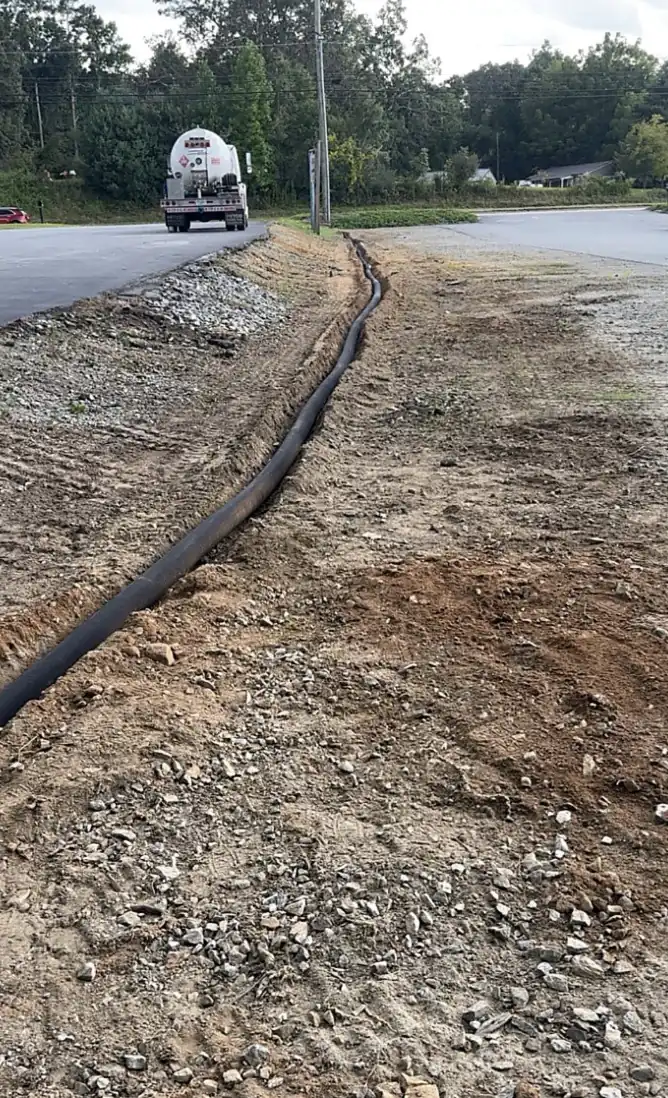
Septic work we take on
- New septic systems for new homes
- Septic tanks set and connected
- Drain fields built to the permit
- Failed tanks and drain fields replaced
- Crushed or separated lines repaired
- Broken lids and baffles replaced
New septic systems
A new system follows the permit, not a guess. The permit shows where the tank sits, where the drain field goes and how it is laid out. The tank hole is dug and bedded so the tank sits level, the line from the house is laid with steady fall, and the drain field is built where the permit says it goes. Then the work is left open for whatever final check the permit calls for before it is covered. Keep the drain field area clear from the first day of construction. Trucks and stockpiles compact the very soil the system depends on.
Replacement and repair
Septic systems fail in parts. A tank can crack or its lid can break. A baffle can rot away and let solids through. A line can be crushed by a vehicle or pulled apart by settling, and a drain field can clog with age until water surfaces in the yard. Some of that is a repair: one line, one lid, one baffle, one part of a field. Some of it means a new tank, a new drain field or both, often in a different spot on the lot. Wet ground, slow drains and odor are the signs. Call before it backs up into the house.
The permit comes first
No sound septic work starts without paperwork. In North Carolina the permit comes from the environmental health office that serves the county where the property sits, and that holds for Polk, Henderson and Rutherford counties alike. The soil and the site are evaluated before a permit is issued. In South Carolina the permit comes from the state Department of Environmental Services, and its own guidance says a county cannot issue a building permit without it. Ask the same offices what a repair or a replacement requires. Office names and steps change, so confirm with them directly.
Mountain ground, red clay and price
Where the system can go is decided by the land. Steep lots in Polk and Henderson counties limit where a drain field fits, and it has to keep its distance from wells, streams and property lines. Clay soils across the Upstate can be slow to take water, which affects the size and the type of system the permit calls for. Price follows from that: the system specified, the depth and difficulty of the digging, rock, access for the machines and how much yard has to be put back. Send the permit or the site evaluation, if you have one, through the contact page.
Septic Systems Questions
Not seeing yours? Call (828) 574-4474 and ask Jordan, or read the common questions.
Who issues septic permits in North Carolina and South Carolina?
In North Carolina, the environmental health office for the county where the property sits. In South Carolina, the state Department of Environmental Services. In both states the soil and the site are evaluated before a permit is issued. Confirm the current office and steps for your address directly with them, since names and procedures change.
How do I know if my septic drain field has failed?
The usual signs are wet or spongy ground over the field, sewage odor outdoors, unusually green grass in strips, and drains in the house that run slow or gurgle. Those signs can also come from a blocked or broken line, which is a smaller repair. Keep vehicles off the area, cut back on water use and call (828) 574-4474.
Can a septic tank be replaced without replacing the drain field?
Often, yes. The tank and the drain field are separate parts, and a cracked tank, a broken lid or a failed baffle does not mean the field is finished. The reverse is also true: a sound tank can feed a field that has clogged. The health office that permits the repair has a say in what is required, so the plan follows their decision.
Can a septic system go on a steep or rocky mountain lot?
Many can, though the lot decides the layout. Slope, rock, shallow soil and setbacks from wells and streams all limit where a drain field fits. The site evaluation by the permitting office settles what kind of system is allowed and where. Once that is in hand, send it over and the digging can be priced for the ground as it is.
Can you clear trees from the area where the drain field will go?
Yes, land clearing can be quoted with the septic work. Go carefully in the drain field itself, because the soil there has to stay undisturbed to do its job. Ask the permitting office how they want the trees and any stump grinding in that area handled before a machine goes in, and pass that on with your photos.
5.0
5.0 on Google · 24 reviews
What People Say Afterwards
Word for word from the Google profile. The same three things keep coming up: he shows up when he says he will, the work is clean, and the ground is left tidy.
“Jordan with JB Stump Grinding & Land Management did an excellent job from start to finish. He was professional, courteous, respectful, and showed up exactly when he said he would. His work was very clean and neat, and he took the time to make sure everything was cleaned up and the property looked great before he left.”
“Exceptional job from start to finish — he was professional, efficient, and clearly takes a lot of pride in his work. His pricing was very fair and reasonable, and the quality of the work was excellent. He showed up, worked hard, and left the area looking great when it was finished.”
“I have used JB Stump Grinding multiple times and I couldn’t be more impressed! Jordan did a great job, showed up when he said he would, and left everything clean when he was finished. Professional, dependable, and easy to work with.”
“I have used JB twice and will use him again anytime. He is a pleasure to work with and also does a fantastic job. He cuts, cleans up and delivers. Definitely deserves 5 stars.”
“Jordan is a stand up guy! Can’t thank him enough! Would highly recommend him to anyone!”
“Best stump removal in the area!”
How a Job Runs
Send two photos
One of the stump with something for scale, one of the way in, plus your town. Call, use the form, or email the photos.
Get your quote
Jordan quotes every job himself. Estimates are free, and you have the number before any work starts.
Lines get marked
Public utility lines are located through 811 before grinding near them. 811 does not mark private lines, so point out irrigation, lighting, invisible fence and septic parts.
The grind
The stump is ground in passes to below grade, usually four to eight inches under. Tell us first if you are planting or laying turf and it goes deeper.
Clean ground
Grindings are raked back into the hole and topped, left in a pile for your beds, or hauled off. Any marks on the lawn get raked.
What Usually Goes With It
Based in Tryon, North Carolina, working both sides of the state line. See where we work.
Dumpster Rental
Roll-off dumpsters out of Tryon, dropped where you need one and hauled off full.
DetailsLand Clearing
Overgrown lots, building sites and fence lines opened back up and left workable.
DetailsForestry Mulching
Brush and saplings ground down where they stand and left as cover.
DetailsSeptic Systems by town
Septic Systems in the Towns Around Spartanburg
Each town has its own page, with the ground, the rules and the access there.
Septic Systems by town
Need Septic Systems?
Send two photos and your town, or call Jordan. You get a real number before any work starts.