

Stump Grinding Guides
Straight answers to the questions people ask most, written by the people who do the grinding.
What Moves the Price
How Much Does Stump Grinding Cost? What Moves the Price
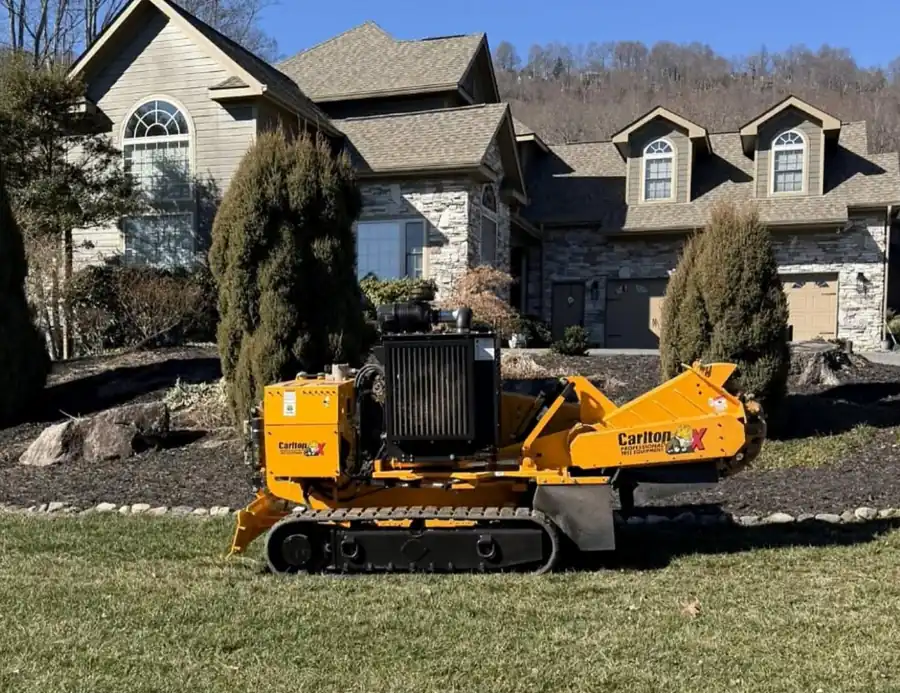
Stump grinding cost is set mostly by how wide the stump is across the cut face, how many stumps there are, and how easily a machine can reach them. Depth, the kind of wood, roots at the surface, whether the grindings are hauled off, and the distance to your town move it from there, which is why a real number comes from two photos and not from a chart.
Read the guide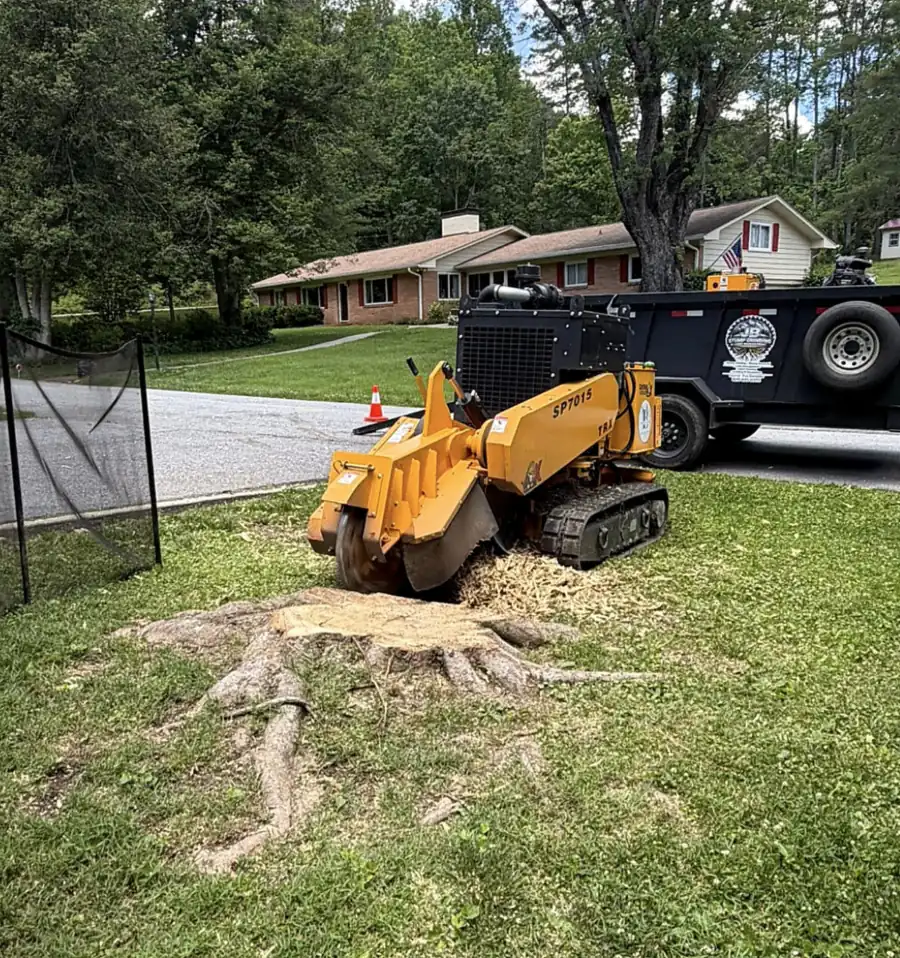
Stump Grinder Rental vs Hiring It Done: Which Makes Sense?
Renting a stump grinder makes sense when you have a few small or medium stumps, open access, a way to haul the machine and a free day. Hiring it done makes more sense for one large or wide-flared stump, a stump behind a gate or on a slope, or any job where your time, the cleanup and the risk are worth more than the difference in cost.
Read the guide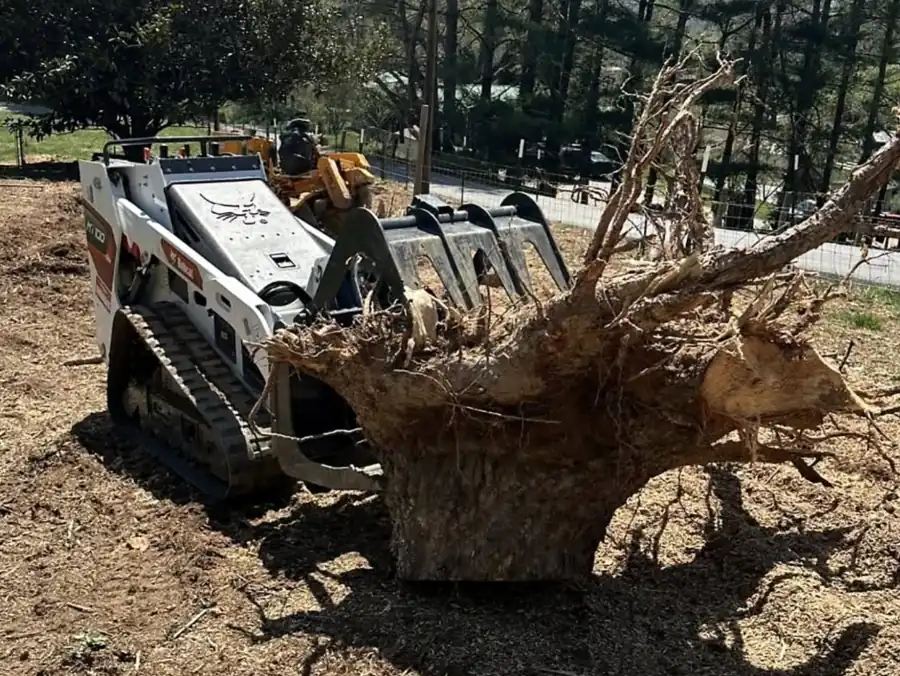
Stump Grinding vs Stump Removal: Which One Your Yard Needs
Stump grinding chews the stump down below ground level and leaves the roots in the soil to rot, while stump removal digs the whole root ball out and hauls it away. Grind when lawn, mulch or nothing at all is going on top, and remove when something will be built, dug or planted in that exact spot.
Read the guideCosts: What Moves the Price
How Much Does Stump Removal Cost? What Changes the Price
Stump removal cost depends first on which job you need: grinding the stump below grade, which is the smaller job, or digging the...
Read the guideCost GuideHow Much Does It Cost to Remove a Root Ball?
The cost to remove a root ball is set by how wide and heavy it is, how much soil and rock is still packed into it, whether the...
Read the guideCost GuideLand Clearing Cost per Acre: Why No Two Acres Price the Same
Land clearing is often priced by the acre, but the acre is the least of it: what is growing there, how big the trees are, the...
Read the guideCost GuideForestry Mulching Cost per Acre: What Moves the Price
Forestry mulching cost comes down to machine time, so anything that slows the mulching head moves the price: how many stems there...
Read the guideCost GuideLot Clearing Cost: What It Takes to Clear a Building Lot
Lot clearing cost for a house site depends on how much of the lot has to open for the house, drive, septic area and working room,...
Read the guideCost GuideHow Much Does Dumpster Rental Cost? What Goes Into the Price
Dumpster rental cost is the sum of a few things: which container, the number of days you have it, how much your debris weighs,...
Read the guideCost GuideShed and Outbuilding Demolition Cost: What Moves the Price
The cost to tear down a shed, barn or other outbuilding is driven less by the demolition than by the disposal: the size of the...
Read the guideCost GuideYard and Site Grading Cost: What Moves the Price
Grading cost depends on how much soil has to be cut, filled, brought in or hauled away, what that soil is, how carefully it has...
Read the guideCost GuideSeptic System Replacement Cost: What Drives the Price
Septic system replacement cost is set first by what the permit calls for: a standard tank and trench field is a very different...
Read the guideCost GuideHow Much Does a Concrete Driveway Cost? What Drives the Price
Concrete driveway cost is set by the size and thickness of the slab, how much ground work the base needs, the reinforcement and...
Read the guidePlanning a Stump Job
How Long Does It Take to Grind a Stump?
A straightforward stump of ordinary size takes minutes to grind once the machine is beside it, and most home stump grinding jobs...
Read the guideGuideHow Deep Does a Stump Grinder Go?
Stump grinding usually goes four to eight inches below the ground around the stump, which is deep enough for lawn or mulch to go...
Read the guideGuideHow to Measure a Stump for a Stump Grinding Quote
Measure a stump straight across the cut face at its widest point at ground level, root flare included, and count how many stumps...
Read the guideGuideStump Under a Deck or Porch: How to Get It Out
A stump under a deck or porch can be ground out once a grinder can reach it, which usually means the stump sits near an open side...
Read the guideGuideHow to Prepare for Stump Grinding
To prepare for stump grinding, mark every private line near the stump, clear the route from the street to the stump, move cars,...
Read the guideGuideStump Grinding Near Utility Lines: What 811 Marks and What It Misses
Before a stump is ground near buried power, gas, water, sewer or phone lines, the public lines are located through 811, which is...
Read the guideGuideStump Grinding Near a Septic Tank or Drain Field
A stump near a septic tank or drain field can usually be ground, as long as you know where the tank, the pipes and the drain...
Read the guideGuideStump Grinding Near a Foundation, Wall or Patio
A stump close to a house foundation, retaining wall or patio can be ground, but the wheel cannot cut hard against masonry, so a...
Read the guideGuideStump Grinding Next to a Driveway or Sidewalk
A stump next to a driveway or sidewalk can be ground without harming the pavement when the machine is set up off the edge or on...
Read the guideGuideStumps Against a Fence: How They Get Ground Out
A stump against a fence can usually be ground from the open side with the fence left standing, as long as the wheel can stay...
Read the guideGuideCan You Grind a Stump in Winter?
Yes, stumps can be ground in winter: the cutting wheel does not care about the temperature, and bare branches and cut-back beds...
Read the guideGuideStump Grinding on Wet Ground or After Rain
A grinder cuts a wet stump just fine; the trouble with rain is the lawn, because a machine on saturated soil leaves ruts and...
Read the guideGuideStump Grinding in a Fenced Backyard: Will It Fit Through the Gate?
A narrow tracked stump grinder fits through standard yard gates, so most fenced backyards can be reached without touching the...
Read the guideGuideWhat to Expect on Stump Grinding Day: Noise, Mess and Timing
On stump grinding day the machine is driven in on its tracks, set beside the stump, and its wheel cuts the wood down in passes;...
Read the guideGuideIs Stump Grinding Worth It?
Stump grinding is worth it when the stump sits in ground you use: a lawn you mow, a bed you want to replant, a spot near the...
Read the guideGuideShould You Leave a Tree Stump in Your Yard?
You can leave a tree stump where it is if it sits at the wooded edge of the property, is not sprouting, and nobody mows, walks or...
Read the guideGuideStump Removal Before Building a House or Addition
Before building a house, garage or addition, every stump inside the footprint, under any slab or driveway, and in the path of...
Read the guideGuideStump Removal for a Patio, Pool or Shed Pad
If a patio, pool, hot tub pad or concrete shed slab is going where a stump stands, the stump and its main roots should come out...
Read the guideGuideGrinding Several Stumps at Once: How to Plan the Job
Grinding several stumps in one visit is almost always the better deal, because the first stump carries the cost of loading,...
Read the guideGuideStump Grinding for Landlords and Rental Property
For a rental property, the simplest route is to get stumps quoted from photos, book the grinding between tenants or with notice...
Read the guideGuideStump Grinding for HOAs: Common Areas, Approvals and Scheduling
An HOA gets stump grinding done most smoothly by mapping every stump on common ground, getting one photo-based quote before the...
Read the guideGuideStump Grinding After Tree Removal: When to Book It and How to Prepare
A stump can be ground as soon as the tree is down, and booking it for soon after the tree work is usually the right call, before...
Read the guideGuideQuestions to Ask a Stump Grinding Company Before You Hire
Before hiring a stump grinding company, ask how deep they grind and how wide, what happens to the grindings, how they will reach...
Read the guideGuideStump Grinding in a Flower Bed or Landscape Bed
A stump in a flower bed or shrub bed can be ground out like any other, but the bed needs a little preparation: pull the mulch...
Read the guideGuideStump Grinding Near a Water Well
A stump near a private water well can be ground safely, as long as the well casing is visible, the buried water line and any pump...
Read the guideGuideCan You Grind a Stump Too Deep?
Yes, a stump can be ground deeper than it needs to be, and past a point extra depth buys nothing but a bigger hole, more chips,...
Read the guideGuideHow Big a Stump Can a Stump Grinder Handle?
There is no fixed upper size for a stump that can be ground, because the grinder works across a wide stump in sections and moves...
Read the guideGuideGrinding a Stump Flush vs Below Grade
Grinding a stump flush means taking it down to ground level, while grinding below grade means going several inches under the...
Read the guideGuideWhat Is a Root Flare, and Why Is a Stump Measured There?
The root flare, also called the trunk flare, is the part of a tree where the trunk widens as it meets the soil and splits into...
Read the guideGuideStumps in Ditches and on Creek Banks: Grind, Leave or Remove?
A stump on a creek bank is usually best left in place or ground down while its roots stay in the soil, because those roots are...
Read the guideGuideStump Grinding Around Rocks and in Rocky Ground
A stump in rocky ground can still be ground, but every stone against the wood has to be found and worked around, because a...
Read the guideGuideStump Grinding in Red Clay: Timing, Mess and the Hole Afterward
Red clay does not stop a stump grinder, but it changes the timing and the finish: grind when the clay is firm, not soaked, and...
Read the guideGuideStump Grinding Around Irrigation Lines and Invisible Dog Fence
811 has public utility lines marked, but it leaves private lines such as sprinkler pipe, invisible dog fence wire and landscape...
Read the guideGuideStump Grinding on Lake and Waterfront Lots
On a lake or waterfront lot, grinding a stump is usually better than pulling it, because the roots stay in the bank and the...
Read the guideGuideStump Grinding Near Trees You Want to Keep
A stump can be ground right beside a tree you are keeping, provided the machine's route and the grind are kept as small as...
Read the guideGuideClearing Stumps for a New Driveway
Stumps in the path of a new driveway should be dug out whole, roots and all, because wood left under gravel or concrete rots and...
Read the guideGuideStump Grinding Myths: What Is True and What Is Not
The most common stump grinding myths are that a ground stump grows back, that grinding removes all the roots, and that a bottle...
Read the guideAfter the Grind
What to Do After Stump Grinding
After stump grinding, deal with the chip pile, fill the hollow with soil a little higher than the lawn, and expect to top it up...
Read the guideGuideWhat to Do With Stump Grindings
Stump grindings are wood chips mixed with soil, and they can be raked back into the hole, spread as mulch on top of the ground,...
Read the guideGuideHow Soon Can You Plant After Stump Grinding? Grass, Trees and Beds
Grass can be seeded or sodded as soon as the wood chips are dug out of the hole, the hole is filled with topsoil and the season...
Read the guideGuideStump Grinding Before and After: What the Yard Really Looks Like
Right after stump grinding, the stump is gone to below grade and in its place is a mound of grindings, which gets raked back into...
Read the guideGuideGrass Seed and Sod After Stump Grinding: Patching the Spot
To grow grass where a stump was ground, dig most of the grindings out of the top several inches, refill with topsoil mounded...
Read the guideGuideHow Long Do Stump Grindings Take to Decompose?
Stump grindings spread thinly as mulch usually break down within about two years, while a deep, untended pile or chips buried in...
Read the guideGuideAre Stump Grindings Good for Your Garden?
Stump grindings are good for gardens as a mulch on paths and around shrubs, trees and perennials, but they should not be dug into...
Read the guideGuideLeveling the Yard After Stump Removal: Fill, Settle, Finish
After a stump is removed, backfill the hole in layers, firm each layer, and finish with topsoil mounded a little above the lawn,...
Read the guideGuideCan You Plant a New Tree Where the Old One Was?
You can plant a new tree where the old one stood, but only after the stump, the grindings and as much of the old root mass as...
Read the guideGuideHow to Decorate a Tree Stump: Planters, Seats and Fairy Gardens
A tree stump can be kept as a planter, a seat, a side table or a fairy garden, as long as it is sound, away from the house and no...
Read the guideGuideStump Grinding Before a New Lawn: Getting the Order Right
Before a new lawn goes in, grind every stump in the area in one visit, a little deeper than usual, and have the grindings piled...
Read the guideDoing It Yourself
How to Remove a Tree Stump Without a Grinder: What Works and What Does Not
Without a grinder, a small stump can be dug out by hand, and a larger one can be rotted down over one to three years by drilling...
Read the guideGuideHow to Kill a Tree Stump and Its Roots
To kill a tree stump, cut it low and paint or spray a herbicide labeled for cut stumps, such as glyphosate or triclopyr, onto the...
Read the guideGuidePotassium Nitrate Stump Remover: How It Works and How Long It Takes
Potassium nitrate stump remover works by adding nitrogen that speeds up the fungi rotting the wood, so it softens a stump over...
Read the guideGuideDoes Epsom Salt Remove Tree Stumps?
Epsom salt is not a proven way to kill or remove a tree stump: an Extension expert who looked into it found no university...
Read the guideGuideHow to Burn Out a Tree Stump
To burn out a tree stump, first confirm burning is allowed at your address, then keep a contained fire going on a dry, exposed...
Read the guideGuideHow to Rot a Tree Stump Faster
To rot a tree stump faster, saw it off near the ground, bore one-inch holes ten or more inches into it, pack them with a...
Read the guideGuideHow to Pull Out a Tree Stump
To pull out a tree stump, dig around it, cut every side root you can reach, then lever or winch the stump over and cut the roots...
Read the guideGuideHow to Remove a Stump by Hand
A stump up to about a foot across can be removed by hand: dig a trench around it, cut the side roots with a saw or mattock, then...
Read the guideGuideHow to Remove Bush and Shrub Stumps
To remove a bush or shrub stump, cut the stems low, then dig out or grind away the crown, the knot of wood where the stems meet...
Read the guideGuideHow to Use a Stump Grinder
To use a stump grinder, cut the stump low and clear stones from around it, set the wheel at the front edge, then sweep the...
Read the guideGuideHow Does a Stump Grinder Work?
A stump grinder works by spinning a heavy steel wheel fitted with carbide-tipped teeth and swinging it side to side across the...
Read the guideGuideWhat Is Stump Grinding?
Stump grinding is removing a tree stump by chipping it away with a spinning, toothed cutting wheel until it sits below ground...
Read the guideGuideTypes of Stump Grinders and What Each One Is For
Stump grinders come in four broad types: walk-behind machines you steer by the handlebars, towable grinders built to be pulled...
Read the guideGuideStump Grinder Safety: What the Operator Manuals Say
The core stump grinder safety rules are to keep people and pets well back while the wheel turns, wear a face shield over safety...
Read the guideGuideHow to Get Rid of a Stump in a Weekend
The only ways to get rid of a stump in two or three days are to grind it or dig it out; stump remover, Epsom salt and rotting all...
Read the guideGuideHow to Get Rid of a Tree Stump: Every Method Compared
You can get rid of a tree stump by grinding it below ground, digging it out by hand, lifting it out whole with a machine, rotting...
Read the guideGuideStump Grinding vs Stump Killer: Which One Gets Rid of the Stump?
A stump killer is a herbicide that stops a freshly cut stump from sprouting, but the dead stump stays where it is, while stump...
Read the guideGuideStump Grinding vs Burning a Stump Out
Grinding removes a stump in one visit with no fire to watch, while burning one out takes days of tending, leaves the roots and a...
Read the guideGuideHow to Get a Stump Out With an Excavator
To get a stump out with an excavator, dig a trench around it to expose and cut the side roots, then use the bucket to pry and...
Read the guideRoots, Regrowth and Pests
Do Tree Stumps Grow Back? What Happens to the Roots After Grinding
A stump ground below grade almost never grows back, because the part of the tree that sprouts is gone. The roots left in the...
Read the guideGuideDo Tree Stumps Attract Termites and Other Pests?
A tree stump does not draw termites in from far away, but it is food for the subterranean termites that already live in Carolina...
Read the guideGuideHow to Kill Tree Roots
To kill tree roots, kill the tree that feeds them: cut it and treat the fresh stump at once with a herbicide labeled for cut...
Read the guideGuideHow to Remove Tree Roots From Your Yard
To remove tree roots, expose them with a shovel or a trench, cut them free with a pruning saw, loppers or an axe, and pull them...
Read the guideGuideWhat Happens to Tree Roots After Stump Grinding?
After stump grinding the roots stay in the ground, use up the food stored in them and die, then rot over several years as soil...
Read the guideGuideHow to Stop Stump Sprouts and Tree Suckers
To stop stump sprouts for good, grind the stump below grade so the buds at its base are gone, or paint the fresh cut right away...
Read the guideGuideTree Roots in Septic Lines and Drain Fields
Tree roots get into septic systems because the lines carry just what roots go looking for, water, air and nutrients, and they...
Read the guideGuideDo Tree Roots Damage Foundations?
Tree roots grow where they find water, air and loose soil, so near a house they go after leaking pipes, gaps and cracks that...
Read the guideGuideMushrooms Growing on a Tree Stump: What They Mean
Mushrooms on a tree stump are the fruit of fungi that are rotting the wood, and on a dead stump they mostly mean it is breaking...
Read the guideGuideCarpenter Ants in a Tree Stump: What to Do
Carpenter ants nest in tree stumps because they hollow out damp, softening wood for shelter rather than food, and an old stump...
Read the guideGuideSnakes, Chipmunks and Yellowjackets in Old Stumps and Root Holes
Old stumps and the root holes under them give cover to the animals people least want underfoot: chipmunks and mice burrow beside...
Read the guideGuideGround Sinking Where a Tree Was: Filling a Stump Hole So It Stays Filled
Ground sinks where a tree was because the wood left below, roots, ground-out chips or a whole buried stump, shrinks as it rots...
Read the guideGuideWhy Old Tree Stumps Are a Hazard
Old stumps are hazards because they hide in grass where people trip and mowers hit them, they rot hollow and give way underfoot,...
Read the guideStumps by Tree Species
Oak Stump Removal: What to Expect From an Oak
The usual way to remove an oak stump is to grind it below grade, because oak is dense, wide at the root flare and slow to rot,...
Read the guideGuidePine Stump Removal: What to Know Before You Grind or Dig
A pine stump will not sprout back, so for most yards grinding it four to eight inches below grade is the whole job. Full removal...
Read the guideGuideBradford Pear Stump Removal: How to Kill the Stump and Stop the Sprouts
A Bradford pear stump keeps sending up shoots unless it is ground out or treated with a labeled herbicide right after the cut,...
Read the guideGuideCrape Myrtle Stump Removal: How to Kill a Crepe Myrtle Stump for Good
A crape myrtle stump is really a clump of several trunks joined at one crown, and that crown sprouts readily, so cutting the tree...
Read the guideGuideLeyland Cypress Stump Removal: Clearing a Dead or Dying Screen
Leyland cypress stumps do not resprout, so grinding them below grade finishes the job, and a whole row can be ground in one...
Read the guideGuideSweetgum Stump Removal: Why the Suckers Keep Coming and What Works
Sweetgum is one of the few common yard trees that sends up new shoots from its roots, so grinding the stump ends the stump but...
Read the guideGuideMaple Stump Removal: Red Maple Sprouts, Surface Roots and Grinding
A maple stump left in the ground usually sprouts, and red maple is one of the most vigorous sprouters in the eastern woods, so...
Read the guideGuideTulip Poplar Stump Removal: Grinding a Big Yellow Poplar Stump
Tulip poplar, also called yellow poplar, grows into some of the widest stumps on wooded lots in western North Carolina and...
Read the guideGuideHemlock Stump Removal: Clearing Hemlocks Killed by Woolly Adelgid
Hemlock stumps do not resprout, so a stump ground below grade is finished, and most hemlock stumps in western North Carolina now...
Read the guideGuideBlack Locust Stump Removal: Hard Wood, Thorns and Root Suckers
Black locust is one of the most stubborn stumps in the Carolinas: the heartwood resists rot for years, and cutting the tree can...
Read the guideGuideCedar Stump Removal: Grinding Eastern Red Cedar Along Fences and Fields
An eastern red cedar does not sprout once it is cut below its lowest live branch, so a cedar stump never needs killing, only...
Read the guideGuideMagnolia Stump Removal: Grinding a Southern Magnolia and Reclaiming the Ground
Mature southern magnolias commonly sprout from the stump and roots, so a magnolia stump should be ground below grade rather than...
Read the guideGuideRiver Birch Stump Removal: Grinding a Multi-Trunk Birch
River birch sprouts from the stump, often as a new clump of stems, but it does not spread by root suckers, so grinding the whole...
Read the guideGuideWillow Stump Removal: Grinding or Digging Out a Willow in Wet Ground
A willow stump is soft and rots quickly, but willows sprout from the base and root so easily from cut pieces that a sloppy job...
Read the guideGuideHolly Stump Removal: Taking Out a Holly Hedge or Holly Tree for Good
Hollies regrow from a stump cut near the ground, which is exactly how overgrown holly hedges are renewed on purpose, so cutting a...
Read the guideGuideDogwood and Ornamental Tree Stumps: Removing Small Stumps From Beds
A dogwood, redbud, Japanese maple or other small ornamental leaves a stump that is quick to grind, but it usually sits in a...
Read the guideGuideTree of Heaven Stump Removal: Why Cutting It Makes Things Worse
Grinding a tree of heaven stump gets rid of the stump, but it does not stop the roots from sending up new shoots, and cutting a...
Read the guideGuideMimosa Tree Stump Removal: Sprouts, Seed Pods and Roots
A mimosa stump that is cut and left will usually sprout again, and leftover roots can send up new shoots, so the reliable...
Read the guideGuideBradford Pear Bounty Programs in North and South Carolina
Both Carolinas run a Bradford pear bounty: you remove your Bradford or other Callery pear, register, bring proof to an exchange...
Read the guideStorms and Root Balls
What to Do After a Tree Falls in a Storm
After a tree falls in a storm, keep everyone well back from any downed power line and anything touching it, photograph the damage...
Read the guideGuideUprooted Tree Root Ball: What to Do When the Roots Stand Up
When a tree blows over by the roots, it leaves a root ball, or root plate, standing on edge beside a crater, and that is almost...
Read the guideGuideHurricane Helene Tree Damage in Western NC: What Is Left and What to Do
Hurricane Helene damaged trees across roughly 821,906 acres of western North Carolina forest in late September 2024, by the N.C....
Read the guideGuideBlow-Down Cleanup on Wooded Acreage: Where to Start
Clean up blow-downs on wooded land in order: make the hazards near homes, drives, fences and trails safe first, decide quickly...
Read the guideGuideStorm Debris and Stump Disposal: Curbside Pickup or Hauling?
Curbside storm pickup generally takes limbs and brush that are cut to length and stacked at the road, but stumps, root balls,...
Read the guideLand Clearing and Mulching
What Is Forestry Mulching? How It Works and What It Leaves Behind
Forestry mulching is a way of clearing brush and small trees in one pass with a machine whose spinning, toothed drum grinds...
Read the guideGuideForestry Mulching vs Land Clearing: Which Does Your Land Need?
Forestry mulching shreds standing brush and small trees into a chip layer on the spot and leaves their roots in the soil, so it...
Read the guideGuideUnderbrush Clearing: How to Open Up Woods Without Hurting the Trees
Underbrush clearing removes the briars, vines, invasive shrubs and thin saplings growing under the trees you want to keep, using...
Read the guideGuideHow to Clear Land for a House: A Step-by-Step Order of Work
To clear land for a house, mark the footprint, driveway, septic area and utility routes first, get the septic permit and any...
Read the guideGuideWhat Is the Best Time of Year to Clear Land?
For most land in western North Carolina and the South Carolina Upstate, late fall and winter are the easiest time to clear,...
Read the guideGuideDoes Brush Grow Back After Forestry Mulching?
Yes, much of it does: forestry mulching cuts brush off at ground level but leaves the roots alive, so sweetgum, red maple,...
Read the guideGuideKudzu Removal: How to Get Rid of Kudzu for Good
Kudzu is gone only when every root crown is dead, so removal means wearing out or killing the crowns rather than cutting the...
Read the guideGuideChinese Privet Removal: How to Get Rid of Privet Thickets
Chinese privet goes for good only when its roots are dead: pull seedlings whole when the soil is moist, cut bigger stems close to...
Read the guideGuideInvasive Plants in North and South Carolina: A Landowner's Guide
On private land from the Blue Ridge foothills down through the Upstate, the invasive plants doing the most damage are kudzu,...
Read the guideGuideHow to Reclaim an Overgrown Pasture or Field
To reclaim an overgrown pasture, walk it for wire, holes and rock first, take the brush and saplings down by mulching or...
Read the guideGuideClearing a Fence Line: Width, Stumps, Old Wire and Survey Pins
Clear a fence line wide enough for the fence plus a working strip on each side that a mower or tractor can travel, take out every...
Read the guideGuideHow to Clear a Trail or Path Through Your Woods
A trail on private land lasts when it follows the contour instead of running straight up the slope, keeps its grade under half...
Read the guideGuideFirebreaks and Defensible Space: Protecting a Home From Wildfire
Defensible space means keeping the first five feet around a house free of anything that burns, the first thirty feet clear of...
Read the guideGuideWhat Happens to the Trees and Brush After Land Clearing?
After land clearing, the trees and brush go one of five ways: logs worth something can be sold as timber, smaller wood can be cut...
Read the guideGuideLot Clearing and Pad Prep for a Mobile or Modular Home
A lot for a manufactured (mobile) or modular home needs a cleared, drained pad with every stump, root and bit of sod gone from...
Read the guideGuideClearing Land for a Garden or Food Plot
Clear a garden or food plot where it will get at least six hours of direct sun a day, and eight to ten if you can, which in the...
Read the guideGuideDo You Need a Permit to Clear Land? Erosion Rules in NC and SC
In North Carolina every clearing job has to keep its mud on the property, and disturbing more than one acre needs an approved...
Read the guideGuideStumps Left After a Timber Harvest: What to Do With Them
Stumps left after a timber harvest can stay where they are if the land is going back to woods, because they rot in place and many...
Read the guideGrading, Drainage, Septic, Concrete and Demolition
Standing Water in the Yard: How to Fix a Yard That Holds Water
A yard holds water because the water has nowhere lower to go, or because the soil cannot soak it in fast enough, and usually it...
Read the guideGuideFrench Drain vs Swale: Which Does Your Yard Need?
A swale is a shallow, open channel that carries rain running over the surface, while a French drain is a gravel-filled trench,...
Read the guideGuideWhat Does a Silt Fence Do? Silt Fence Basics for Lots and Yards
A silt fence is a temporary fabric barrier that makes muddy runoff pond behind it long enough for the soil to settle out before...
Read the guideGuideGravel Driveway Washing Out: Why It Happens and How to Fix It
A gravel driveway washes out because rain runs down the length of it instead of being turned off the side, and the stone leaves...
Read the guideGuideWhat Is a Building Pad and How Is a House Pad Prepared?
A building pad is the level, compacted area of ground where a house, garage or shop will sit, cut and filled to a set height and...
Read the guideGuideRough Grading vs Finish Grading: What Is the Difference?
Rough grading moves the bulk of the dirt to set the shape of a site, cutting and filling the subsoil to near its final height for...
Read the guideGuideConcrete vs Gravel Driveway: How to Choose
Gravel costs less to put in and suits long, flat or gently sloping drives, but it needs new stone and regrading for as long as...
Read the guideGuideHow Long Before You Can Drive on New Concrete?
You can drive on new concrete once it has gained enough strength to carry the load, and that depends on the mix, the slab and...
Read the guideGuideSigns a Septic Drain Field Is Failing (and What to Do First)
The clearest signs of a failing drain field are soggy ground or standing water over the field, sewage odor outdoors, bright green...
Read the guideGuideSeptic Repair vs Replacement: Which Does Your System Need?
A septic system needs a repair when one part has failed, such as a cracked lid, a broken baffle, a crushed pipe or a dead pump,...
Read the guideGuideWhat Can You Plant Over a Septic Drain Field?
Plant grass or shallow-rooted perennials and ground covers over a septic drain field, and keep trees, shrubs and vegetable...
Read the guideGuideHow to Demolish a Shed (and When to Hire It Out)
To demolish a shed, empty it, settle the permit and power questions, then take it apart from the top down: roofing first, then...
Read the guideGuideDeck Removal: How to Tear Down an Old Deck
Removing a deck means taking off the railings and boards, then the joists and beams, then the posts and footings, and finally...
Read the guideGuideConcrete Slab Removal: How an Old Slab or Patio Comes Out
An old concrete slab or patio comes out by breaking it into pieces, with a jackhammer on a small pad or a hydraulic breaker on a...
Read the guideGuideOld Barn and Outbuilding Demolition: Tearing One Down Safely
An old barn or outbuilding comes down safely when it is emptied first, checked for anything hazardous, disconnected from power...
Read the guideGuideOld Mobile Home Removal: Getting a Trailer Off Your Land
An old mobile home leaves a property either whole, towed on its own chassis, or in pieces after being taken apart on site, and in...
Read the guideDumpsters and Debris Disposal
Tree Stump Disposal: Where Stumps and Root Balls Can Go
A tree stump or root ball can go to a county landfill or transfer station that takes wood waste, be hauled off by the contractor...
Read the guideGuideWhat Can You Put in a Dumpster? What Goes In and What Cannot
Household junk, furniture, flooring, drywall, lumber, cabinets, roofing and most remodel debris can go in a roll-off dumpster....
Read the guideGuideYard Waste Disposal: What to Do With Leaves, Limbs and Brush
Yard waste can be left on the lawn, composted or used as mulch at home, set out for town collection where your town offers it,...
Read the guideGuideHow to Get Ready for a Roll-Off Dumpster Delivery
To get ready for a dumpster delivery, pick a firm, level spot the truck can back straight into with open air above it, protect...
Read the guideGuideRenting a Dumpster for a House or Estate Cleanout
A dumpster makes a house or estate cleanout faster because everything can go out one door to one place, but it works only if the...
Read the guideGuideUsing a Dumpster for a Roof Tear-Off or a Remodel
A roof tear-off or a remodel needs a dumpster sized for weight as well as space, set where debris can drop or be wheeled straight...
Read the guideGuideDumpster vs Junk Removal: Which Makes More Sense for Your Job
A rented dumpster makes more sense when there is a lot of debris, the work runs over several days and you have people to do the...
Read the guideGuideDumpster on the Street or in the Driveway: Who to Ask First
A dumpster in your own driveway or yard usually needs no one's permission except an HOA's, while a dumpster on a street, shoulder...
Read the guideGuideYard Debris Disposal in Polk County, NC: Brush, Limbs and Leaves
In Polk County, NC, yard debris goes to the county transfer station and landfill on NC 9 north of Mill Spring, which lists...
Read the guideGuideYard Debris Disposal in Henderson County, NC: Where Brush Goes
In Henderson County, NC, wood waste goes to the county transfer station, while the county convenience center is for residents'...
Read the guideGuideYard Debris Disposal in Rutherford County, NC: Landfill, Centers, Stumps
In Rutherford County, NC, brush, limbs, leaves and grass go to the yard waste area at the county landfill near Rutherfordton,...
Read the guideGuideYard Debris Disposal in Spartanburg County, SC: Brush, Leaves, Stumps
In Spartanburg County, SC, brush and leaves that your city or town does not collect go to county sites, including the landfill on...
Read the guideGuideYard Debris Disposal in Greenville County, SC: Centers, GGSD, Limits
In Greenville County, SC, residents can take yard waste to the county's residential waste and recycling centers or to Twin...
Read the guideGuideBurning Yard Debris in North and South Carolina: The Rules
In North Carolina you can burn leaves, limbs and brush only on the property where they grew, only where no public pickup is...
Read the guideWant a Number for Your Own Stumps?
A guide can only tell you what moves the price. Send two photos and your town and Jordan will quote your job, free, before any work starts.
- Only your name and phone are required
- Email photos to jbdumpsters@outlook.com
- Rather talk now? Call (828) 574-4474