

Stump grindings are wood chips mixed with soil, and they can be raked back into the hole, spread as mulch on top of the ground, composted or hauled away. The one thing not to do is dig fresh grindings into soil where you want plants or grass, because rotting wood ties up nitrogen.
What stump grindings are
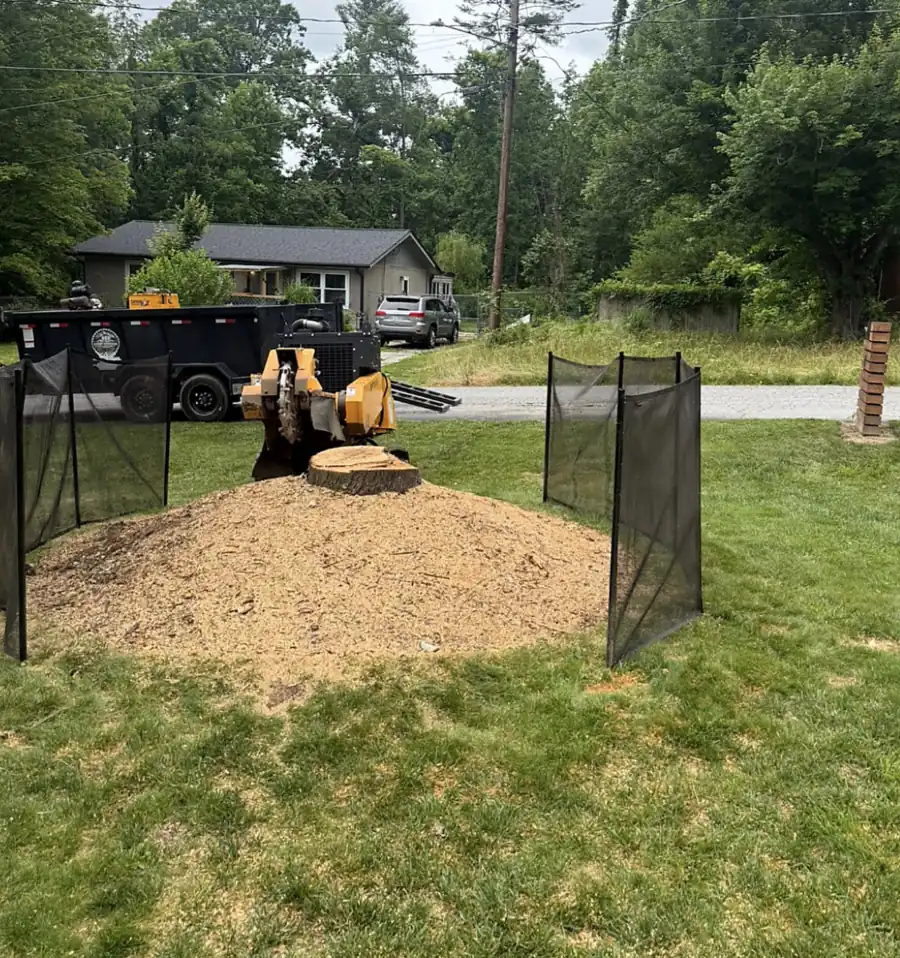
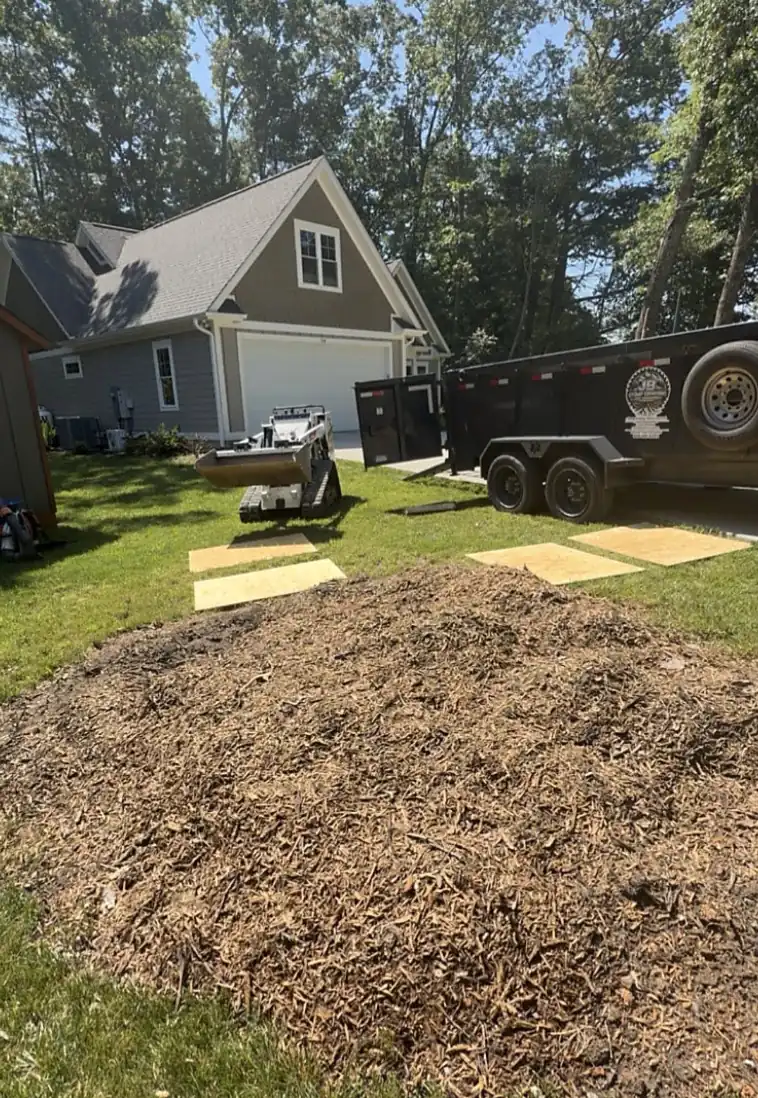
Grindings are what the cutting wheel throws out: shredded wood from the stump, mixed with the soil it was sitting in. They are coarser and dirtier than bagged mulch, and there are always more of them than you expect. Solid wood fluffs up when it is chipped, so one good-sized stump can leave a mound you could sit on. On a clay lot the mix will carry red clay through it. None of that makes it waste. It is free organic matter, already in your yard. The only real question is where it does good and where it does harm.
Your three choices on the day
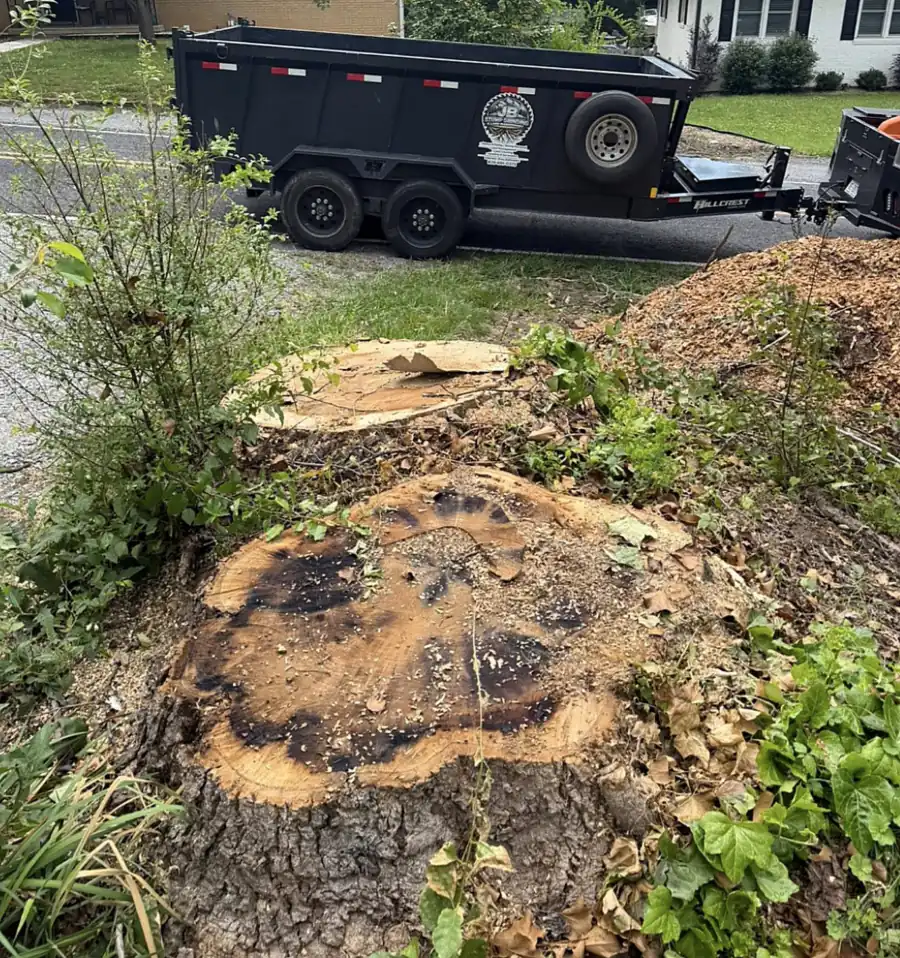
Raked back, left, or hauled. Unless you ask otherwise, the grindings are raked back into the hole and topped off, which suits most yards. If you want them for beds or a path, they are left in a pile where you say. If you want them gone, they are loaded and hauled off, and that is quoted separately because it is another machine movement. Pick before the quote, not once the grinder has finished. It changes the number and it changes what the spot looks like when the trailer pulls away. More on the finish in what to do after stump grinding.
Use them as mulch, on top of the ground
This is the simplest use. Spread grindings around trees and shrubs, along a fence, or on a woodland path. Clemson Extension's mulch guidance says a two to three inch layer of wood chips gives good weed control, that fine wood mulches should not go deeper than that, and that mulch should be kept two to three inches back from the stems of woody plants. Do not pile it against a trunk. Chips mixed with a lot of soil can sprout weeds faster than clean mulch, so use the woodiest part of the pile for beds near the house and the dirtier part out back.
Why you should not dig them in
Fresh wood is high in carbon and low in nitrogen. The microbes that rot it need nitrogen to do the work, and they take it from the soil around the chips. Oregon State University Extension puts it plainly: mixed into the soil, wood chips have a greater tendency to tie up nitrogen, and the better use is as mulch on top. Plants growing in a chip and soil mix can turn pale and stall until the wood is mostly gone. Left on the surface the effect is far smaller, though Clemson Extension notes that small chips still draw some nitrogen from the soil as they rot, so feed nearby plants if they pale. That is the difference between mulch and a mistake.
Leaving them in the hole
Raked back into the hollow, grindings are fine under a mulch bed, a natural area, or a spot you just want level. For a lawn they are a poor fill. Iowa State University Extension advises removing them as thoroughly as possible before planting grass and replacing the volume with topsoil, since wood both starves seedlings of nitrogen and leaves gaps as it decays. So for grass, take out most of the chips, fill with soil, and mound it slightly. Timing and seed are covered in planting after stump grinding. If you want the hole left ready for soil, ask for the grindings to be piled or hauled.
Compost, paths and hauling them off
Grindings compost well if you balance them. They are a 'brown', so mix them with greens such as grass clippings and give the pile time. Iowa State notes the material can be composted at home or sent to a municipal composting site. On a path they pack down into a soft, quiet surface that needs topping up every so often. If you have no use for them, have them hauled. A big hardwood stump can make more chips than a small yard can absorb. Tree stump disposal covers where stumps, root balls and wood waste can go.
Two places to keep them away from
First, the house. Clemson's mulch guidance notes that wood chips may attract termites and that keeping mulch back from walls stops it acting as a bridge across treated soil. Spread grindings in the yard, not against the foundation. Do stumps attract termites has more. Second, tree trunks. Mulch heaped against bark holds moisture where it does harm. Beyond that, grindings are safe stuff. They will fade from tan to grey, sink as they rot, and may grow a crop of mushrooms after rain. Rake the layer once in a while and add to it when it thins.
Photos From Real Jobs
Common Questions
Should I remove wood chips after stump grinding?
Remove most of them if grass, sod or a planting bed is going on the spot, and fill with soil instead. Leave them if the spot will be mulch or a natural area. Extension guidance is consistent on this: wood in the root zone ties up nitrogen and settles as it rots, so chips make good mulch and poor soil.
Are stump grindings good mulch?
Yes, used on top of the ground. They hold moisture and keep weeds down like any wood chip mulch. Spread them two to three inches deep and keep them a few inches back from trunks, stems and the house. They are rougher looking than bagged mulch and have soil mixed through, so many people use them in back beds and along fence lines.
How long do stump grindings take to decompose?
As a mulch layer, wood chips are usually fully broken down within about two years, according to Clemson Extension. A deep pile, or chips buried in the hole, can take longer because the middle stays dry or short of air. Smaller chips go faster than chunks. Turning a pile and mixing in grass clippings speeds it up.
What to Do Next
Decide where the grindings go before you ask for a price: back in the hole, left in a pile, or hauled. Then send two photos and your town. Call (828) 574-4474 or see stump grinding.