

Right after stump grinding, the stump is gone to below grade and in its place is a mound of grindings, which gets raked back into the hole and topped unless you ask for something else. Given soil, seed and a growing season or two, the patch usually grows in and blends with the lawn.
Before: what you are really looking at
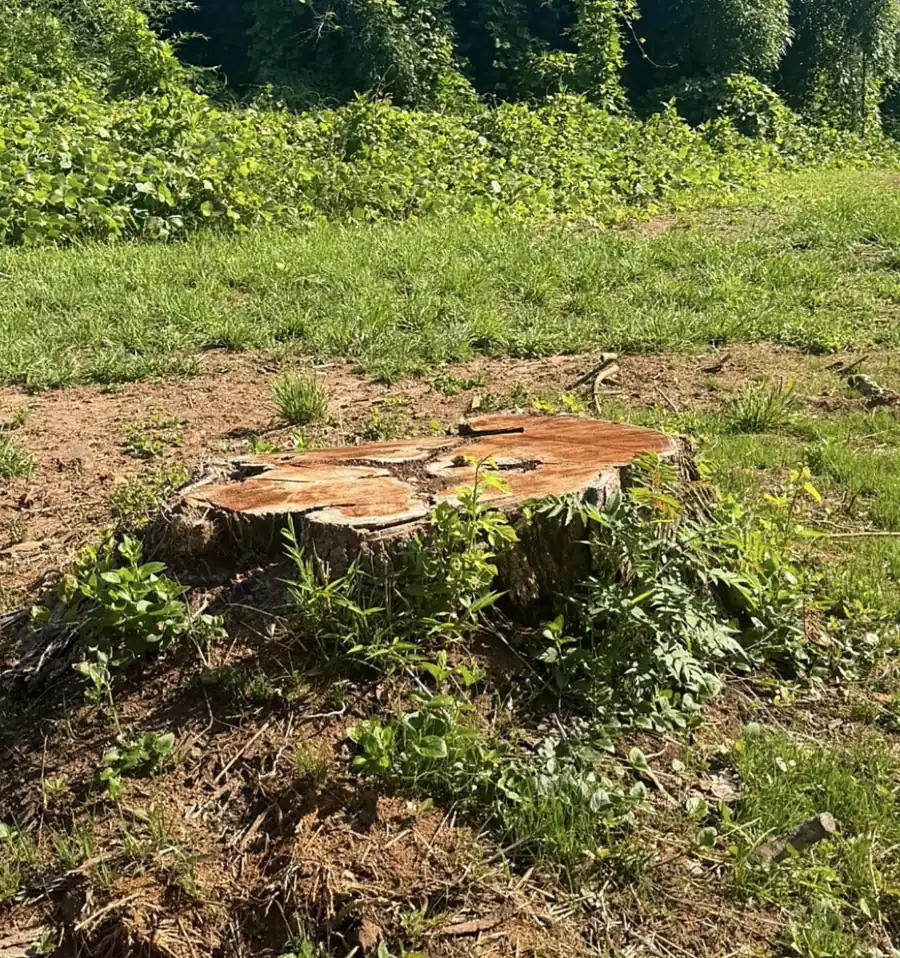
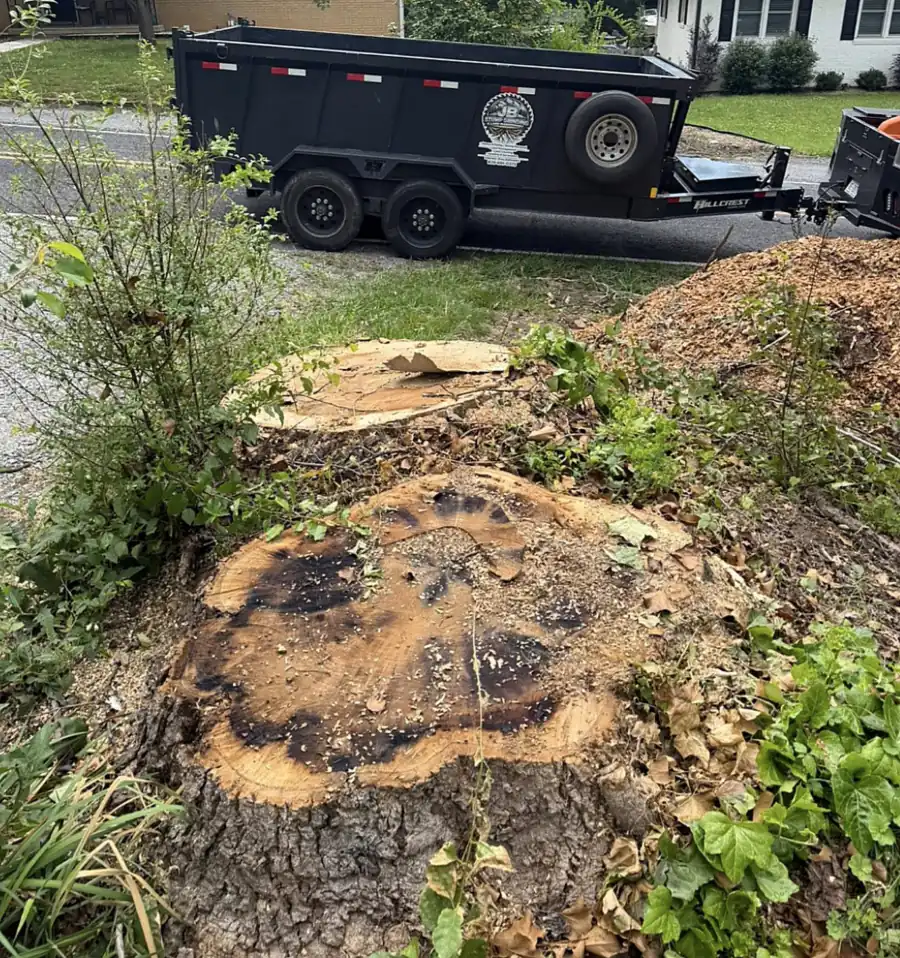
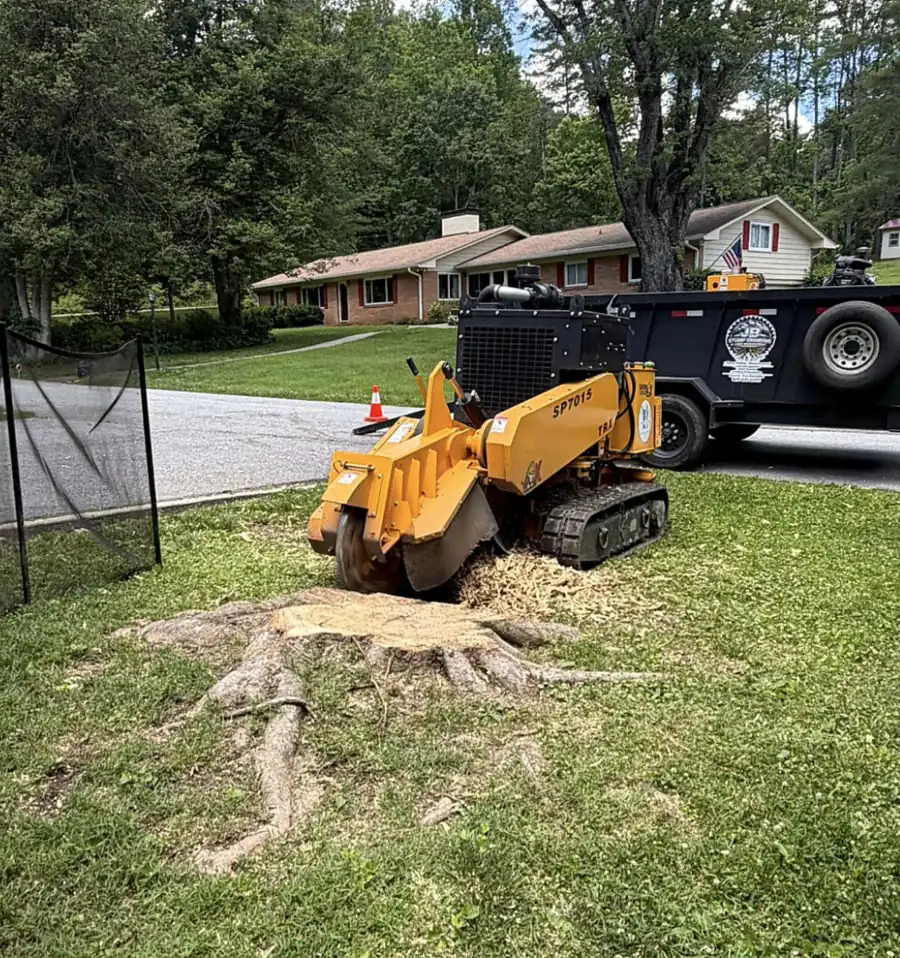
A stump is more than the round of wood you see. The cut face sits on a root flare that spreads wider than the trunk did, and on many trees the first roots run along the surface for a few feet before they dive. The grass around it is usually thin, because the tree took the water and the mower could not get close. Old stumps add their own details: bark falling away, a soft center, sprouts, an ant trail, fence wire grown into the wood. All of that is the before picture. It is worth a clear photo, because it is what a quote is based on.
During: the part that looks worst
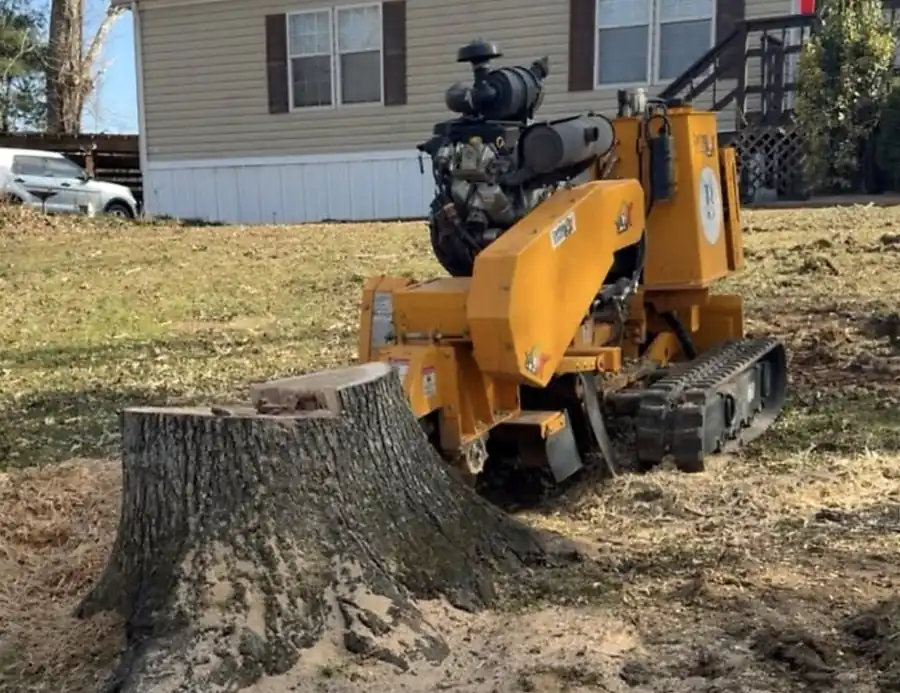
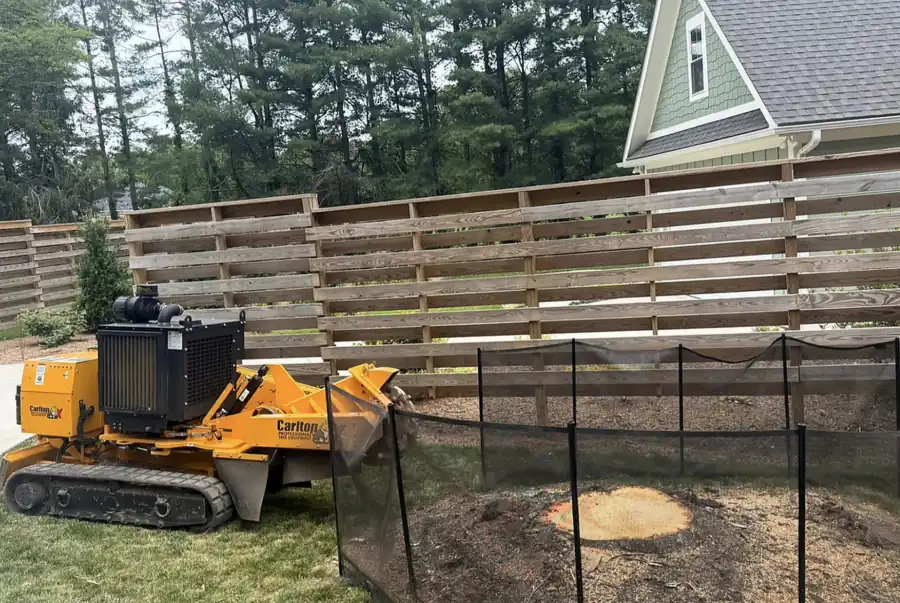
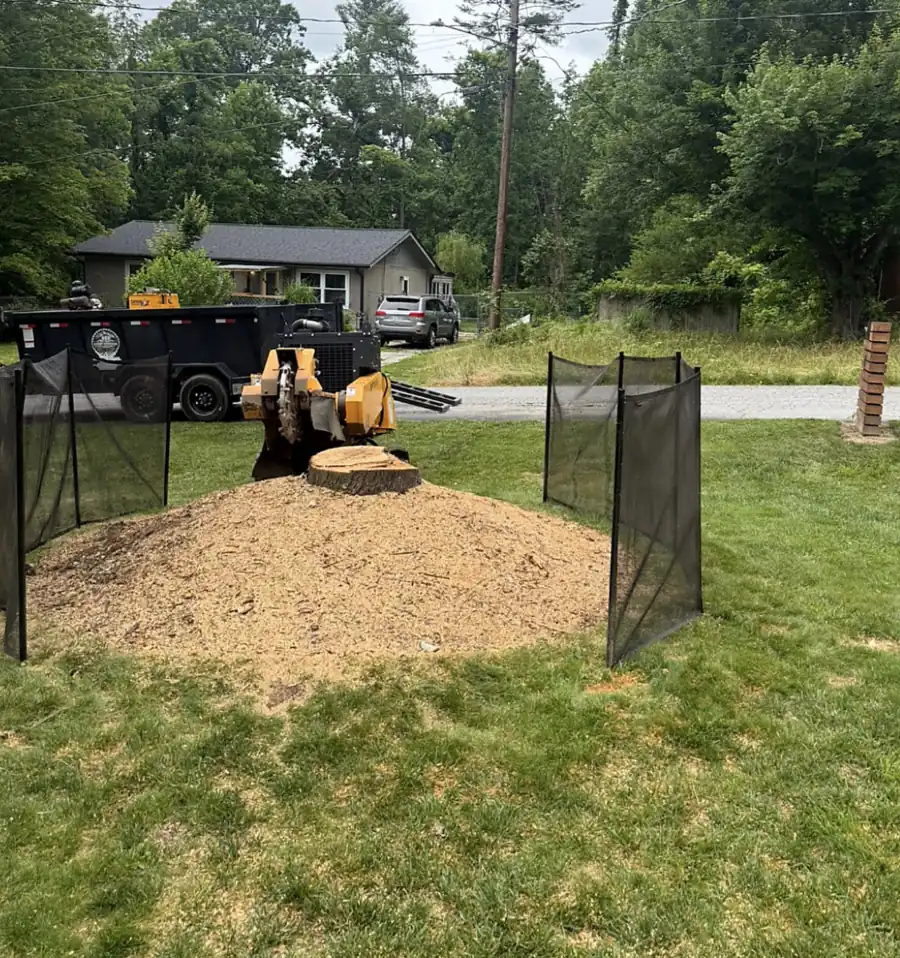
The tracked grinder drives to the stump and the cutting wheel sweeps across the face in passes, a little deeper each time. Chips fly, so you will often see mesh debris screens stood around the stump to catch them, as in several of the photos below. For a short while the yard looks worse than it did with the stump in it: a machine on the lawn, a growing heap of chips and soil, noise. A straightforward stump is a matter of minutes once the machine is beside it. Getting the machine there is the variable, and how long stump grinding takes is covered in its own guide.
Right after: a mound, not a flat lawn
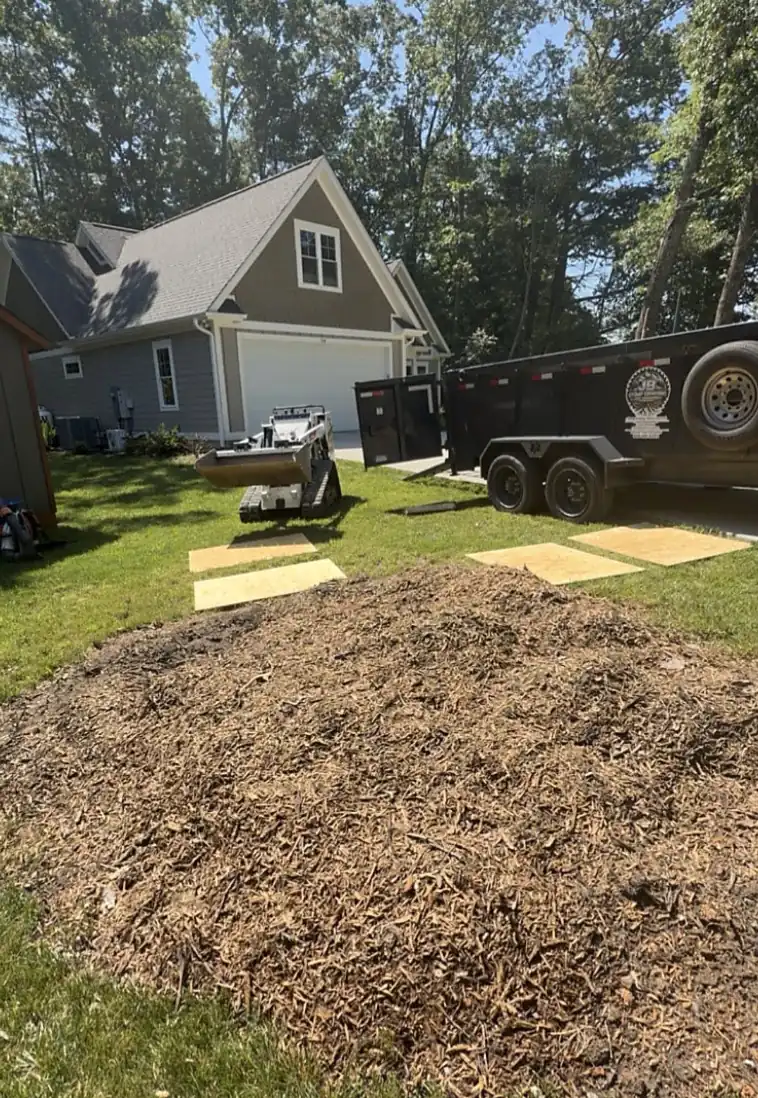
This is where expectations go wrong. The stump is gone to below grade, usually four to eight inches under. What you see is a mound of grindings, wood chips mixed with soil, sitting where it was. The mound always looks bigger than the stump did, because solid wood takes up far more room once it is loose chips. Unless you ask otherwise, the grindings are raked back into the hole and topped. You can also have them left in a pile for beds, or hauled off, which is quoted separately. Any marks from the tracks get raked. The result is a low, tidy patch of brown, not turf.
A few weeks later
The patch settles. Loose grindings pack down with rain, and the mound that stood proud of the lawn drops to level and then a little below it. That dip is normal, and a few shovels of soil fix it. If you plan to seed, this is when to dig the chips out of the top few inches and replace them with soil, because grass grows poorly in wood. Purdue Extension notes that grass over old stump wood can turn yellow as the wood ties up nitrogen. In damp weather a few mushrooms may come up along the lines of the old roots. They are feeding on the dead wood, not the lawn.
A season or two later
With soil on top and seed put down in the right season, the spot usually grows in and blends with the lawn. Under mulch in a bed it disappears the day the mulch is spread. What tends to linger is small: a slightly greener or paler patch for a while, a shallow dip that needs one more top-up as the roots rot, the odd mushroom after rain. The roots themselves are still in the ground, rotting away out of sight over several years. The full list of jobs for those first months is in what happens after stump grinding.
What changes the picture
Four things decide how your after looks. Size comes first: a wide stump with a big flare leaves a wide patch and a tall mound. Next is what you chose for the grindings: raked back, piled or hauled. Third is the ground on the day. A tracked machine is easy on a firm lawn, and soft, soaked ground is worth waiting out. Last is what you do next. A patch that is filled with soil and seeded can look like lawn within a growing season or two. A patch left as chips looks like chips for a long time. If turf or planting is going on top, say so first so it is ground deeper.
About the photos on this page
These are real photos from our jobs, and we would sooner be straight about them than tidy. They were taken on different properties, so no two of them show the same stump, and there is no matched before and after pair here. Read them as stages: stumps waiting to be ground, the grinder at work behind its screens, and the grindings left when the wheel stops. The grown-in stage is described in words, because every picture here is from our own work and none is borrowed. For the service itself, see stump grinding.
Photos From Real Jobs
Common Questions
What does the yard look like right after a stump is ground?
Brown and low, not green and flat. The stump is gone below grade and the grindings are raked back into the hole and topped unless you chose a pile or hauling. Expect a patch of chips and soil about as wide as the stump and its root flare.
How long until the stump grinding spot looks like normal lawn?
Often a growing season or two, if the top few inches are filled with soil and seeded or sodded at the right time for your grass. The grass, the weather and the watering all move it. Left as wood chips it stays a bare patch much longer, because grass struggles in fresh wood and the spot keeps settling as the chips rot.
Are your stump grinding before and after photos of the same stump?
No. The photos on our before and after page come from different jobs and are captioned that way. They show the stages of the work honestly: stumps before grinding, the machine at work, and the grindings afterwards. Each one is shown as a stage of the work, never as a matched pair.
What to Do Next
Want to know what your own after will look like? Send two photos, the stump with something for scale and the way in, plus your town, or call (828) 574-4474. You get a quote before the work.