

When a tree blows over by the roots, it leaves a root ball, or root plate, standing on edge beside a crater, and that is almost always lifted out whole with a loader or an excavator rather than ground like a stump. The trunk has to be separated from it with care, because the plate can drop back into the hole, and the crater is backfilled once the root ball has gone.
Why the tree came up by the roots
Tree roots are shallower than most people picture. Iowa State University Extension notes that most of a root system sits in the top few inches of soil, that the woody framework roots typically run about eight to twelve inches down, and that roots rarely grow below four feet. They spread wide instead, often several times the reach of the branches. So the anchor is a broad, flat plate, not a deep peg. Clemson Extension points out that saturated soil lets wind overthrow even well-rooted trees after heavy rain. Soak the ground, push hard on the crown, and the whole plate levers up out of the mud.
What you are looking at
There are usually three parts. The root plate is the disc of roots and soil now standing on its side, often taller than a person, with clay and stones packed into it. The crater is the hollow it tore out of, which may be holding water. The hinge is the line of roots on the far side that never let go and are still in the ground, holding the plate at its angle. Beyond the edge of the plate are the roots that snapped. They stay in the soil and rot. The trunk may still be attached and lying across the yard, or it may already have been cut off and hauled.
The danger is in the hinge
An uprooted tree is not at rest. The tree care trade's own safety body calls uprooted root plates unpredictable: separating the trunk takes away the pressure that was holding the plate in place, and the roots still in the ground may be tight enough to pull it back. A plate that drops into its crater can crush anyone standing in the hole or on the low side. The same group says to work with at least one other person, and that slopes and uneven footing make chainsaw work more dangerous. Keep children and pets out of the crater. Tree still lying on the plate? Send a photo and we will talk through how to tackle it.
Why a root plate is not ground like a stump
A stump grinder is built for wood sitting at ground level. Its wheel shaves a stump down in passes until it is below grade. A root plate on edge is a different object. It is mostly soil and stone held together by roots, and it stands up in the air. Running a cutting wheel into packed clay and rock dulls teeth and throws debris, and there is nothing level to work down to. That is why tipped plates are lifted. The exception is a plate that has fallen back and seated itself close to level in its old hole. If it is solid and flat, it can sometimes be ground like any other stump.
How the root ball comes out
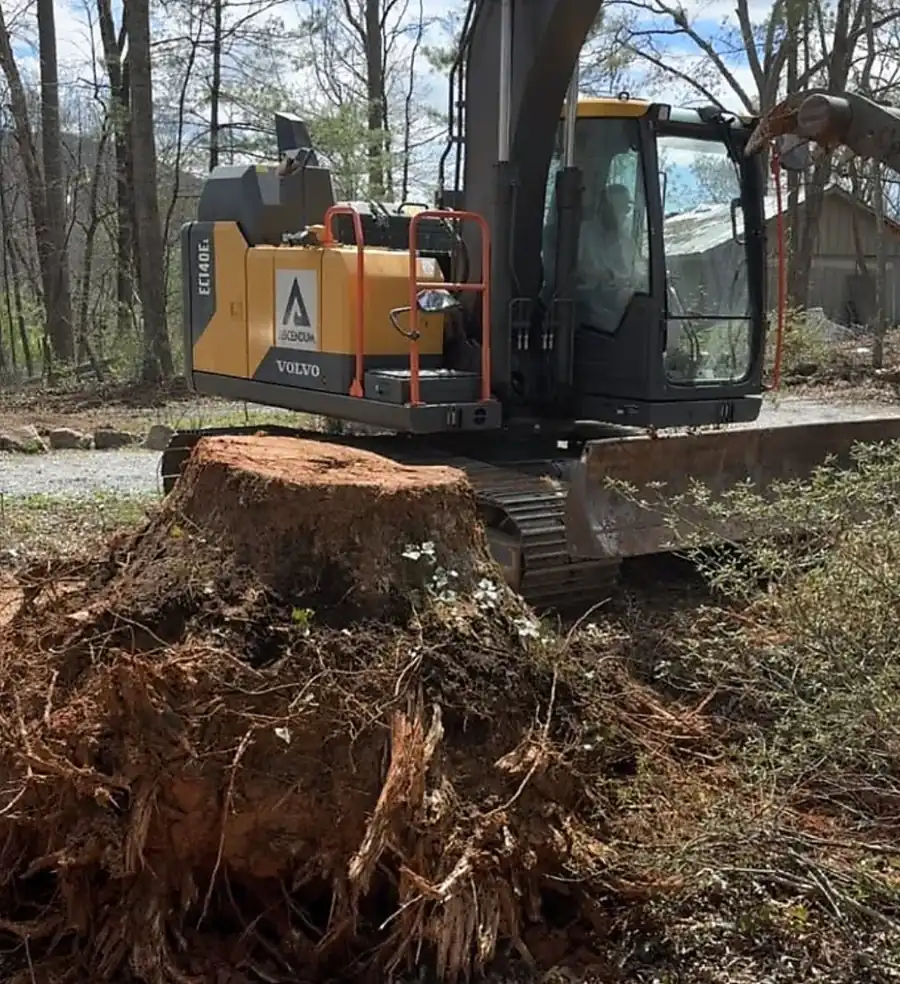
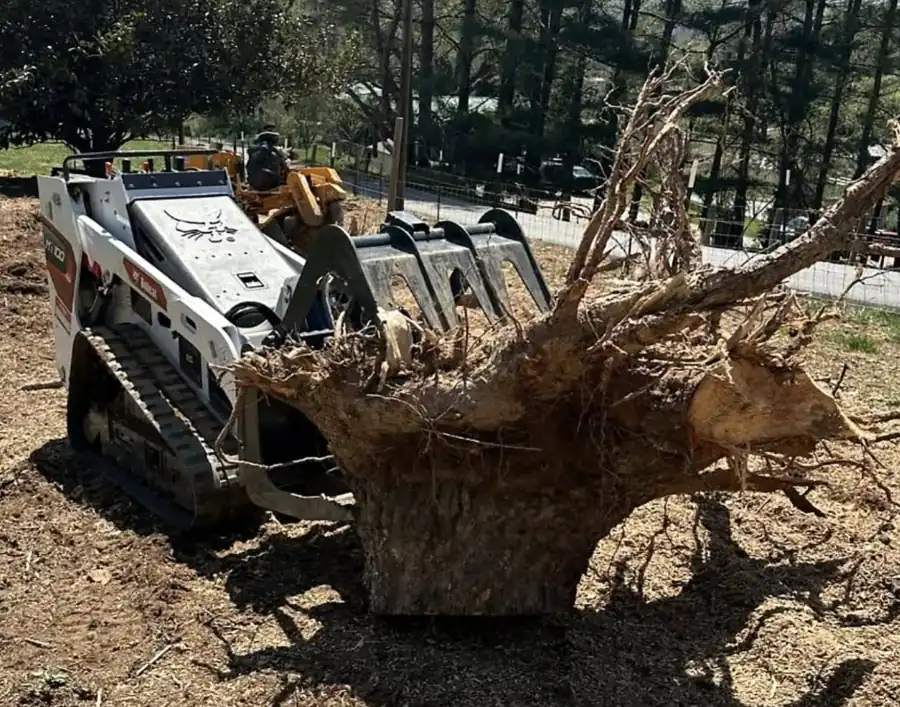
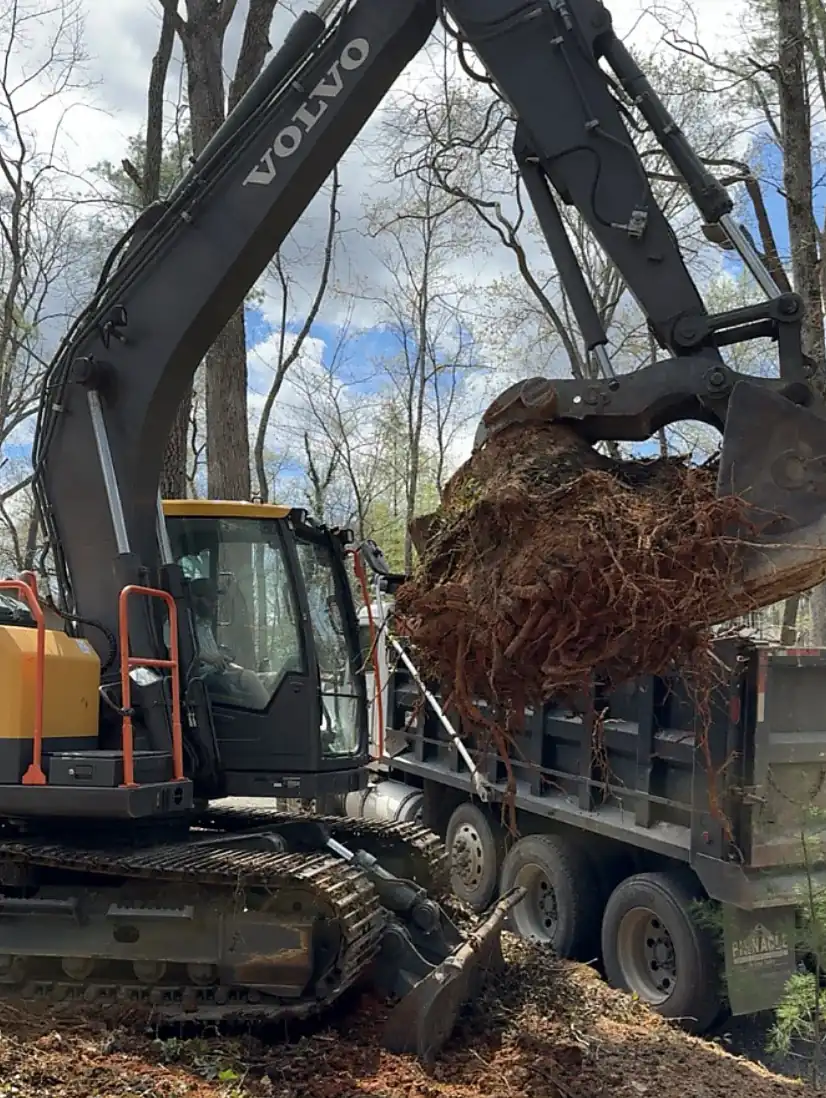
Lifting is a machine job. A mini track loader with a grapple can pick up root balls that no group of people could move, and an excavator handles the ones too heavy or awkward for the loader. Loose soil can be knocked off into the crater first, which keeps the dirt on the property and lightens the load. The plate is then loaded and taken off site. If the trunk is still attached, it is cut free first from a safe position, with the plate held or the cut planned so the release goes where nobody is standing. See storm stump and root ball removal for how the job runs.
Filling the crater so it stays filled
Once the plate is out, the hole is wider and more ragged than it looked. It is backfilled, and the fill will settle as it takes on rain, so plan to top it up. Filling in layers and firming each one cuts down the sinking. The snapped roots left around the edge rot slowly and can leave soft spots as they go. If lawn is going back, finish with a few inches of good soil over the fill so seed or sod has something to root into. If anything will be built on that spot, say so up front, because fill under a slab or a post needs proper compaction, not a rake and a roller.
Root balls that have sat for a year or more
An old root ball is easier to move than a fresh one. Rain washes soil out of it, and the roots dry and start to decay, so it loses weight. It does not stop being a hazard, though. The hinge roots can still hold tension while they are alive, and a plate leaning over a crater can still tip. Open pits hold water and catch mowers and ankles. Old ones come out the same way fresh ones do: lifted, loaded and hauled, with the hole filled behind them. If several trees went over on one property, have every plate dealt with on the same visit.
Photos that get you a straight answer
Stand back and photograph the plate side-on, with a person, a shovel or a wheelbarrow next to it so its size is clear. Add a shot showing whether the trunk is still attached and what it is resting on. Take one of the route from the road: gates, slopes, soft ground, the septic tank, the drive. Count the plates if there is more than one. Before any digging near them, utility-owned lines get marked through 811. Lines you own, such as irrigation, lighting cable, an invisible fence or the septic line, are not on that list, so show where they run.
Photos From Real Jobs
Common Questions
How heavy is the root ball of an uprooted tree?
Far heavier than it looks, because most of the weight is soil, not wood. Clay packed between the roots, rock caught in them and water soaked into both all add up. A fresh plate from a big tree is well beyond what people can shift by hand, which is why a loader or an excavator does it. Older plates that have shed soil weigh less.
Can I leave an uprooted root ball where it fell?
At the back of a wooded lot, often yes. State forestry guidance treats decaying wood as a normal part of a forest and good cover for small animals. In a yard it is a different story: the plate can still tip, the crater holds water and catches mowers, and it takes years to break down. Near a house, a drive or a play area, have it lifted.
Is it safe to stand in the hole left by an uprooted tree?
Not while the root plate is still standing beside it. Roots on the far side can still be gripping the soil and pulling, and once the trunk is cut away the plate can swing back toward its hole. Anyone in the crater is in its path. Keep people and pets out until the plate has been lifted out or laid flat.
What to Do Next
A photo of the plate from the side, another of the route from the road, and the name of your town are enough to start. Ring (828) 574-4474 or send them to jbdumpsters@outlook.com, and Jordan will say whether it is a lift, a grind or both, and quote it before any work. For the first hours after the storm, read the guide to a tree down in a storm.