

After a tree falls in a storm, keep everyone well back from any downed power line and anything touching it, photograph the damage before anything is moved, and call your insurer if the tree hit a building. Leave trunks under tension, hung-up limbs and tipped-up root plates to people with the right equipment, and deal with the stump and root ball once the hazards are cleared.
First, look for wires
Before anyone goes near the tree, look along it for power, phone and cable lines. Duke Energy's safety advice is to assume any downed line is live, even if it is not sparking, to stay at least thirty feet away, and to remember that wet ground and standing water can carry current further. Do not touch anything the line is touching, including the tree itself, a fence or a vehicle. Keep children and pets indoors. Report it to your power company, or call 911 if anyone is in danger. Nothing else on this page matters until the lines are dealt with.
Then look up and around
A fallen tree is rarely the only hazard. Branches broken off but still caught in the canopy, called hangers, can drop without warning, and the tree industry's safety body points out that torn limbs overhead make it dangerous to work on anything below them. Neighboring trees may be cracked or leaning after the same wind. Walk the yard with that in mind, from a distance first. Keep people away from anything that looks like it could still move, and do not start cutting until you know what is holding what.
Photos and the insurance call
Photograph the damage before anything is moved or cut: the tree, where it landed, the roof, fence, car or shed it hit, and the root plate. The N.C. Department of Insurance advises photographing and listing damage before temporary repairs, making only temporary repairs such as a tarp, keeping every receipt, and waiting for the insurer to inspect before permanent repairs. It notes that most insurers will pay, up to a limit, to remove a tree from a damaged structure, but will not pay to remove a tree from the yard. Read your policy. It also warns against paying cash, signing blank forms or giving in to high-pressure offers.
Why storm-downed trees are dangerous to cut
A tree that fell in a storm is full of stored force. Trunks and limbs pinned under other wood or bent against the ground are under tension, and the Tree Care Industry Association warns that releasing that tension with a chainsaw is extremely dangerous. The root plate is its own hazard. When a trunk is cut free, the roots still anchored in the ground can pull the stump and root plate back upright into the hole, fast enough to trap someone. If you are not trained for that kind of cutting, leave it. Tree down and still tangled? Send a photo and we can talk it over.
The root plate and the crater
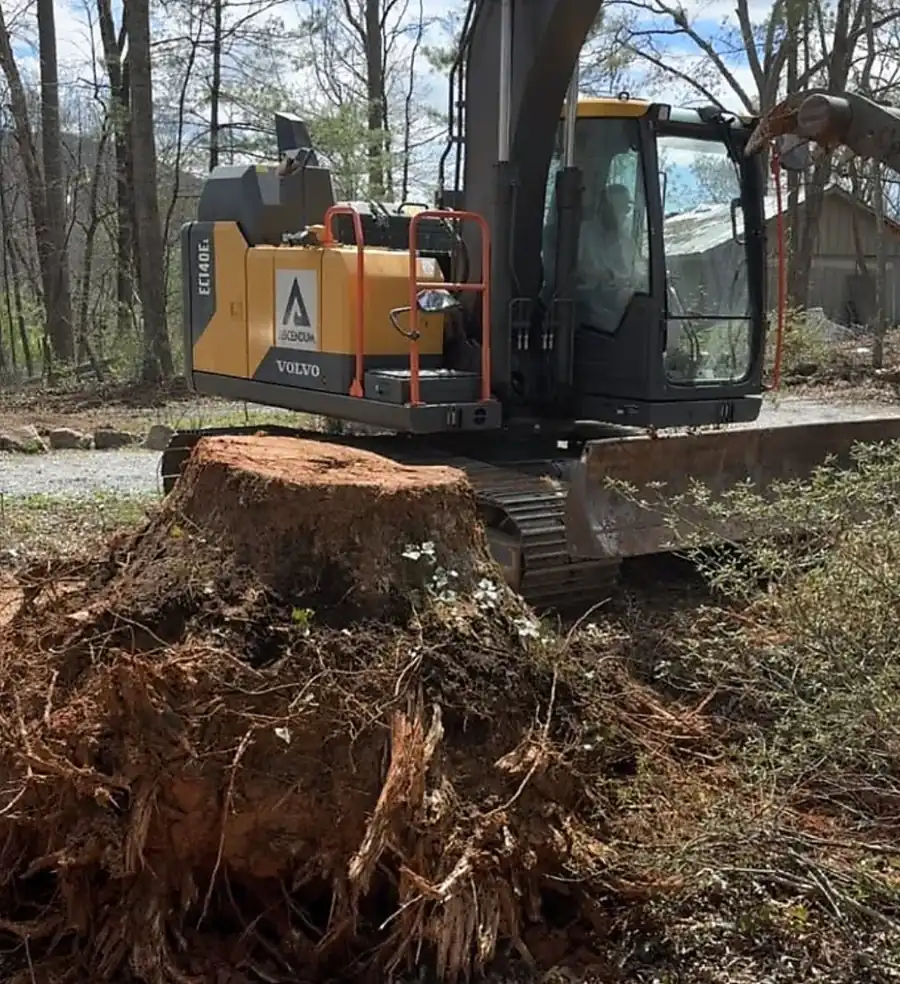
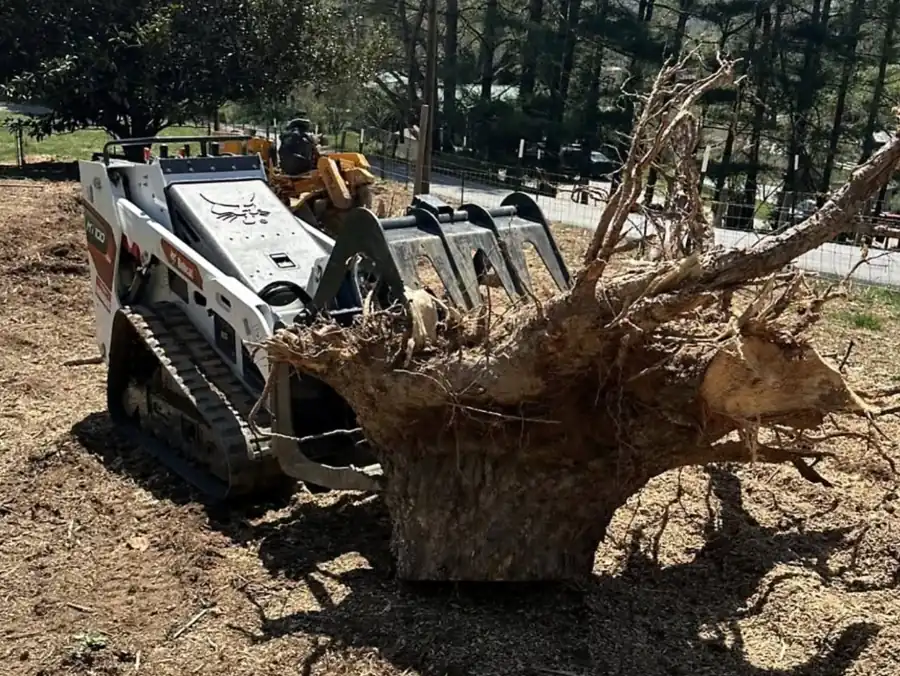
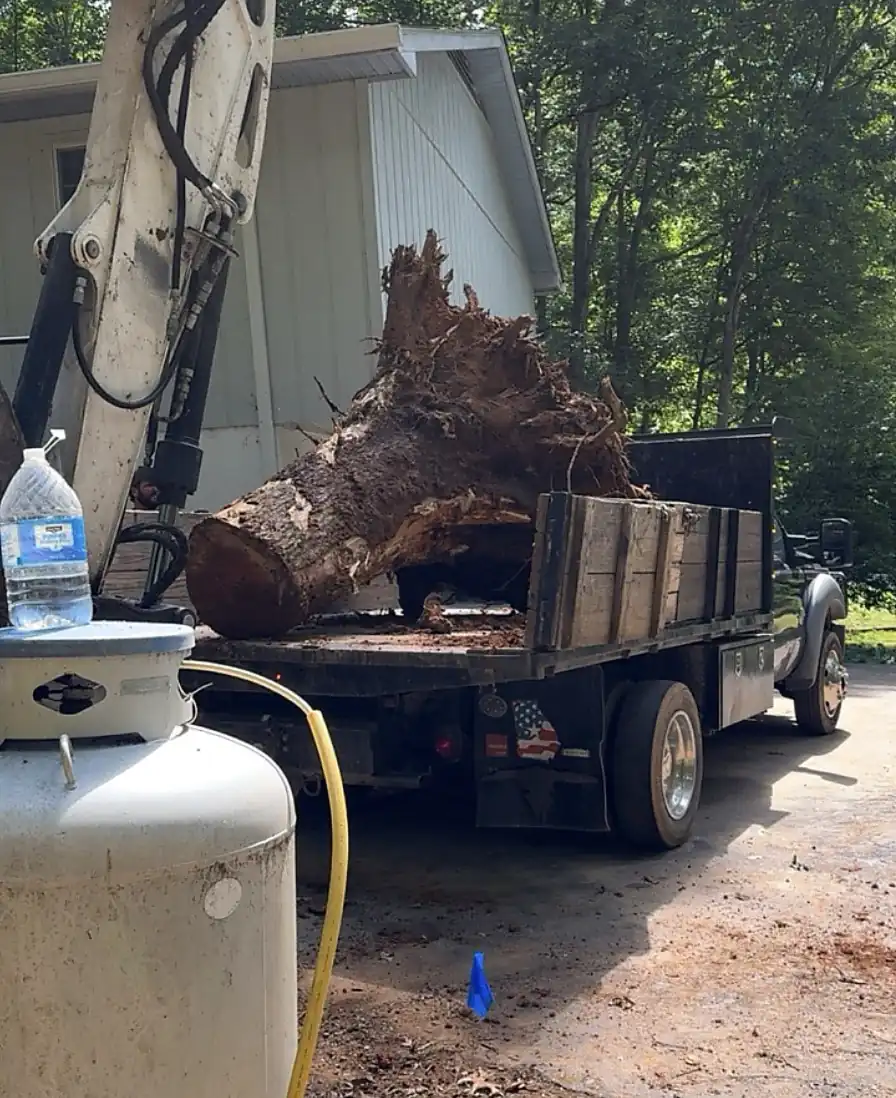
An uprooted tree leaves two things once the trunk is gone: a slab of roots and soil standing on edge, and a crater where it used to sit. There is nothing flat to grind. The usual answer is to lift the whole root plate out with a loader or excavator, haul it, and backfill the crater so the ground can settle. On a lawn, that is a job worth doing soon, because the hole fills with water and the soil on the roots dries hard. Uprooted tree root balls explains the choices, and the page on storm stump and root ball removal describes the job.
Snapped trunks and broken stumps
Not every storm tree comes out by the roots. Many snap, leaving a jagged stump a few feet high with a fallen top beside it. Once the fallen wood has been cleared, that stump is ordinary work. It can be cut low and ground below grade like any other, and the roots left to rot in place. A snapped stump does not need to come out whole unless something is being built on the spot. If several trees broke across the property, have the stumps handled in one visit after the trunks are cleared, rather than one at a time.
After Helene: the stumps that are still there
Hurricane Helene in September 2024 left damage across western North Carolina forests on a scale few people had seen. The N.C. Forest Service's assessment, as reported by WSOC-TV, put it at 821,906 acres across about seventeen counties, with Henderson County among the hardest hit. Many properties still have root plates standing on edge, snapped stumps and half-filled craters from that storm. They are no less fixable now than they were the week after. Hurricane Helene tree damage in western North Carolina covers what that cleanup looks like.
Photos From Real Jobs
Common Questions
Does homeowners insurance pay to remove a tree that fell in the yard?
Usually not, if it hit nothing. The N.C. Department of Insurance says most insurers pay, up to a limit, to remove a tree from a damaged structure, but not from the yard. Check your own policy and call your agent, and photograph everything before it is moved.
How far should I stay from a power line a tree pulled down?
At least thirty feet, according to Duke Energy, and further if the ground is wet. Treat the line as live, do not touch the tree, fence or anything else it is touching, and report it to the power company. Call 911 if anyone is hurt or in danger.
Is it safe to cut up a fallen tree with the root ball still attached?
Not without training. The Tree Care Industry Association warns that when the trunk is cut free, the anchored roots can pull the stump and root plate back upright into the hole, and that releasing tension in pinned wood with a chainsaw is extremely dangerous. Leave those cuts to people with the right equipment.
What to Do Next
Once the wires and the trunk are dealt with, photograph what is left, the root plate or stump, and the route in from the road. Send those with your town, or ring (828) 574-4474, for a price agreed before anything starts.