

Stumps in the path of a new driveway should be dug out whole, roots and all, because wood left under gravel or concrete rots and lets the surface sink. Stumps along the edges can simply be ground, and the entrance permit and the land disturbance rules should be checked before any machine starts.
Why the driveway line has to be free of wood
A driveway is only as good as the ground under it. A stump left in the line, even one cut flush, keeps rotting under the stone or the slab. As it goes, it leaves a soft spot, then a dip, then a pothole that keeps coming back however much gravel goes in. Road builders deal with this by grubbing, which means digging out stumps and roots. NCDOT's own specifications allow sound stumps to be cut low and left only where more than six feet of fill will sit over them, and even then decayed stumps must come out to about two feet below the natural ground. A home driveway rarely has fill anywhere near that deep.
In the line or along the edge
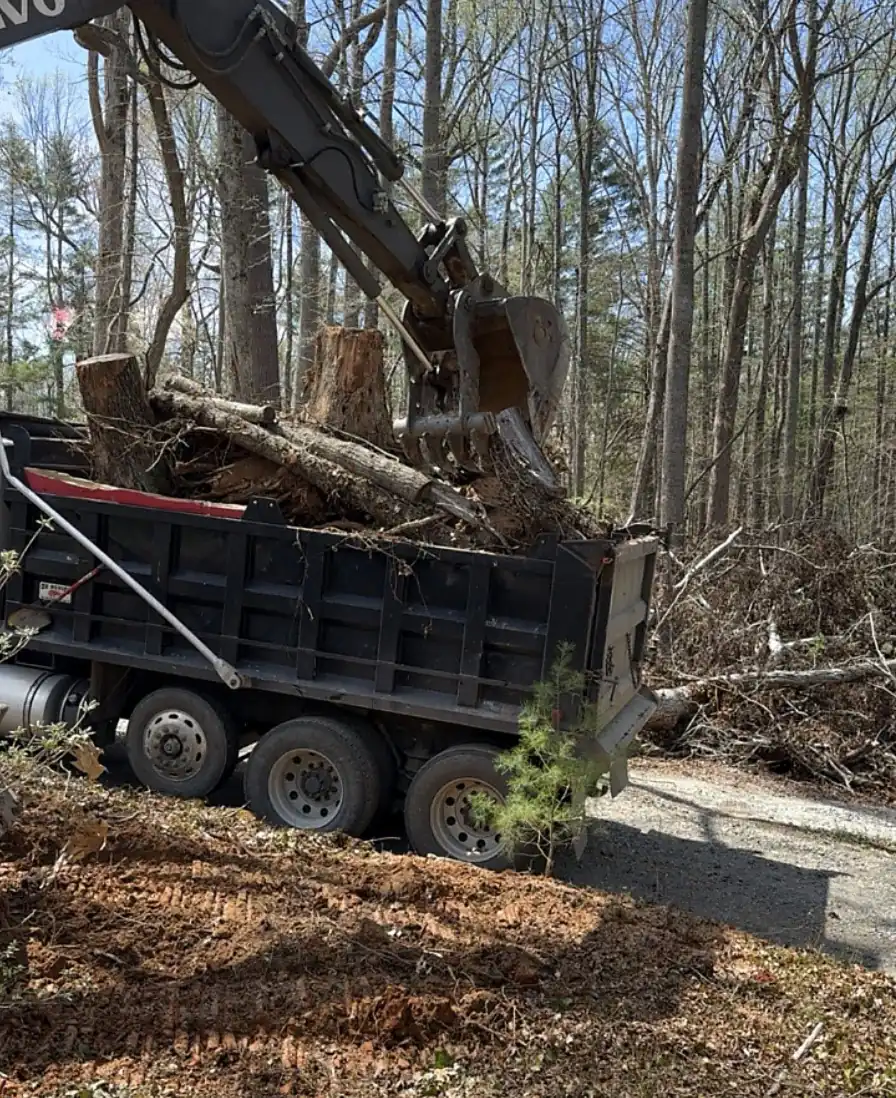
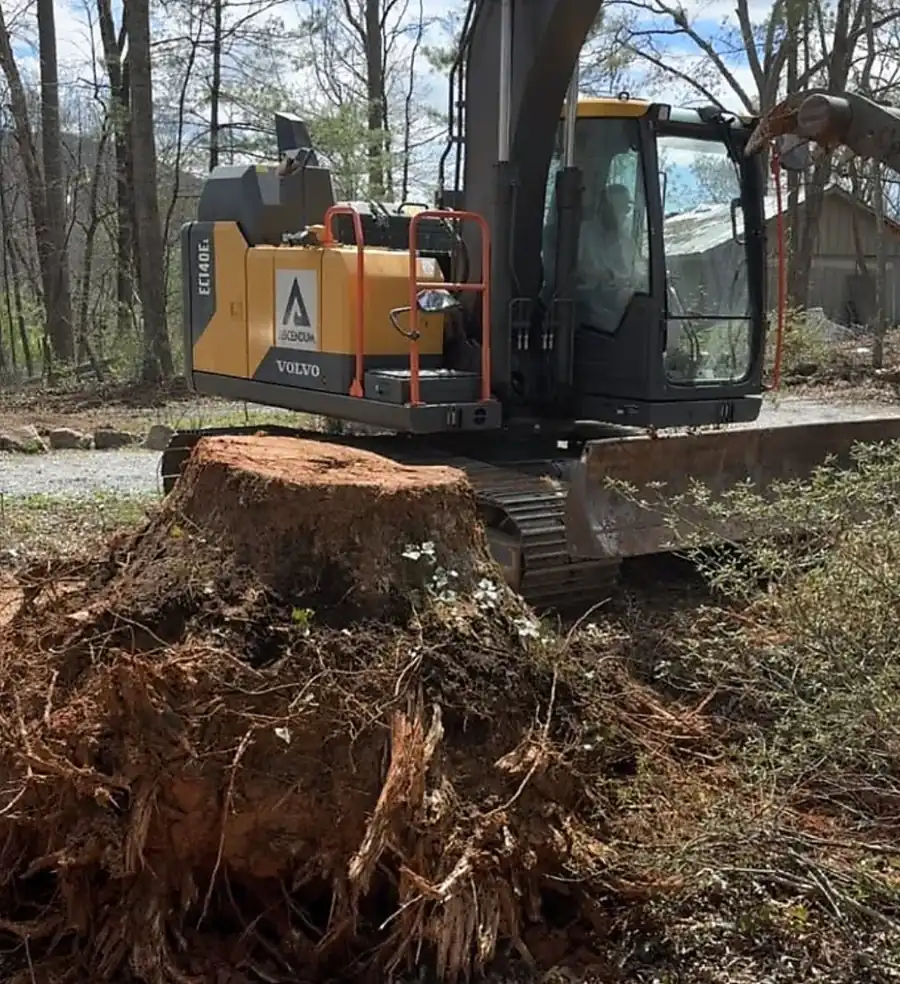
Walk the planned route and sort the stumps into two groups. In the line: anything under the travel lane, the shoulders, a turnaround or a parking pad. These come out whole, with an excavator or a loader and grapple, and leave on a trailer. Along the edge: stumps a few feet outside the finished shoulder, in the ditch line or on the bank. These can usually be ground below grade and left, which keeps the bank intact. Where a culvert pipe will cross under the drive, any stump near the pipe line belongs in the first group, since the pipe needs firm, even bedding.
The usual order of work
Stake the line first, then take down the trees. Next come the stumps and root balls, lifted out and hauled, not buried under the fill. After that the topsoil is stripped, the grade is cut and filled and compacted, drainage goes in, and the base stone goes down. Getting the stumps out before any grading means the machine is not digging roots out of finished ground later. If you are coordinating a tree crew, a grader and a stone delivery, put the stump work between the first two. Grading and excavation covers the dirt work that follows, driveways included.
Where the driveway meets the road
The entrance has its own rules, and they depend on who maintains the road. In North Carolina, NCDOT says a driveway permit is needed to gain or change access to the state highway system, and it is obtained through the local NCDOT District Engineer's office. In South Carolina, work inside an SCDOT right-of-way needs an encroachment permit, applied for through SCDOT's online permitting system, with the county or district office able to advise first. On a town street, start with the town's public works office. Ask about the culvert size and position, sight distance and the apron before you set the route.
Land disturbance and erosion rules
A long driveway can disturb more ground than people expect. NC DEQ says an erosion and sedimentation control plan is required for projects disturbing more than one acre, that sediment must be kept on the site whatever the size of the job, and that trout waters get a 25-foot undisturbed buffer. Some local governments run their own programs, which can be stricter, and Henderson County is one of them. In South Carolina, land disturbance rules run through SCDES and county stormwater offices. Ask the county before work starts. Land clearing and erosion rules names the offices across the area.
Stumps on a sloped route
On mountain and foothill lots, a driveway often climbs across a slope, with a cut bank on the uphill side and fill on the downhill side. Stumps in the cut come out with the soil anyway. Stumps in the fill area must come out before fill goes over them. Stumps just above the cut bank are usually better ground and left, since their roots are holding that bank. Once the trees are gone, bare cut slopes wash fast in a summer storm. Plan silt fence, seed and straw, and water control as part of the job. Why gravel driveways wash out covers the drainage side.
Gravel or concrete on top
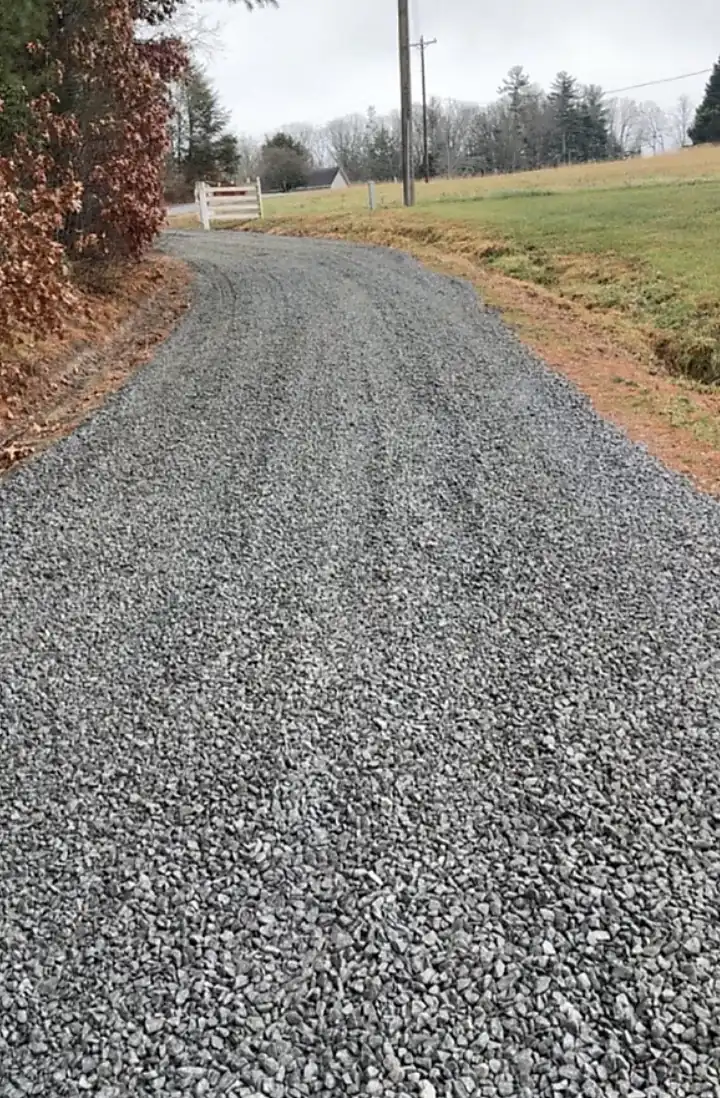
Both surfaces need firm, wood-free ground beneath them, but they fail differently. Gravel over a rotting stump sinks into a hole that can be filled again, which is annoying but simple to fix. Concrete over the same spot has nothing under it, cracks across the gap and needs cutting out. So the case for getting every stump out of the line is stronger still under a slab. If you have not chosen the surface yet, concrete vs gravel driveways sets them side by side.
What to send for a number
Send a rough sketch or an aerial screenshot with the line drawn on it. Add a photo looking along the route from the road, and one or two of the biggest stumps with something for scale. Count the stumps in the line and the stumps along the edge, and give a rough width for the largest. Say whether the trees are already down. Note where the drive meets the road and whether that road is state, county or town maintained. Jordan quotes every job himself, before the work, so the stump removal, hauling and grading can be priced together.
Photos From Real Jobs
Common Questions
Can you put a gravel driveway over tree stumps?
Not if you want it to last. Stumps under the drive rot, and the gravel sinks into the voids they leave, so the same soft spot keeps coming back. Dig the stumps out whole from the driving lane, shoulders and any pad, and grind only the ones that sit outside the finished edge.
Do I need a permit for a new driveway entrance?
Very often, yes. In North Carolina, NCDOT requires a driveway permit to connect to a state road, through the District Engineer's office. In South Carolina, work in an SCDOT right-of-way needs an encroachment permit. Town streets have their own rules, so ask the town's public works office.
Should stumps be ground or pulled for a driveway?
Pulled, for anything under the drive itself, because grinding leaves roots that rot and settle under the surface. Grinding is fine for stumps outside the finished edge, in the ditch line or on the bank, where a little settling does no harm and the roots help hold the soil.
What to Do Next
Planning a new drive through trees? Send the route, a photo along it and the stump count. Call (828) 574-4474 to talk it through, or see stump removal for how the root balls come out.
See our grading & excavation service or call (828) 574-4474.