

811 has public utility lines marked, but it leaves private lines such as sprinkler pipe, invisible dog fence wire and landscape lighting cable to the property owner, and those often lie well inside the depth a stump grinder reaches. Find and flag them before the day, and show the operator exactly where they run.
What 811 marks, and what it leaves to you
Contacting 811 gets the public utilities to mark their lines: power, gas, water, phone and cable up to the meter. SC811 states plainly that standard locating marks only public lines, that lines beyond the meter are private and not included, and that property owners are responsible for identifying and marking private lines. NC811 works the same way and asks for three working days' notice. So the paint and flags that appear in your yard tell you about the street service. They tell you nothing about the sprinkler zone that runs past the old maple, or the dog fence wire that loops around the front lawn.
Why these lines sit right in the danger zone
Private lines are put in by homeowners and installers, and they are rarely deep. Invisible Fence says its boundary wire is buried about four inches down. An Oregon State University Extension answer on sprinkler pipe recommends eight to twelve inches and describes a contractor's lines at seven to eight. Landscape lighting cable is often laid shallow as well. Compare that with grinding. A standard finish is four to eight inches below grade, and Iowa State Extension puts the reach of professional grinders at about eight to twelve inches. Every one of those lines is within reach of the wheel if it passes near the stump.
Finding sprinkler pipe and drip lines
Start at the controller and run each zone in turn. Walk the yard while it runs and put a flag at every head near the stump. Pipe usually runs in fairly straight lines between heads and back toward a valve box, so the flags show you its likely path. Look for valve box lids in the lawn, often green and round or rectangular. Drip tubing in beds may sit just under the mulch. If you have an as-built drawing from the installer, dig it out. Turn the controller off on grinding day, so a nicked pipe does not keep running.
Finding an invisible dog fence wire
The boundary wire is one continuous loop that starts and ends at the transmitter box, usually in a garage or basement. Follow it from where it leaves the wall. The training flags put in when the system was new are a good guide if any are still standing. Where the loop crosses near the stump, mark it every couple of feet. Keep the dog indoors for the day. If the wire does get cut, the boundary stops working until it is repaired, and a dog will not know that. Your installer or the system maker can tell you how a break is found and spliced.
The other private lines people forget
Run through this list before the day. Low-voltage cable to path lights and uplights. Power to a shed, a pool pump, a gate opener or a well. Gas from a propane tank to the house, a grill or a standby generator. Water to an outdoor tap or a barn. The septic tank, its outlet pipe and the drain lines. Any of these that runs past a stump needs a flag. If you do not know what is buried, an old site plan or a private locating service can help, as SC811 suggests. Stump grinding near a septic system covers tanks and drain fields.
How to flag it so the operator can use it
Flags beat paint on a lawn, because they stand up above the grass. Put them along the line on both sides of the stump, spaced close enough to show a curve. Use a different color for each kind of line if you can, and note which is which. Then take a photo of the stump with the flags in it and send it with your quote photos. It answers the question before it is asked. If a line runs straight under the stump, say so up front. The grind may need to stay shallower on that side, or the line may need to be moved first.
If a line gets hit anyway
Even with flags, a shallow line can sit closer than anyone thought. If a sprinkler pipe is nicked, shut the water to the system and mark the spot. A short section of pipe is a common repair. If a dog fence wire is cut, keep the dog in and call your installer. If a lighting cable is cut, switch off its transformer. If you smell gas, leave the area and call the gas supplier or 911 from a safe distance. The point of flagging is that none of this happens. Stump grinding near utility lines covers the public side.
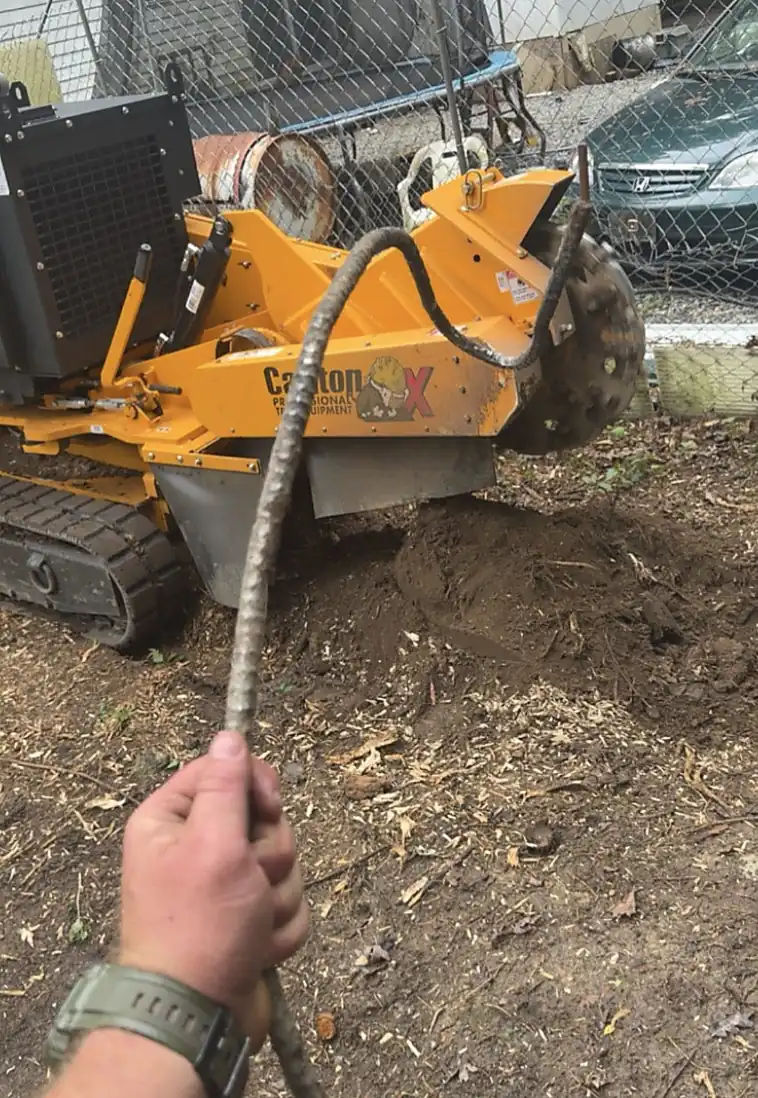
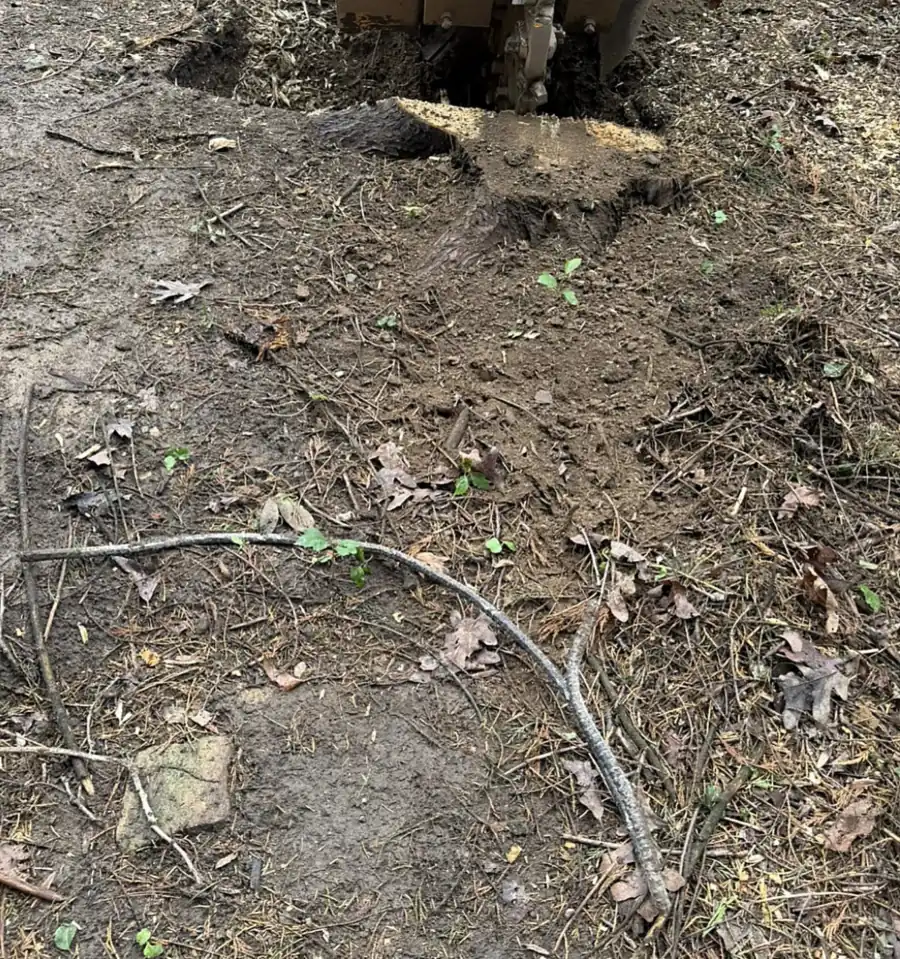
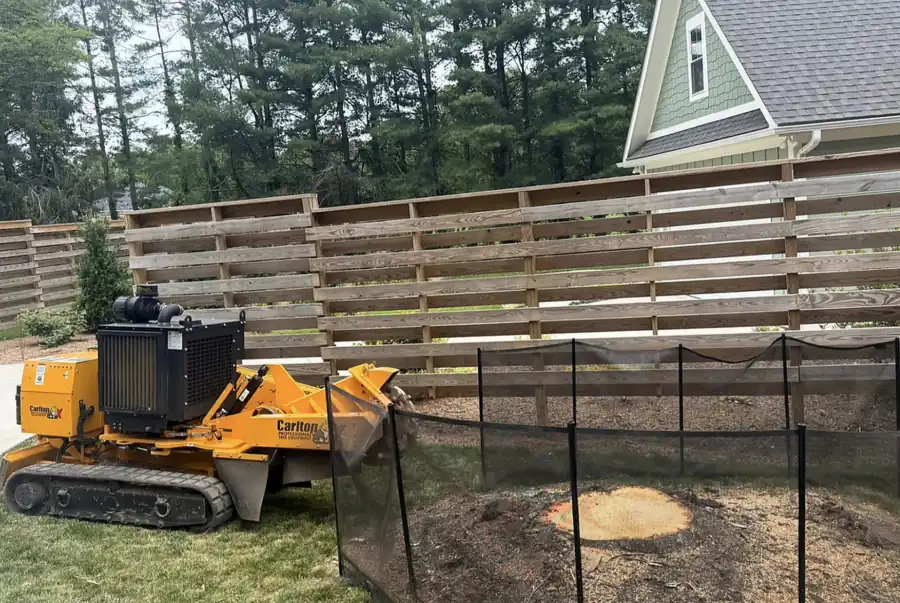
Photos From Real Jobs
Common Questions
Does 811 mark sprinkler lines and invisible fence wire?
No. 811 arranges marking of public utility lines up to the meter. Sprinkler pipe, dog fence wire, lighting cable, septic lines and lines to outbuildings are private. SC811 says property owners are responsible for identifying and marking them, using site plans or a private locating service.
How deep is an invisible dog fence wire buried?
Shallow. Invisible Fence says its boundary wire is buried about four inches deep, and other brands are similar. That is well inside normal stump grinding depth, so flag the wire wherever it passes within a few feet of a stump, and keep the dog inside on grinding day.
Should I turn off my sprinkler system before stump grinding?
Yes. Turn the controller off for the day, after you have run each zone once to flag the heads near the stump. If a pipe is nicked, the water stays off until it is repaired, instead of running into the hole and softening the ground.
What to Do Next
Flag the private lines, take a photo with the flags in it, and send it with your town and a photo of the way in. Call (828) 574-4474 or start with stump grinding.