

Stump grinders come in four broad types: walk-behind machines you steer by the handlebars, towable grinders built to be pulled behind a truck, self-propelled tracked machines, and grinder attachments that run on a loader, skid steer, tractor or excavator. The smaller types are the usual rentals, while heavier tracked machines and attachments mostly belong to people who grind stumps for a living.
Walk-behind handlebar grinders
The smallest common stump grinder is a gasoline engine on two wheels with a cutting wheel out front and long handlebars behind. The Dosko walk-behind is typical, with a fourteen-inch cutting wheel. The engine drives the wheel through a belt and clutch, and you swing the machine side to side on its wheels to sweep the cutter across the stump. A brake holds it in place. These are light enough to roll through a yard gate and simple enough to learn in an afternoon. They suit small and medium stumps on open, level ground, and they are slow on wide hardwood.
Towable grinders
Some grinders are built with road wheels and a hitch so they tow behind a pickup straight to the job, and some walk-behinds, the Dosko among them, are made towable too. Towing saves the ramp-and-trailer step and lets a rental shop hand over a slightly bigger machine. Once at the stump, though, a towable still has to be maneuvered into position by hand or by its own drive, and wider wheelbases do not fit every gate or side yard. They make the most sense for stumps you can reach from a drive or open lawn.
Self-propelled tracked grinders
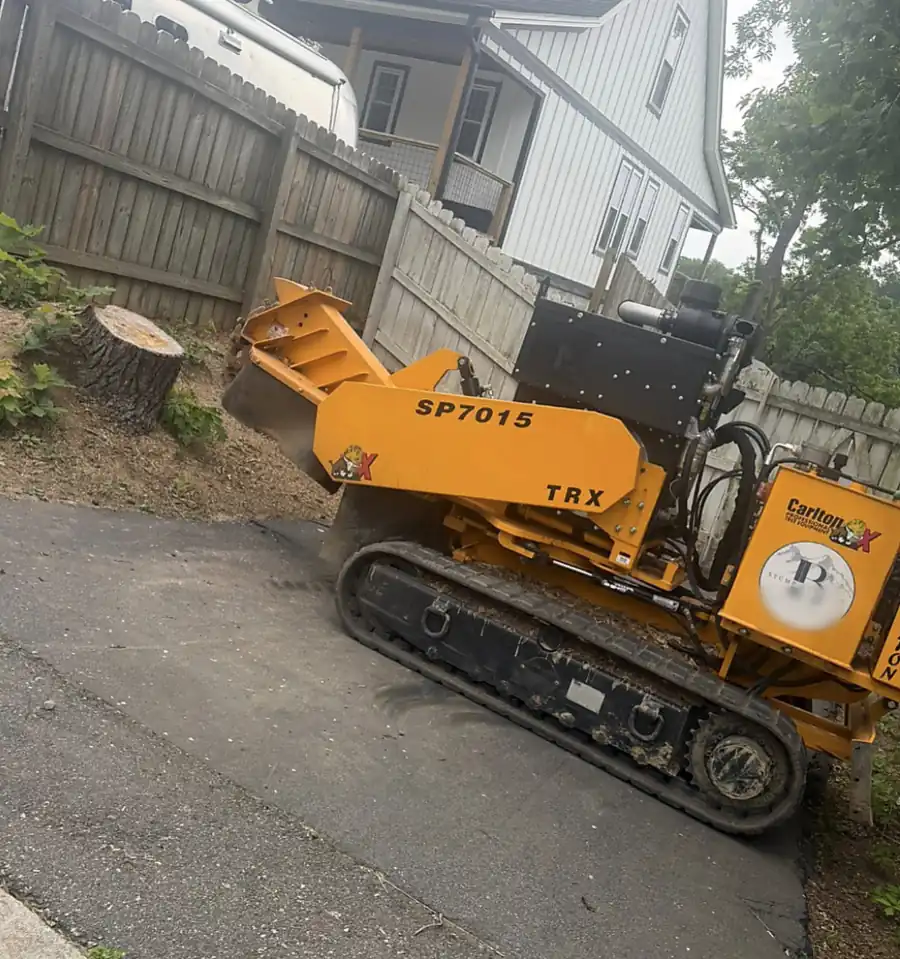
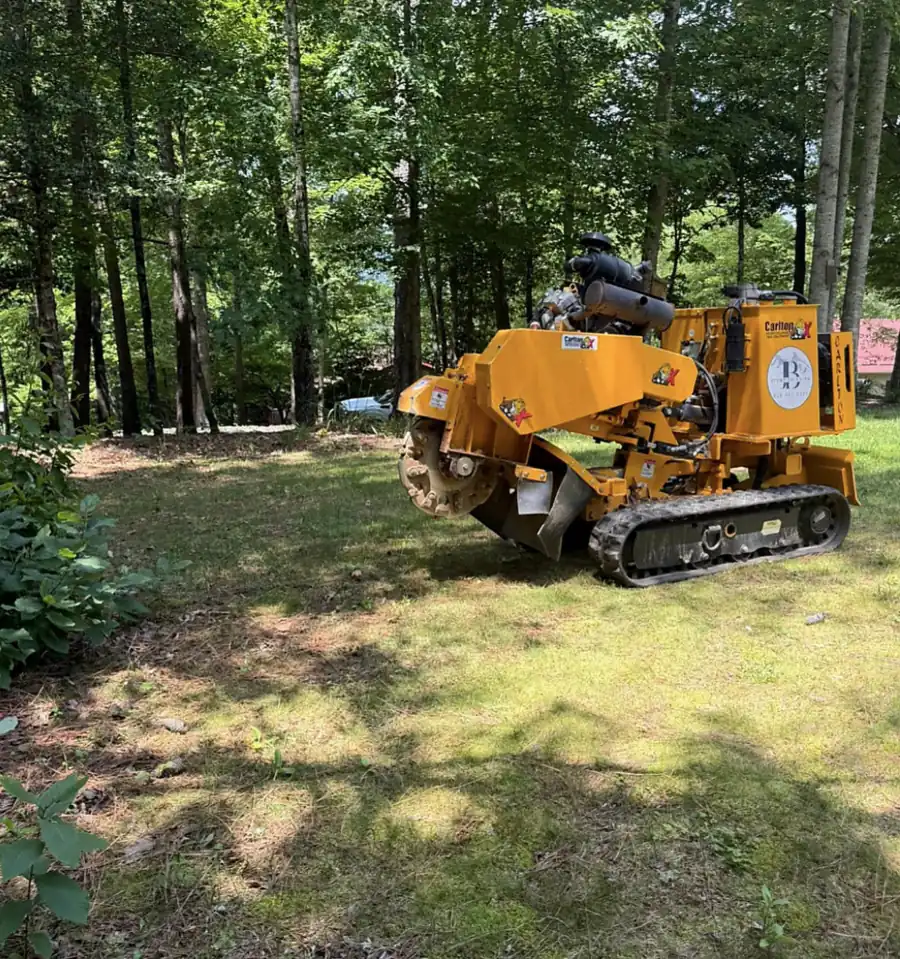
Tracked grinders drive themselves on rubber tracks and move the cutting wheel with hydraulics. The operator steers with ground drive levers and swings the wheel with a control lever, and Vermeer builds its tracked models so letting go of that lever stops the wheel from engaging. Barreto's hydraulic track grinder is another example. Tracks spread the machine's weight, which is easier on lawns, and the narrow models fit through yard gates and climb trailer ramps under their own power. They are heavier and stronger than walk-behinds and hold the wheel steadier in dense wood.
Grinder attachments for loaders and tractors
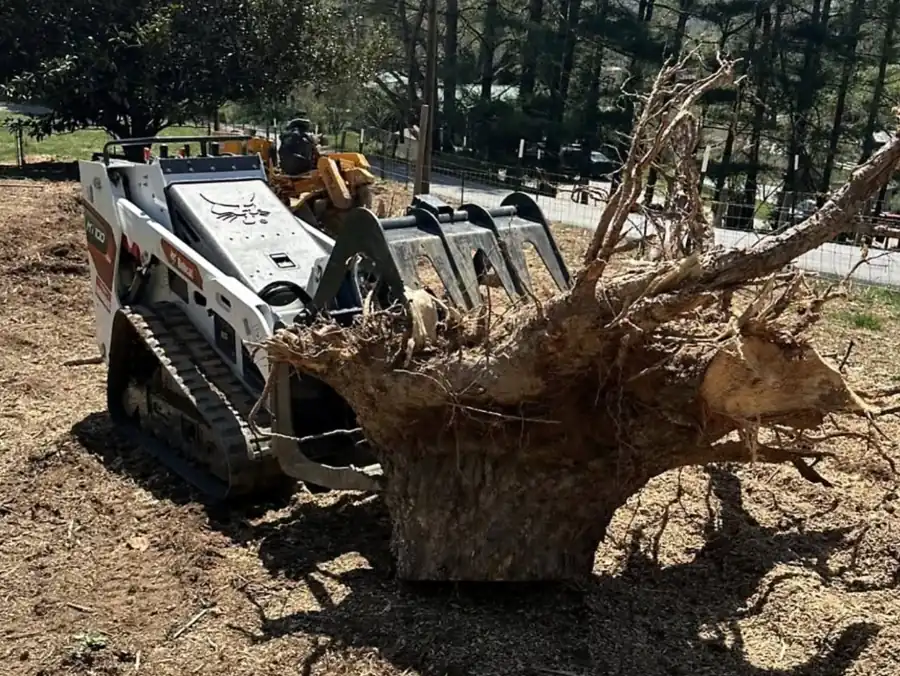
Many compact machines can carry a stump grinder head. Toro makes one for its compact utility loaders, run from the loader's auxiliary hydraulics; you swing it across the stump by tilting the attachment and lower it with the loader arms. Similar heads exist for skid steers, tractors and excavators. An attachment makes sense when the carrier is already on site, for example when a lot is being cleared and graded, so one machine handles both jobs. On a finished lawn, a full loader is a lot of machine to bring in for one stump.
Vertical and forestry grinders
Out in the woods there is a different family. Vertical grinders spin their cutter on an upright axis and bore down into the stump. Wikipedia's entry describes them as used in forestry and grounds maintenance, removing stumps to more than a meter deep and handling stumps up to about 150 centimeters across. Some are mounted on excavators. These are site-clearing tools, not yard machines, and you would only meet one where land is being cleared at scale or where stumps must come out completely for construction.
What separates small from large
Three things. Power: Wikipedia's entry lists grinder models from roughly 70 to 300 horsepower, and a rental walk-behind sits well below that range. Wheel size: a bigger wheel reaches deeper, since manuals limit how much of the wheel is buried before you move forward. And weight: a heavy machine holds its wheel steady in dense wood, while a light one bounces and has to take thinner bites. A standard horizontal machine, whatever its size, works the top layer of a stump rather than its deep roots. The size question is always the same: how much wood, how fast, through how narrow a gap.
Which type fits which job
One or two small stumps on open lawn, and a free Saturday: a walk-behind rental. Several medium stumps reachable from the drive: a towable or a compact tracked machine. A big oak, a stump behind a gate, a slope or a long row of stumps: a tracked grinder in experienced hands. A cleared lot full of stumps: an attachment on the machine already working there, or full removal with an excavator. Before deciding to run one yourself, read stump grinder rental vs hiring. The Carlton tracked grinder used for stump grinding here is the narrow tracked type, built to fit standard yard gates.
Photos From Real Jobs
Common Questions
What size stump grinder do I need?
Match it to the widest stump and the narrowest gap. A walk-behind is fine for a few small stumps on open ground. Wide hardwood stumps, or several stumps, call for a heavier tracked machine that holds its wheel steady. Measure the gate or side yard the machine must pass through before choosing anything.
Is a tracked stump grinder better than a wheeled one?
For most yards, yes. Tracks spread the weight, so they mark a firm lawn less and handle soft spots and gentle slopes better than small wheels. Tracked machines also drive themselves to the stump. Wheeled walk-behinds are lighter, cheaper to rent and fine on level, open ground.
Can a skid steer grind stumps?
Yes, with a stump grinder attachment run off its auxiliary hydraulics. It works well on clearing and construction sites where the skid steer is already working. On a finished lawn or behind a fence, a dedicated narrow grinder usually does less damage getting to the stump.
What to Do Next
Not sure which machine your stumps need? Describe the widest stump and the narrowest gate, or send pictures of both, at (828) 574-4474.