

Stump grinding is removing a tree stump by chipping it away with a spinning, toothed cutting wheel until it sits below ground level, usually four to eight inches under. It does not pull the stump or its roots out: the stump becomes a pile of wood chips mixed with soil, and the roots are left where they are to decay.
The plain definition
A tree that has been cut down leaves a stump: the bottom of the trunk, still joined to its roots. Stump grinding gets rid of the part you can see and trip over by grinding it into chips, from the top down, until the cut is below the surrounding soil. Nothing is dug up or pulled. The yard around the stump stays where it is. What remains underground is the root system, cut off from the trunk and left to decay. That is the whole trade: the stump gone from sight in a short visit, in exchange for roots that rot slowly out of sight.
What the machine is
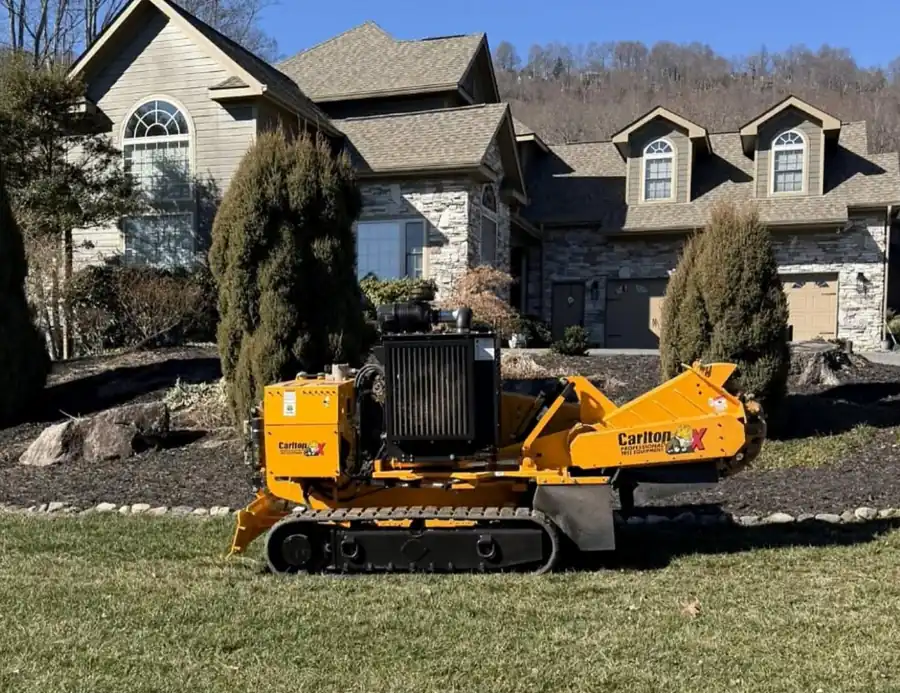
A stump grinder is a powered machine carrying a steel wheel ringed with carbide-tipped teeth. The wheel spins and is swung side to side across the stump, each pass shaving off a thin layer, while the operator lowers it and moves forward. Machines range from walk-behind units a homeowner can rent to heavy tracked grinders and attachments for loaders and excavators. Tracked machines spread their weight and can be narrow enough to pass through a yard gate. How a stump grinder works goes through the parts.
What a stump grinding visit looks like
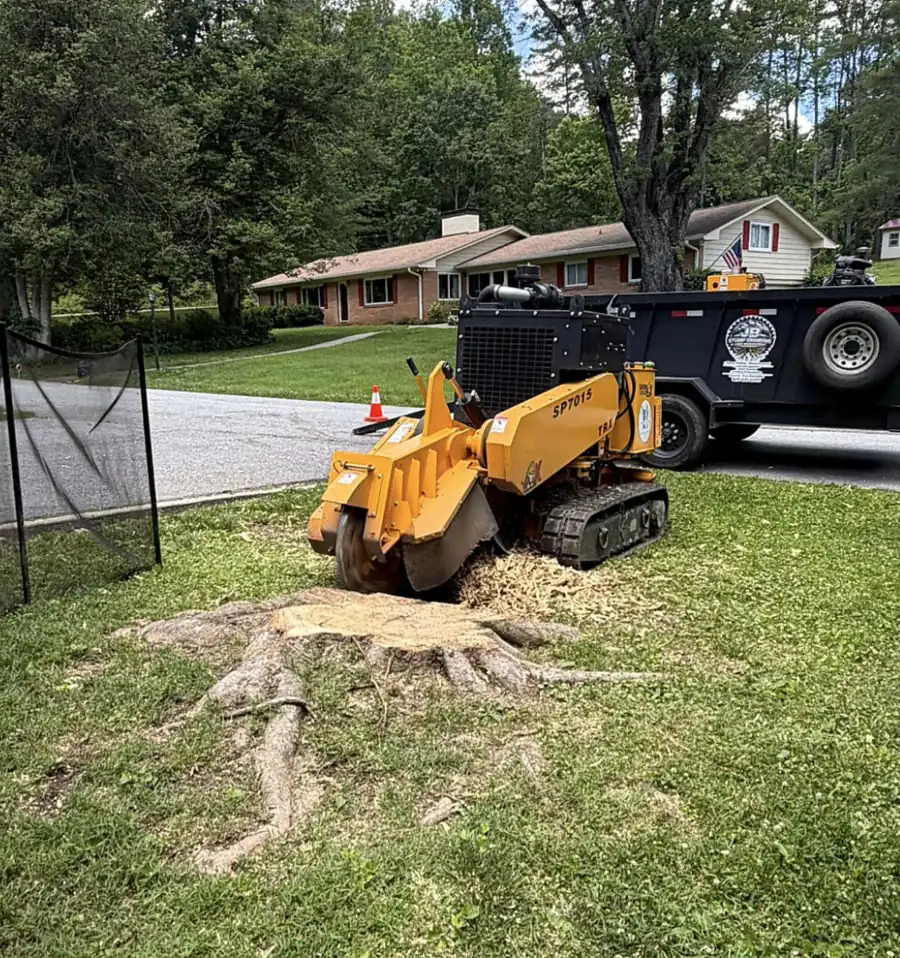
The machine comes on a trailer, is walked or driven to the stump, and set up beside it. Any lines near the stump have been marked. The wheel goes to work at the front edge and the stump turns into a spray of chips. For an ordinary stump with good access that part is minutes. Then the grindings are dealt with: raked back into the hollow, left in a pile for beds, or loaded and hauled off. The machine walks back out. What takes the time on most jobs is getting the machine to the stump and back, not the grinding.
What it leaves behind
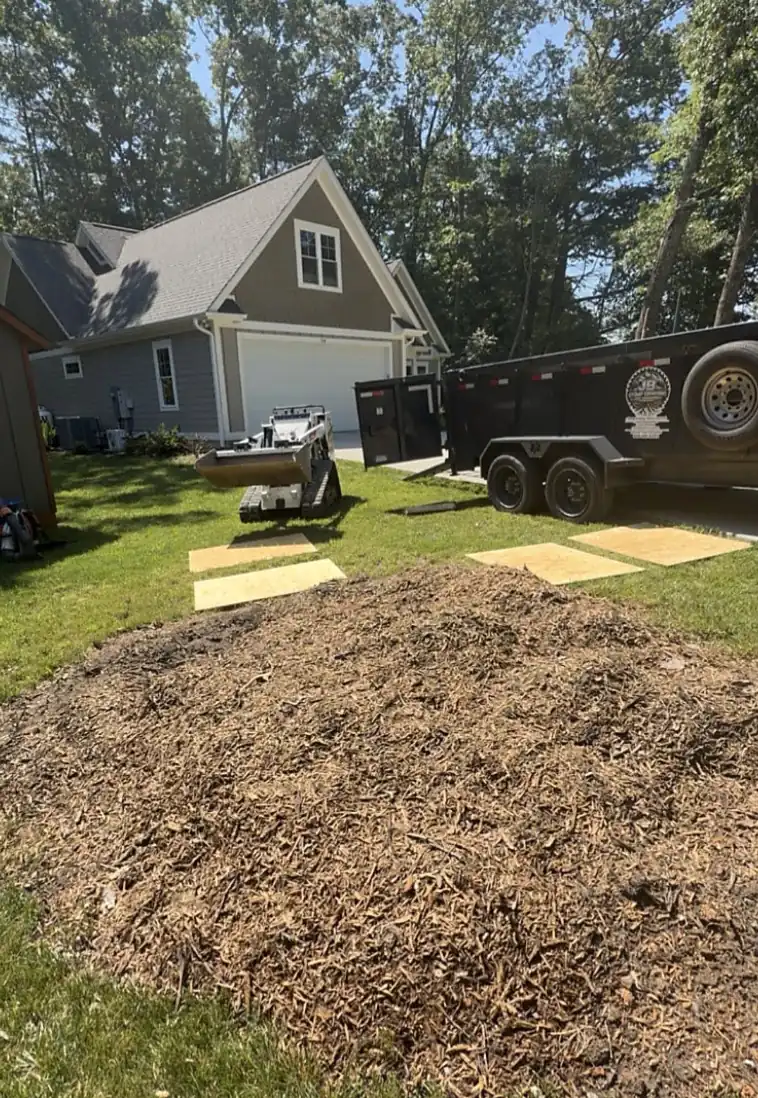
Three things. A hollow where the stump stood, shaped like the stump and a little wider. A mound of grindings, bigger than you expect, because solid wood swells when it is chipped. And roots running out under the lawn, still in place, now dead. Over the next few years those roots rot, the ground over them can dip a little, and mushrooms may appear after rain. None of it needs much from you beyond a top-up of soil. Under anything solid, it is a different story, as the next sections explain.
Grinding, stump removal and tree removal
People use these words loosely. Tree removal means taking down the standing tree. Stump grinding takes what is left down below grade. Stump removal is used two ways: in everyday speech it often means grinding, but in the trade it means digging the whole root ball out with an excavator or a loader, which leaves a large hole to backfill. Per Iowa State University Extension, a professional grinder usually finishes somewhere between eight and twelve inches deep, big side roots included. Stump grinding vs stump removal helps you pick.
Why most yards get ground, not dug
Grinding keeps the yard in one piece. There is no crater, no trailer load of root ball and soil, and no torn lawn from a digging machine. A narrow tracked grinder reaches stumps behind gates, beside drives and close to walls where an excavator would do damage. It needs no waiting: rotting a stump with fertilizer takes one to three years even when it works well, by Iowa State's estimate, and an untouched stump can sit for a decade. And there are no chemicals and no fire. For a stump under future lawn or mulch, grinding is nearly always the sensible job.
What stump grinding is not for
Grinding is the wrong job when something solid is going on that exact spot. A footing, fence post, slab, drain line, pool or retaining wall needs ground free of wood, because the roots left under a ground stump rot and settle. Replanting a tree in the identical hole is a second exception. A wind-thrown tree is a third, because its roots have tipped up into a wall of soil with nothing level left to cut. Each of those needs full stump removal: the root mass lifted out by machine, then fill brought in and given time to settle.
Words you will hear on a stump job
Cut face: the flat top of the stump left by the saw. Root flare: the wide base where the trunk spreads into the main roots; stump width is measured across it. Grade: the level of the soil around the stump, so 'below grade' means under that level. Passes: the side-to-side sweeps of the wheel. Grindings: the chips and soil the machine leaves. Root ball: the stump plus its roots and the soil they hold, the thing that comes out in a removal. Know those six and any quote will make sense.
Photos From Real Jobs
Common Questions
Does stump grinding leave a hole in the yard?
A shallow one. Where the stump stood there is a hollow a little wider than the stump, filled with or beside a mound of grindings. Raked back and topped, it sits about level. Because the chips and roots below settle as they rot, it may need a little more soil later. It is nothing like the crater a dug-out root ball leaves.
Is stump grinding messy?
It throws chips. The wheel sprays wood and soil around the stump, so many operators set mesh screens and ask for cars, toys and pots to be moved. Afterward the grindings are raked back into the hollow, piled for your beds or hauled off. A tracked machine on firm ground leaves little marking on the lawn.
What is the difference between stump grinding and stump removal?
Grinding chips the stump away below the surface; the roots stay put and decay. Removal, in the trade sense, digs out the whole root ball with an excavator or loader and hauls it away, leaving a hole that is backfilled. Grind for lawn or mulch. Remove when something will be built or planted in that exact spot.
What to Do Next
Have a stump and not sure which job it needs? Send two photos and your town, say what the spot is for next, and call (828) 574-4474.