

A stump in rocky ground can still be ground, but every stone against the wood has to be found and worked around, because a cutting tooth that strikes rock dulls, chips and can throw the stone. Loose rock is moved before the day, buried rock is handled pass by pass, and a stump fused to a wall or ledge may be better lifted out whole.
Why stone and a cutting wheel do not get along
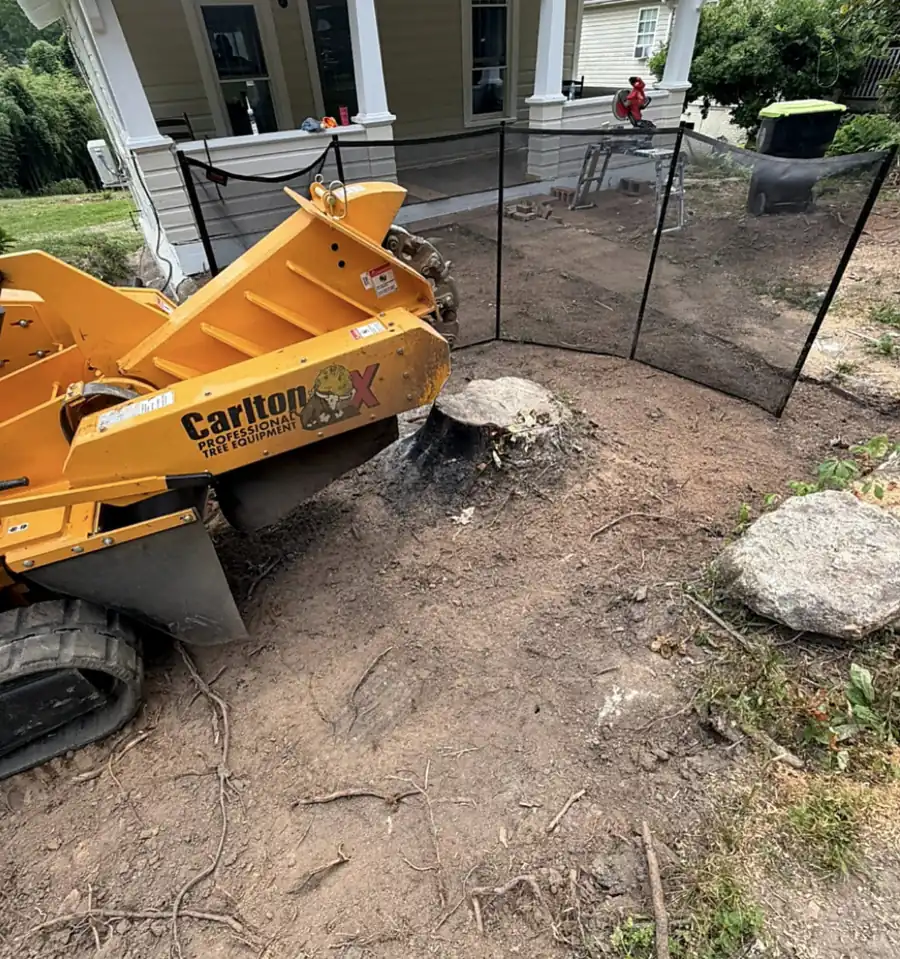
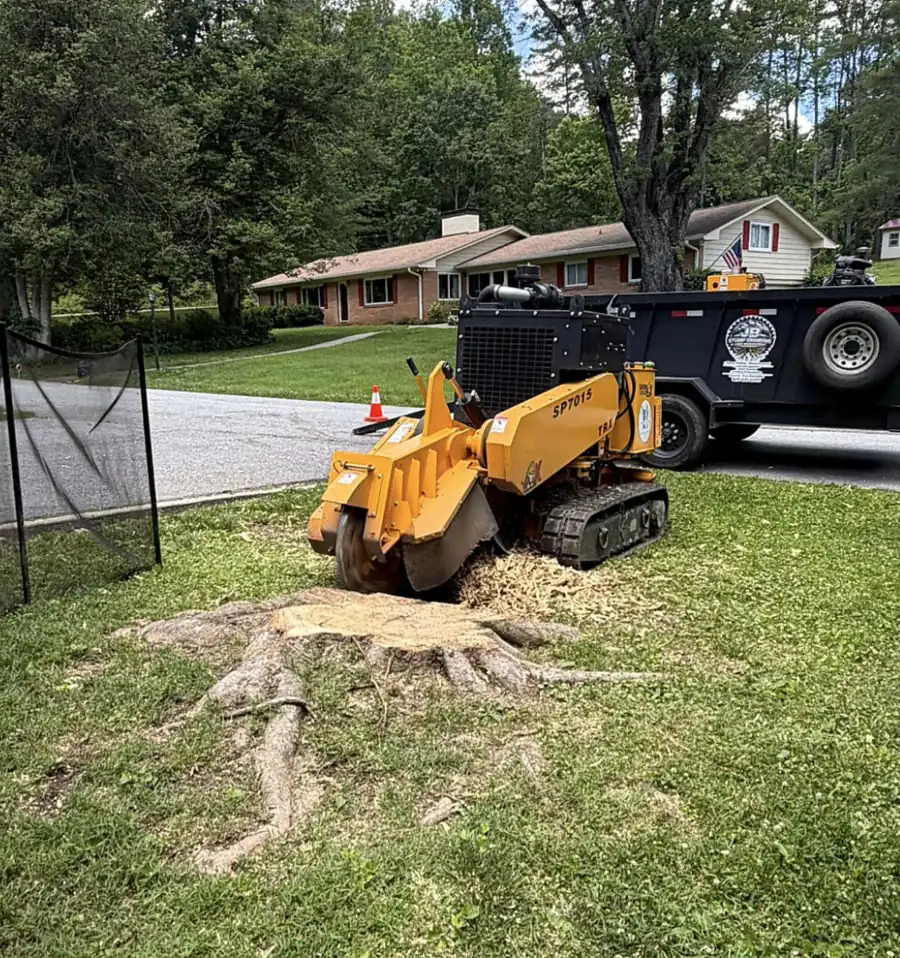
A stump grinder's wheel carries hardened teeth that shave wood away in thin passes. Wood gives way. Stone does not. When a tooth meets a rock it can lose its edge or chip, the wheel can jump, and the rock itself can be flung out of the cut. So a rocky stump is not a bigger stump, but it is a slower one. The operator feels for stone, backs off, clears it and goes again. That is also why mesh debris screens get stood around the work, and why people, pets and cars stay well back while the wheel is turning.
Where the rock comes from around here
Some of it is the ground itself. NC State Extension notes that soils in the Piedmont and the mountains form mostly from weathered bedrock, called saprolite, and that some mountain soils are shallow over rock. USDA's official description of the Cheoah series, a Blue Ridge soil on steep slopes, lists flat rock fragments right through the profile. Some of it was brought in: fill dirt with stone in it, an old foundation, a buried stone wall. And a lot of it is decoration. River rock beds, boulders set at the edge of a bed, stepping stones and dry-stacked walls often sit right where a tree once stood.
Rock you can see: move it before the day
The easiest rock to deal with is the rock nobody grinds into. Before the job, pull loose landscape stone back a few feet from the stump on every side. Lift stepping stones and edging that sit within the root flare. Rake river rock and gravel away from the base so the wheel meets bark, not pebbles. If a boulder is too heavy to shift, leave it and say so. Then take your quote photo after the clearing, close enough to show the ground at the base. How to measure a stump for a quote lists the other photos worth sending.
Rock you cannot see: how the grind changes
Buried stone shows up as a change in sound and feel at the wheel. When it does, the grind stops, the stone is dug out with a bar or shovel if it will come, and the passes carry on. Roots often grow around stones, so an old stump can hold rock inside its own flare. Most stumps still finish at the usual depth, four to eight inches under the surrounding grade. Iowa State Extension describes the big professional machines as reaching roughly eight to twelve inches down. Where a shelf of bedrock sits higher than that, the grind stops at the rock, and you are told so on the day.
Stumps grown into walls, boulders and ledges
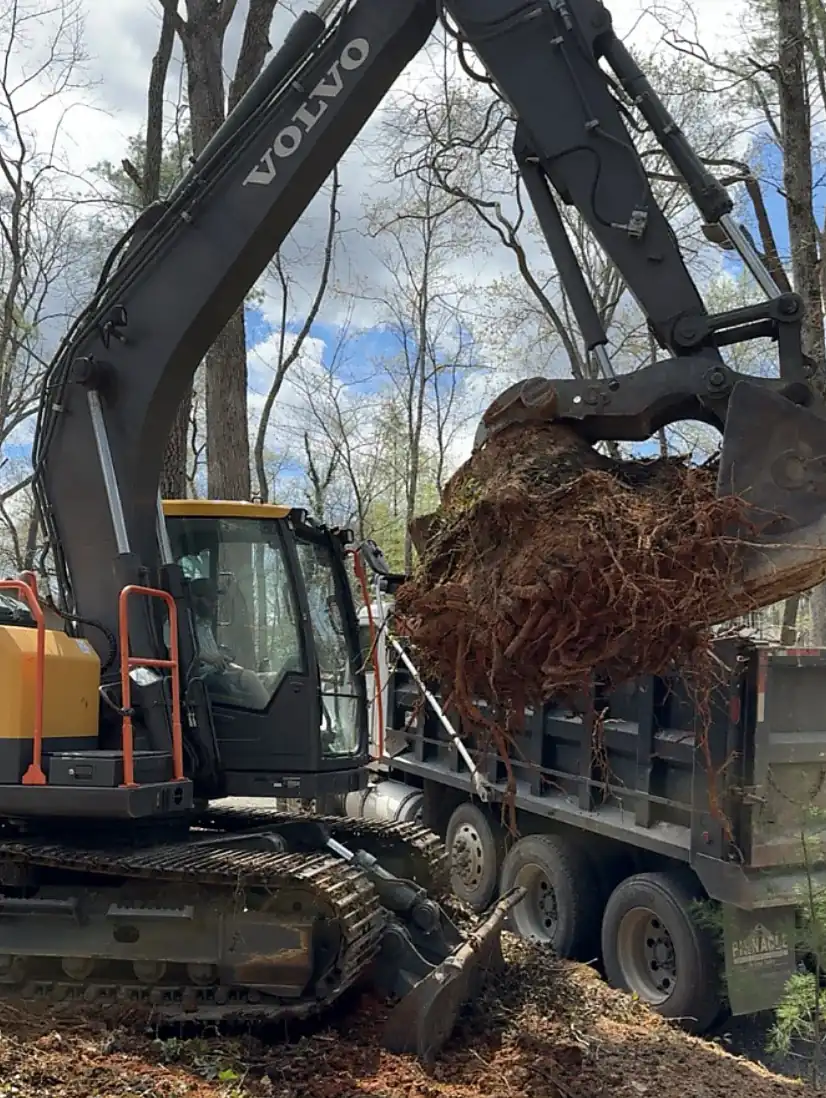
A tree that grew against a retaining wall or wrapped itself around a boulder leaves a stump that is part wood and part stone. The wood side can be ground down in careful passes, staying off the stone. What is left against the rock can often be finished by hand once the bulk is gone. If the wall is failing anyway, or the plan is to rebuild it, lifting the whole stump out with the excavator may be the cleaner job. Be aware that roots sometimes help hold a dry-stacked wall in place. Stump grinding near a foundation or wall covers that side of it.
A quick way to check the ground yourself
You can learn a lot in five minutes with a steel rod or a long screwdriver. Push it into the soil in a ring around the stump, a foot or so out from the bark, every few inches. Soil lets it sink. Roots stop it with a dull, springy feel. Rock stops it dead with a click you can feel in your hand. If you hit rock all the way round, mention it when you ask for a price. If you find one big stone on one side, say which side. It helps the job get planned before the machine is unloaded, and it takes the surprise out of the day.
What rock does to the quote and the finish
Rock adds time, and it can wear teeth, so it belongs in the quote, not in a conversation afterward. Mention known stone, old wire or concrete when you send photos. On the finish, rocky ground leaves a hollow with stones mixed through the grindings. Pick the larger ones out before the chips are raked back, or ask for the grindings to be hauled. If grass is going on top, the top few inches need to be soil, not chips and gravel. What to do after stump grinding walks through the fill.
Photos From Real Jobs
Common Questions
Can a stump be ground if it has rocks around the roots?
Yes, in nearly every case. The wheel is worked around the stone, loose rocks are dug out as they turn up, and the grind carries on to the usual depth below grade. It takes longer than the same stump in clean soil. Where bedrock sits close to the surface, the grind stops at the rock and you are told before the machine leaves.
Will hitting a rock damage a stump grinder?
A rock can dull or chip the cutting teeth and make the wheel jump, which is why operators slow down in stony ground and stop when they feel stone. Teeth wear and get replaced as part of the work. The bigger concern is thrown stone, so screens go up and everyone stays back.
Should I dig the rocks out from around my stump before it is ground?
Move any loose stone you can lift: landscape rock, edging, stepping stones and gravel within a few feet of the stump. Do not dig deep around the stump yourself, since that loosens soil and can expose lines. Just say where you know buried rock sits and send a photo of the base.
What to Do Next
If your stump sits in rock, against a wall or among landscape stone, a close photo of its base and a second of the access route tell most of the story. Add your town and phone (828) 574-4474. The stump grinding page has the rest.